Recorded November 24, 2026
Earth & ClimateReported finding
US Grid at 80% Renewables Would Waste 10% Extra Power, Study Finds
An MIT and Georgia Tech study finds a grid at 80% renewables would produce up to 10% surplus power, mostly in spring for 7-12 hour stretches — power that could run steel furnaces and AI training instead of going to waste.
By Nathan Brooks4 min read766 words
In brief
- A grid meeting 80% of demand with renewables would generate up to 10% surplus power, per a study in Joule by MIT and Georgia Tech researchers.
- Excess periods typically last 7 to 12 hours, peak in spring, and occur midday through afternoon.
- The finding holds even with battery costs an order of magnitude below today's prices, and across much of the U.S.
- The model was fed 40 years of U.S. weather data on wind and solar resources.
- Potential users include electric arc furnaces, raw-material grinding, fertilizer and concrete production, and AI training.
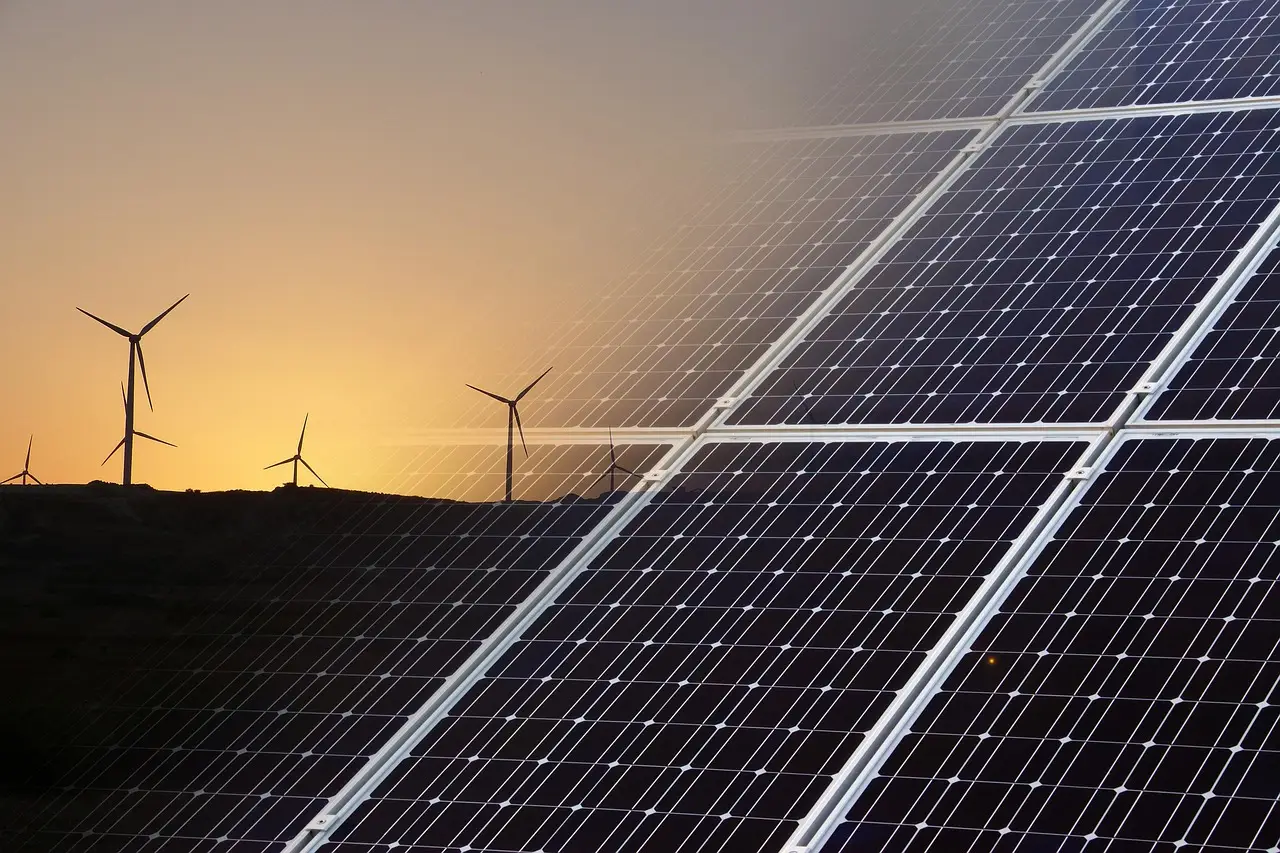
A grid powered 80 percent by wind and solar would generate up to 10 percent more electricity than it could immediately use or store, according to a new study from MIT and Georgia Tech published in Joule. The researchers say that surplus, rather than being wasted, could feed industrial processes from steelmaking to AI training — if engineers design for it now.
The team modeled future power systems with different mixtures of wind and solar capacity, simulating how they would operate hour by hour over decades. To do it, they fed the model 40 years of U.S. weather data capturing extremes and fluctuations in wind and solar resources, plus technology factors such as battery costs and regional electricity demand profiles.
What did the model actually find?
The headline number is roughly 10 percent surplus generation in systems that cost-effectively meet demand with 80 percent renewables. That finding held even when storage costs were set very low — an order of magnitude below today's battery prices, as lead author Micah S. Ziegler, now an assistant professor at Georgia Tech, explains.
"We found that considerable excess energy could be available even in systems with very low-cost storage, including at costs an order of magnitude lower than what battery storage costs today," Ziegler says.
The team also found the effect is broadly consistent across the United States, in many future scenarios. "This energy is broadly available across the U.S.," says senior author Jessika Trancik, a professor in MIT's Institute for Data Systems and Society (IDSS).
The timing is predictable, which matters most for anyone hoping to use the power:
- Excess periods peak in spring, with smaller surpluses in mid- to late fall.
- They typically run 7 to 12 hours, from midday through the afternoon.
- Some last multiple days.
- Even in cost-optimal systems, the potentially available excess power would regularly double the amount used to meet demand.
Who could use this electricity?
Because the surplus follows seasonal and daily patterns, the researchers argue that processes designed to run intermittently could switch on during those windows. Concrete candidates include electric arc furnaces for steel production, mills for grinding raw materials, and equipment making seasonal products such as fertilizer or concrete, which see heavier use in spring, summer and fall.
The electricity could also absorb some of the growing demand from data centers — particularly flexible computing such as AI model training, which can be scheduled for specific hours or months.
"In this era where there is a need for additional electricity, where demands are growing to support data centers and other end users, we wanted to understand what this excess electricity will potentially look like so we can design processes to benefit from these excesses," Trancik says.
Running industrial processes intermittently is harder than running them continuously. But the predictability helps, the authors note, and strategies like less-capital-intensive machinery or sharing equipment across manufacturing sites could make it work.
Why 7-to-12 hours is the number to watch
Ziegler suggests that duration is a practical design target for technology developers and system planners. "When the same characteristic is found consistently across a wide range of possible energy systems, it can be considered more robust to our uncertainty about the future," he says.
The context is a U.S. grid in transition. Wind and solar are variable, weather-dependent resources, and when supply outruns demand, operators today either store the excess or curtail production. "Another way to think about that curtailed energy is as an opportunity to use this excess electricity for some other processes," Trancik says.
The study is model-based, so the findings describe scenarios rather than measured reality — and the researchers themselves flag the uncertainty in future storage costs and power-system design. Next, they plan to study the costs of building the infrastructure, equipment and technologies that could capture the surplus.
The stakes, as Trancik puts it: "In many places today, we enjoy inexpensive electricity, but there could be more constraints on the system going forward. This excess renewable energy could be a resource that we might utilize to meet increasing demands." Ziegler adds that cost-effective use of the surplus could reduce the cost of the transition to low-carbon energy.
The paper's co-authors are Aliza Khurram, a former IDSS postdoc now at the Toyota Research Institute, and Shannon Y.S. Hwang, an IDSS PhD student. Funding came from MIT Climate Grand Challenges, the MIT Portugal Partnership Research Seed Fund Program, the MIT Technology and Policy Program, Georgia Tech, the MIT Energy Initiative, and the National Science Foundation.
via sciencedirect.com (Original)
More from Nathan Brooks
Show full bio
Market editor covering companies, deals and strategy in general science news at SciBeat.
589 articles
Nearby plates
- Adding Wind to Solar and Batteries Cuts Costs by Nearly a Fifth
- Plan to Overhaul Green Power Contracts Could Save £9.2bn by 2036
- National Wealth Fund backs 1GW battery storage build-out in Scotland
- UK Electrification Roadmap: £1.2 Billion Grid Deals and 52% Renewables Lead the Push
- Data centers linked to 650 premature deaths in 2023