Recorded November 24, 2026
Earth & ClimateReported finding
22-year study: selective logging better preserved forest recovery
A long-term Fujian experiment found that selectively logged forests had at least 50% higher adaptive potential and connectedness than clear-cut forests, which had not fully recovered after 22 years.
By Marcus Bennett4 min read851 words
In brief
- A long-term logging experiment in Wuping County, China, supplied data from 1998 to 2017.
- Selectively logged forests had at least 50% higher adaptive potential and connectedness than clear-cut forests.
- After 22 years of natural recovery, selectively logged forests approached mature natural forests; clear-cut forests had not fully recovered.
- Early recovery (3–5 years) and later recovery (10–22 years) showed different effects from species evenness, light-demanding trees and tree height inequality.
- The study appeared in the Journal of Applied Ecology in 2026 with DOI 10.1111/1365-2664.70612.
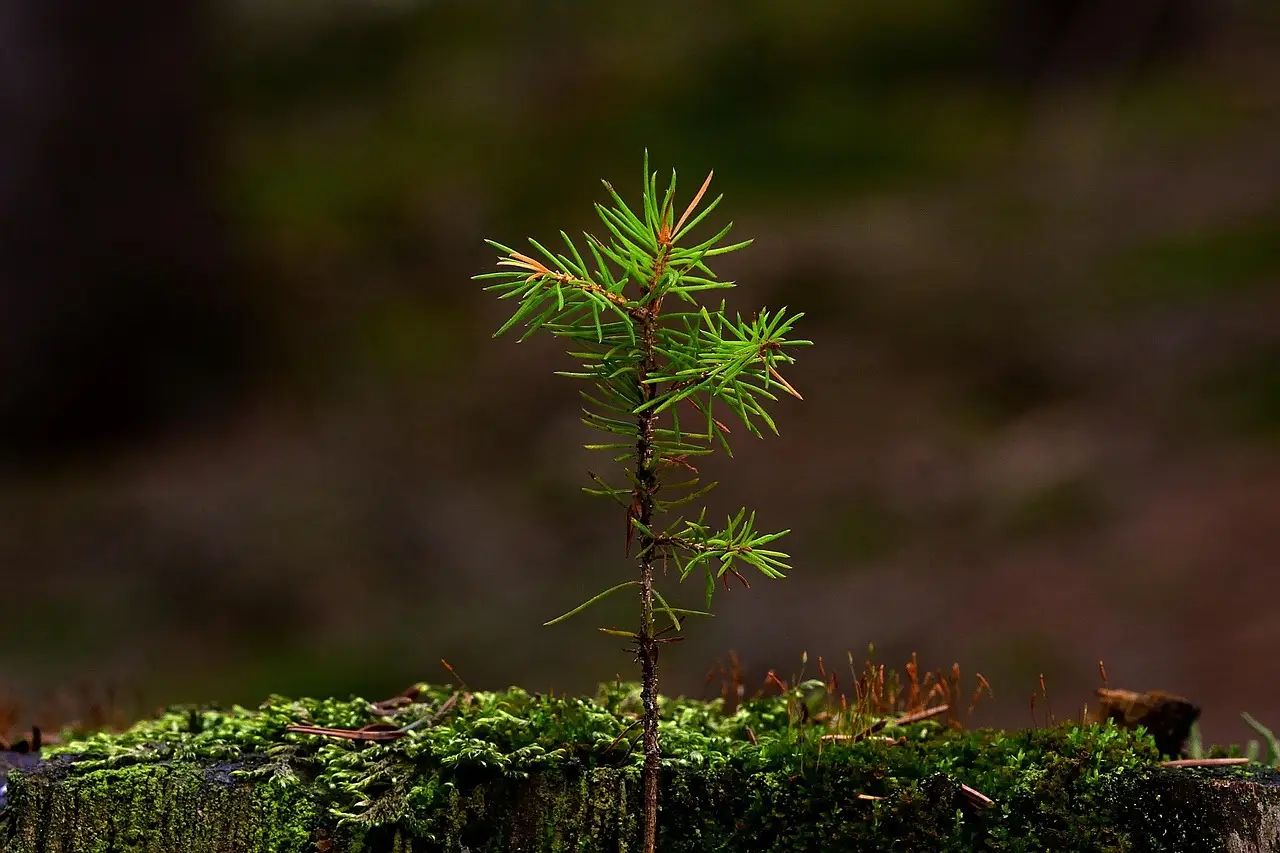
After 22 years of natural recovery, selectively logged subtropical forests approached the adaptive capacity of mature natural forests, while clear-cut forests had not fully recovered. The result came from a long-term experiment in an evergreen broad-leaved forest in Wuping County, Fujian Province, China. Researchers at the South China Botanical Garden (SCBG) of the Chinese Academy of Sciences led the study, which the Journal of Applied Ecology published in 2026.
What did the 22-year comparison show?
“Both potential and connectedness were at least 50% higher in selectively logged forests than in clear-cut forests,” said You Zhangtian, a Ph.D. graduate of SCBG and co-first author of the study.
You Zhangtian added: “After 22 years of natural recovery, the adaptive capacity of selectively logged forests had approached that of mature natural forests, whereas clear-cut forests had yet to recover fully.”
Together, these results support adaptive cycle theory, which predicts that selective logging generally disturbs species composition and forest structure less than clear-cutting. The experiment supplies empirical support rather than a theoretical claim alone.
In plain terms, two of the study’s core measures registered at least 50% higher values under selective logging.
How did researchers measure adaptive capacity?
Adaptive capacity means a forest’s ability to cope with disturbances and environmental change. The team assessed it through three attributes:
- Potential: the accumulation of resources supplied by species.
- Connectedness: the rigidity of species interactions, meaning how fixed those ecological relationships are.
- Resilience: the ability to recover toward the condition of mature natural forests after disturbance.
Records from the long-term logging experiment covered 1998 through 2017. The researchers examined how these three attributes changed under different logging practices and during subsequent natural recovery.
Adaptive cycle theory suggests that selective logging may preserve adaptive capacity because it generally changes species composition and structure less severely. Clear-cutting produced a larger and more persistent gap between the measured attributes and the condition of mature natural forests.
In plain terms, the study measured whether a logged forest retained enough ecological variety, interaction structure and recovery ability to cope with future change.
Why did clear-cut forests remain behind?
“Compared with selectively logged forests, clear-cut forests had higher species evenness, more light-demanding trees and simpler tree height structures,” said Wu Guilin of the Chinese Academy of Forestry, another co-first author. “These differences were associated with lower forest adaptive capacity.”
Species evenness describes how evenly tree individuals are distributed among species. Light-demanding species favor brighter conditions, while tree height inequality means greater variation in canopy heights.
The researchers associated those three differences with lower adaptive capacity. The result does not establish that any single trait caused the gap, because species composition and forest structure changed together after logging.
Overall, the results suggest that logging affects adaptive capacity primarily through changes in species diversity, functional group composition and stand structure. Functional groups are broad ecological categories, while stand structure describes the physical arrangement and height of trees.
The persistent difference tracked the forest’s overall makeup and structure, rather than one isolated measurement.
How did recovery effects change over time?
Recovery did not influence adaptive capacity through one fixed set of factors. The relationships changed as the forests aged.
- Early recovery, three to five years after logging: species evenness, the abundance of light-demanding species and tree height inequality each reduced potential and connectedness.
- Later recovery, 10–22 years after logging: the influence of species evenness strengthened, while the influence of light-demanding species abundance and tree height inequality weakened.
These shifting relationships explain why an early post-logging survey cannot show which forest characteristics will matter during later recovery. The same measurement can carry different weight at different stages.
“The key finding is that the factors shaping forest adaptive capacity are not static but change as forests recover from logging,” said Ye Qing of SCBG, corresponding author of the study. “This highlights the importance of long-term monitoring for sustainable forest management.”
A single early survey cannot reveal which recovery processes will dominate between 10 and 22 years after logging.
What does the study mean for forest management?
The results support selective logging as a way to retain more adaptive capacity in the studied subtropical forest. Clear-cutting remained short of full recovery, while the selectively logged forests approached the condition of mature natural forests.
Experimental evidence from subtropical forests remains limited, and one long-term experiment cannot establish the same advantage for every forest type or logging system. The practical implication is more measured: managers should regard recovery capacity as a reason to consider selective logging, then keep monitoring long enough to track the processes that change over time.
The paper is “Selective logging better preserves adaptive capacity than clear‐cutting in subtropical forests of China via tree compositional and structural recovery,” by Zhangtian You et al., Journal of Applied Ecology (2026), DOI 10.1111/1365-2664.70612.
The study’s practical message is plain: selective logging preserved more recovery capacity in this experiment, and good management still depends on watching the forest as it changes.
via phys.org/rss-feed/ (Source)
More from Marcus Bennett
Show full bio
News editor covering regulation, policy and their impact on general science news at SciBeat.
602 articles
Nearby plates
- Japanese forests shift toward warmer-climate tree species
- Drought Now Weakens Even Switzerland's High-Altitude Protective Forests
- Protecting Standing Amazon Forests Beats Restoration, Study Finds
- Seven Years of Drought Rewire Grasslands Toward Fast-Living Plants
- Hidden leaf cycles shift Amazon carbon estimates by 9.4%