Plate Nº 67 · recorded November 17, 2026
Earth & ClimateReported finding
Waiting for the Next Pinatubo: Drones Prep for a Natural Geoengineering Test
A Bristol team has flown its first high-altitude drones over Wales, preparing to measure volcanic plumes that could answer questions solar geoengineering experiments cannot.
By Nathan Brooks5 min read970 words
In brief
- Mount Pinatubo's 1991 eruption injected nearly 20 million tons of sulfur dioxide into the stratosphere and cooled global temperatures by about one degree Fahrenheit for roughly two years.
- Matthew Watson's University of Bristol team has £4.3 million from ARIA and completed first test flights at Llanbedr Airfield, Wales, in April.
- The 2021 SCoPEx balloon flight in Sweden was cancelled after opposition; the Harvard project ended in 2024 without ever flying.
- The VolRes initiative, founded in 2015, unites more than 250 scientists preparing for the next large eruption.
- The 2014–2015 Holuhraun eruption in Iceland raised regional cloud cover by about 10 percent while emitting 40,000 tons of sulfur dioxide per day.
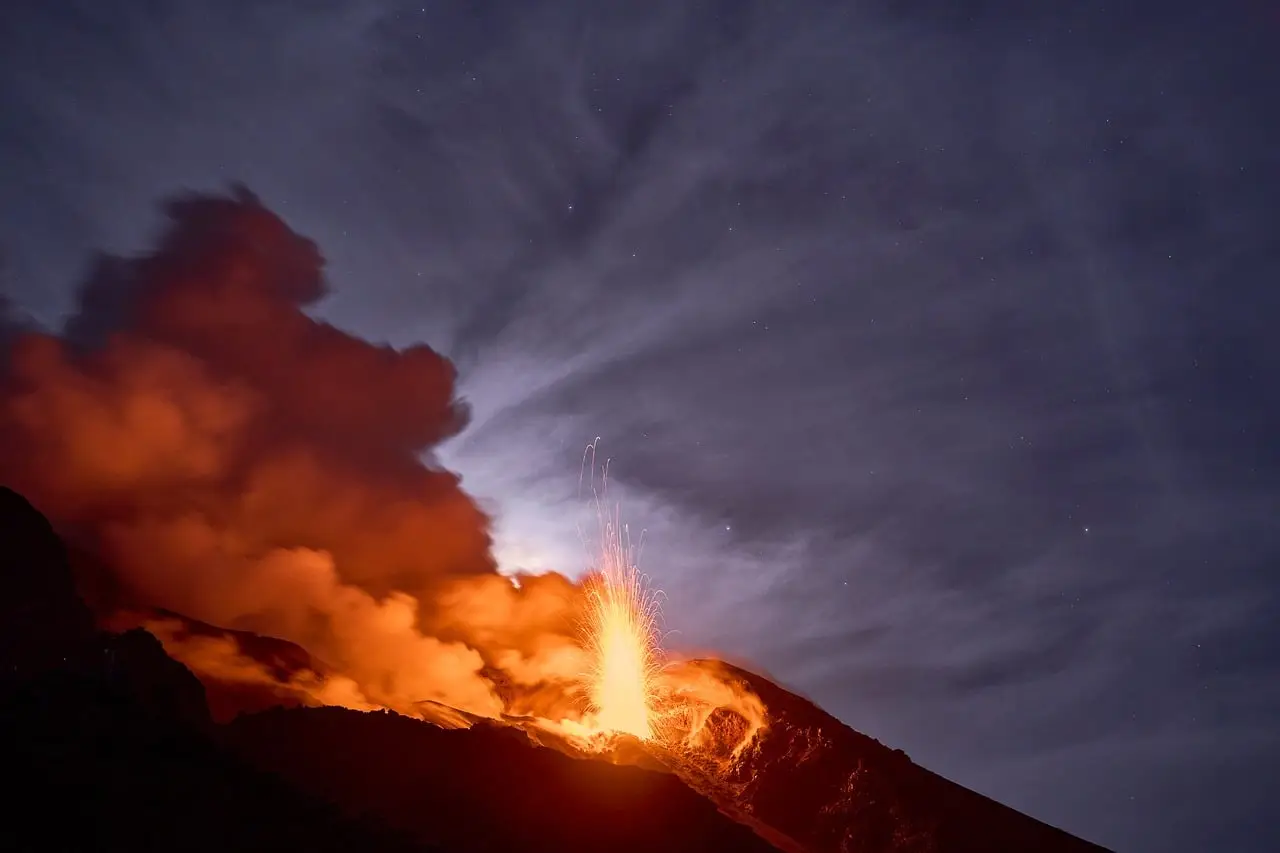
A team of nine researchers led by Matthew Watson completed the first successful test flights of a high-altitude drone in April at Llanbedr Airfield on the Welsh coast. The aircraft is built to fly into a volcanic plume — and, eventually, into the plume of an eruption large enough to cool the planet.
Watson, a professor of volcanoes and climate at the University of Bristol in England, has nearly £4.3 million from the U.K. Advanced Research and Invention Agency, or ARIA. The money funds two distinct lightweight aircraft fitted with sensors to quantify how volcanic aerosols and cloud droplets form and evolve, from the lower troposphere up into the lower stratosphere.
The drones are meant to gather data relevant to solar geoengineering: cooling Earth by deliberately reflecting a small fraction of sunlight away from it. The most widely studied proposal, stratospheric aerosol injection (SAI), would release sulfur dioxide or other aerosol precursors into the stratosphere, where they'd form reflective particles.
Why does Pinatubo still matter 35 years later?
When Mount Pinatubo in the Philippines erupted in 1991, it killed more than 800 people — many when roofs collapsed under wet ash — and unleashed nearly 20 million tons of sulfur dioxide into the stratosphere. The gas formed sulfate aerosols that reflected sunlight, dropping global temperatures by about one degree Fahrenheit. The cooling lingered for about two years.
For researchers, Pinatubo was a natural experiment on an enormous scale. It hasn't been repeated in nearly four decades. "You're able to track plumes. You're able to test your model," said atmospheric scientist James Haywood of the University of Exeter, who has long studied eruption impacts. "And you're able to test the dispersion of the aerosol in the stratosphere — how that evolves and how long it lasts."
Why haven't researchers just run their own experiments?
Solar geoengineering remains deeply controversial, with major uncertainties around regional rainfall. SAI could weaken Asian and African monsoons because cooler surfaces would alter evaporation and atmospheric circulation. Some climate experts and politicians oppose studying it at all, arguing it distracts from emissions cuts and invites capture by fossil-fuel interests.
Harvard's Stratospheric Controlled Perturbation Experiment (SCoPEx) illustrates the difficulty. A 2021 flight over Sweden — which would have released nothing at all — was cancelled after opposition from environmental and Indigenous groups. The project ended in 2024 without ever reaching the sky. Florida, Louisiana and Tennessee have passed laws prohibiting intentional atmospheric releases meant to affect temperature, weather or sunlight.
"The problem is, if we don't get more data, it will hamper us from understanding [climate engineering] better," said Ying Chen, an atmospheric scientist at the University of Birmingham. "Volcanoes give us an opportunity to do this."
What happens in 2027?
If all goes to plan, Watson's team will deploy drones to volcanoes in Guatemala, Montserrat and Chile that erupt frequently or release gases passively. Targets include Chile's Lascar volcano, a peak above 18,000 feet and one of the tallest persistent passive emitters in the world, and Guatemala's Fuego, which emits small bursts of ash, gas and magma several times per hour.
Montserrat's Soufrière Hills, which last erupted in 2013 but still leaks sulfur dioxide seaward, is relevant to marine cloud brightening — a second geoengineering approach spraying microscopic sea-salt particles into low clouds. Watson hopes to measure "how quickly it forms these little particles that seed clouds and how the cloud-droplet size distribution is changing."
His end goal is a rapid-response fleet of nine aircraft deployable to the next big eruption anywhere. "The next significant volcanic eruption will tell us an awful lot about climate engineering," he said. "It's an opportunity we don't want to miss."
He's not alone. The Volcano Response initiative (VolRes), created in 2015 under the World Climate Research Program, brings together more than 250 scientists. They've already mobilized for Russia's Raikoke eruption in 2019 and the 2022 underwater eruption of Hunga Tonga-Hunga Ha'apai.
How do past eruptions guide the models?
Chen leads a multiyear, UK-funded project analyzing Pinatubo and Raikoke, which sent more than 1.5 million tons of sulfur dioxide into the stratosphere — among the largest injections since Pinatubo, though its cooling effect was negligible. A volcano's location matters: latitude and plume height shape how material spreads through the stratosphere.
Iceland's effusive Holuhraun eruption, from 2014 to 2015, offers a marine-cloud case study. Emitting about 40,000 tons of sulfur dioxide per day, it increased regional cloud cover by roughly 10 percent. Chen and colleagues found cloud cover may matter more for cooling than cloud brightening itself. Hunga Tonga, by contrast, was comparable in explosive power to Mount St. Helens in 1980, but its plume carried mostly water vapor, not the sulfur researchers needed.
What about the human toll?
Volcanic cooling has exacted costs far from the volcano. A 2025 study in Communications Earth & Environment links a likely tropical eruption around 1345 to cold European summers, a Mediterranean famine, and grain trade that carried the plague bacterium to European ports — helping launch the Black Death. Laki's 1783–1784 eruption weakened African and Indian monsoons and contributed to famine in Egypt. Tambora's 1815 blast triggered Europe's "year without a summer."
Environmental scientist Lorena Sabino of the University of the Philippines Los Baños surveyed nearly 1,000 people living in danger zones of five of the country's deadliest volcanoes about geoengineering perceptions. Many had never heard of the field. She hopes the work will inform the ethics and governance of any eruption-modeled intervention.
For now, scientists can't predict when the next big eruption will come. "We're sort of overdue," Haywood said. So they prepare — hoping the sky becomes a natural experiment once again.
via scientificamerican.com (Source)
More from Nathan Brooks
Show full bio
Market editor covering companies, deals and strategy in general science news at SciBeat.
456 articles