Plate Nº 69 · recorded November 17, 2026
Earth & ClimateReported finding
One Industrial Hub, the Daily Water of 700,000 Filipinos
A proposed New Clark City hub under the US-led Pax Silica initiative would use up to 90 million liters of water daily — the household needs of 700,000 Davao residents, advocates warn.
By Priya Raman4 min read722 words
In brief
- The proposed New Clark City industrial hub would need 65–90 million liters of water per day, per BCDA figures cited by IDIS.
- That equals the daily household water use of about 706,276 people across Davao City's 15 most populous barangays.
- The hub's 16.2 sq km footprint nearly matches Barangay Catalunan Grande's 16.03 sq km, whose residents use only 4.3–5.6 million liters daily.
- The Philippines is joining Pax Silica, a US-led initiative securing minerals and manufacturing for AI and semiconductors.
- IDIS cites RA 7942, RA 8371, PD 1586, PD 1067 and RA 9275 as existing protections it says are inadequately enforced.
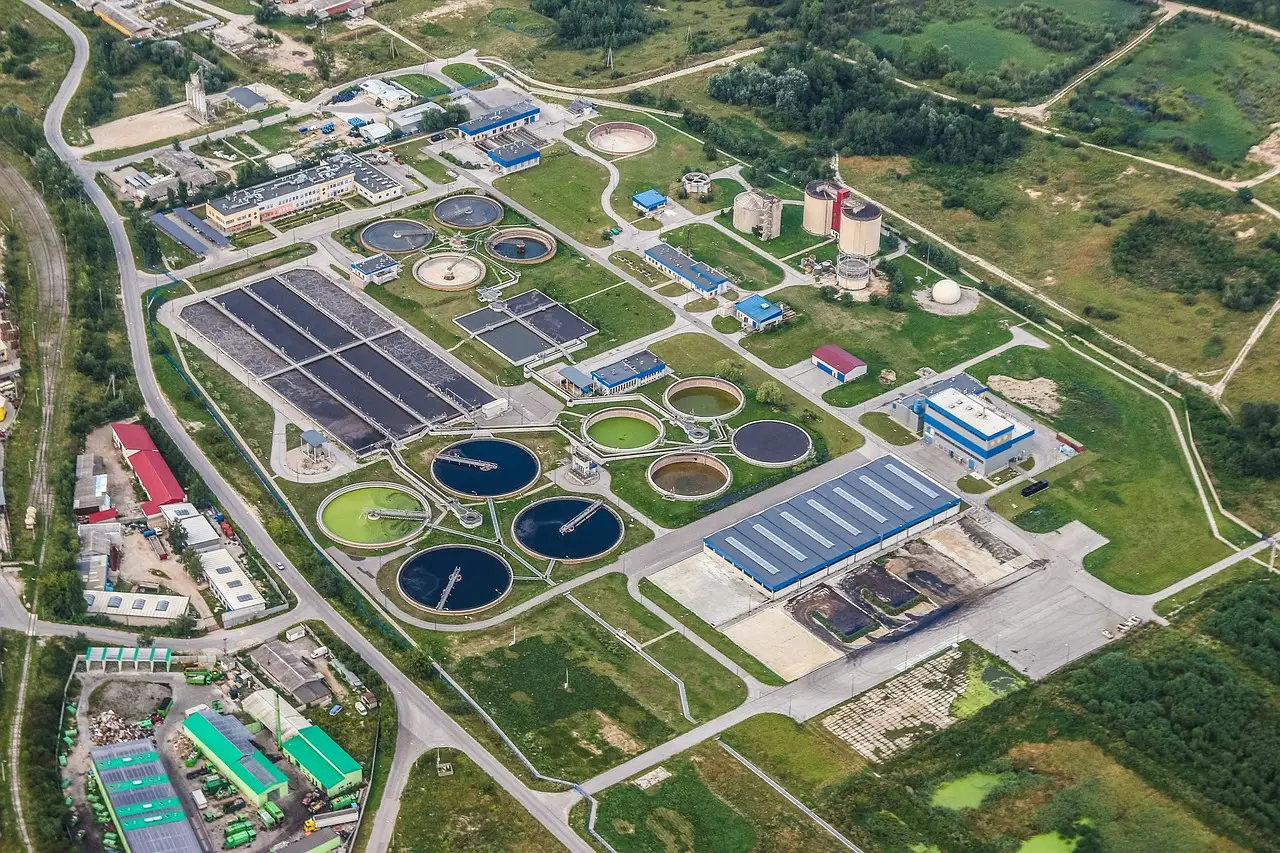
A single industrial hub proposed for New Clark City in Tarlac would consume 65 to 90 million liters of water every day — roughly the combined daily household water use of more than 700,000 residents across Davao City's 15 most populated barangays. That figure sits at the center of a new warning from an environmental policy group as the Philippines prepares to join Pax Silica, a United States-led initiative to secure the global supply of minerals, technologies, and manufacturing capacity for artificial intelligence and semiconductors.
The statement was issued by the Davao City-based Interfacing Development Interventions (IDIS), whose Executive Director, Atty. Mark T. Peñalver, is listed as the signatory. The group's central question is blunt: "Security for whom? Prosperity for whom? And at whose expense?"
What is Pax Silica?
Pax Silica aims to strengthen supply chains for powerful technology-producing countries by securing access to critical minerals, expanding manufacturing, and building industrial infrastructure. For the Philippines, participation means opening its mineral resources — nickel, copper, and other industrial materials — to foreign partners while hosting mineral processing and advanced manufacturing facilities. The proposed 16.2-square-kilometer industrial hub in New Clark City is expected to become a major component.
The government presents the arrangement as a source of investment, jobs, and technological advancement. IDIS does not dispute that such benefits appeal to any developing country. Instead, the group argues that the initiative is designed chiefly to secure resources for foreign economies, and asks whose interests will prevail when those demands conflict with the needs of Filipinos.
How much water are we talking about?
The water comparison anchors the group's case. The Bases Conversion and Development Authority (BCDA), IDIS notes, projects the hub's daily water requirement at 65 to 90 million liters.
To make that concrete, IDIS compares it with Barangay Catalunan Grande in Davao City. The barangay covers 16.03 square kilometers — almost exactly the land area of the proposed hub — and houses 42,868 residents. Their estimated residential consumption is only 4.3 to 5.6 million liters per day. One industrial hub, in other words, could use as much water as 12 to 21 Catalunan Grandes.
Scaled up, Davao City's 15 most populated barangays hold about 706,276 people — nearly 40 percent of the city's population — and together use an estimated 70.6 to 91.8 million liters daily for households. One hub matches that.
Proposals exist to store river water, harvest rainwater, recycle water, and build dedicated facilities. But IDIS counters that building infrastructure does not make resources free or unlimited, because the land, rivers, and materials for those facilities still come from the country.
What laws are already on the books?
IDIS cites a framework of existing protections:
- The 1987 Philippine Constitution, which states that natural resources belong to the Filipino people and must remain under the State's full control.
- The Philippine Mining Act (Republic Act No. 7942), regulating extraction.
- The Indigenous Peoples' Rights Act (Republic Act No. 8371), which protects ancestral lands and requires Free, Prior and Informed Consent — a process requiring genuine community agreement before development proceeds.
- Presidential Decree No. 1586, establishing the Environmental Impact Statement System.
- The Water Code (Presidential Decree No. 1067) and the Clean Water Act (Republic Act No. 9275), governing water use and protection.
Yet the group asks why communities still face environmental destruction, contested consent processes, and threats to livelihoods despite this legal architecture. It also cautions that post-mining rehabilitation cannot restore an intact ecosystem: a replanted site is not equivalent to a forest that took generations to form, and no promised rehabilitation guarantees that damage to watersheds and wildlife will be undone.
Development for whom?
The statement widens into a broader critique of governance: billions spent on flood-control projects while communities still flood, public funds lost to corruption, and unpreparedness for El Niño. It also cites reports that communities were concealed behind tarpaulins during preparations for the ASEAN Summit, suggesting people were treated as something to hide from foreign dignitaries.
IDIS closes with a demand rather than a compromise: development built by Filipinos, for Filipinos, with resources and sovereignty treated as non-negotiable. "Our natural resources are not bargaining chips, our communities are not expendable, and our sovereignty is not for sale," the statement reads, closing under the hashtag #RejectPaxSilica.
via mindanaotimes.com.ph (Source)
More from Priya Raman
Show full bio
Senior reporter covering people, launches and day-to-day practice in general science news at SciBeat.
432 articles
Nearby plates
- 39 Countries Now Back Declaration to Triple Nuclear Energy
- The Data Centre Problem Bigger Than Water or Power: the Money
- Water-Based Method Separates Zirconium and Hafnium Five Times Better
- Africa Launches $7.6 Million Urban Resilience Facility at COP31
- 6% of Montreal's Mapped Area Sends Half Its Business Food Waste to Dump