Plate Nº 67 · recorded November 17, 2026
Space & AstronomyReported finding
X-Rays Catch a Hidden Feeder Behind a Giant Star's 27 Eruptions
Chandra caught AT 2016blu firing X-rays 100 times above baseline during a March 2026 flare, pointing to a neutron star or black hole stripping gas from the giant star.
By James Calloway4 min read707 words
In brief
- AT 2016blu, a star of at least 33 solar masses in galaxy NGC 4559, produced 27 visible outbursts between 2012 and 2026 on a rough 113-day cycle.
- During a March 2026 eruption, Chandra measured the source at least 100 times brighter in X-rays than in 2001-2002 observations.
- The findings, published in The Astrophysical Journal, mark the first X-ray detection during an eruption of this kind.
- The proposed companion — either a neutron star or small black hole — remains unidentified.
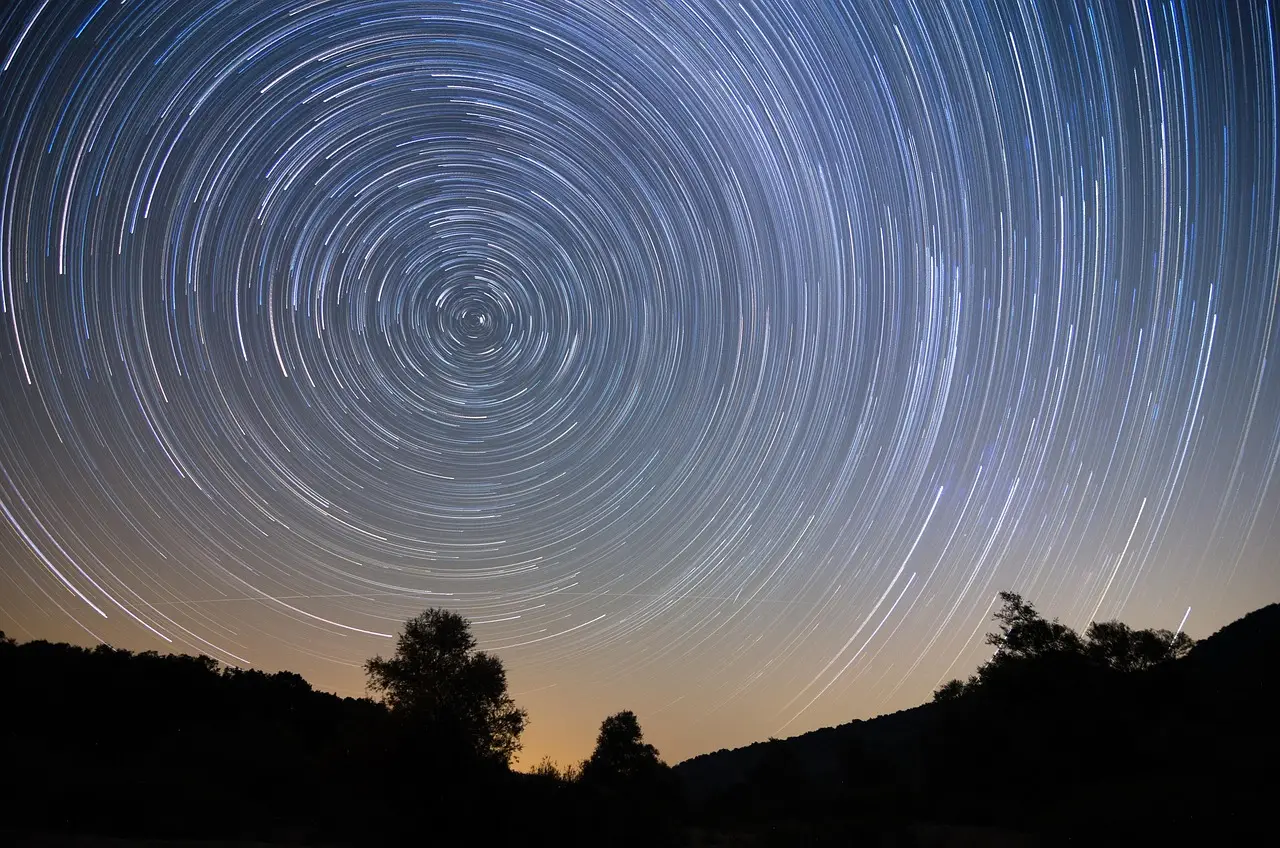
A giant star 30 million light-years away blasted out X-rays at least 100 times brighter than its usual level during a March 2026 eruption — and NASA's Chandra X-ray Observatory caught it in the act. The spike, researchers say, points to a possible hidden companion: a dead star or small black hole quietly pulling gas off its giant neighbor.
That's the claim. It comes with gaps, and we'll get to them. But the detection itself is a first, and it gives astronomers a new tool for a class of outbursts they had mostly studied only in visible light.
What did Chandra actually see?
The star, called AT 2016blu, lives in the spiral galaxy NGC 4559. It's a monster — at least 33 times the mass of our Sun — and it refuses to behave. Astronomers logged 27 visible outbursts between 2012 and 2026, caught by automated surveys and, notably, by amateur astronomers. Those observations revealed a rough rhythm of one flare every 113 days.
That rhythm mattered. It let the team schedule an X-ray observation around the next expected flare. When Chandra looked during the March 2026 outburst, the source was at least 100 times brighter in X-rays than in observations from 2001 and 2002 — a quiet-era baseline recorded years before anyone noticed the visible eruptions.
Chandra's sharp vision also did something ground-based telescopes couldn't: it separated AT 2016blu's signal from another X-ray source sitting nearby. Without that resolution, the detection would be murky.
How does a hidden companion explain this?
The team's explanation, published in The Astrophysical Journal, starts with an oval orbit. A neutron star — the crushed core left behind when a massive star dies — or a small black hole circles the giant star. Every 113 days or so, the companion swings close enough to steal gas.
Here's the mechanism, in plain terms. As the stolen gas falls toward the companion, it heats up violently — hot enough to produce X-rays. Gas surrounding the pair absorbs some of that energy and glows in visible light. One encounter, two kinds of brightness. That's the neat part of the model: it explains why the system flares in both X-rays and visible light at once.
It also explains survival. A supernova normally marks the end of a massive star's life. AT 2016blu has stayed in place through years of repeated eruptions. Repeated close passes by a companion, each siphoning a bit of gas, let the star flare again and again without destroying itself.
The researchers describe this as the first X-ray detection during an eruption of this kind. It also places AT 2016blu among candidates for an unusually bright class of X-ray sources powered by matter falling onto a compact object.
What's still unknown?
Plenty. The companion's identity remains open. The data don't yet distinguish between a neutron star and a black hole — two objects with very different physics.
The fix is patience. Observing future eruptions in both visible light and X-rays could reveal how tightly the two signals track each other. That timing, in turn, could show whether a neutron star or a black hole best fits what Chandra saw.
Worth hedging: this is one well-timed observation built on a rough 113-day cycle. "Rough" is the operative word. Cycles drift, models get revised, and a single flare — however dramatic — doesn't settle what's orbiting that star.
What does this change for astronomy?
Until now, astronomers watching these giant-star eruptions had mostly visible light to work with, which made it hard to tell whether a star was flaring on its own or whether something else was feeding on it. X-rays cut through that ambiguity. Gas falling onto a compact object heats in a way self-flaring stars don't replicate, so an X-ray signal during an eruption is a fingerprint of a companion.
Expect more of this. NASA's Chandra X-ray Center and the University of Virginia, whose researchers contributed to the work, note that the method can now be applied to other recurring flares. Each new eruption is a chance to test the model — or break it.
via knowridge.com (Source)
More from James Calloway
Show full bio
Staff writer covering regulation, policy and their impact on general science news at SciBeat.
474 articles
Nearby plates
- A Giant Star Flares Every 113 Days. Chandra May Have Found Why
- Chandra Catches Hidden Black Hole Fueling 'Supernova Impostor'
- Black Hole Caught Faking 27 Supernovas in a Nearby Galaxy
- Supernova SN 2026ahvu Flares Up Just 50 Million Light-Years Away
- Black Hole Winds Pack 100 Times More Power Than Scientists Expected