Recorded November 19, 2026
Space & AstronomyReported finding
A Jupiter-Sized Planet Vanished From View in Seven Years
TOI-2535 b, a hot Jupiter 1,100 light-years away, stopped crossing its star by March 2026. Simulations point to an unseen Saturn-mass companion tilting its orbit.
By Nathan Brooks4 min read779 words
In brief
- TOI-2535 b, a Jupiter-sized hot Jupiter 1,100 light-years away, went from detection in 2019 to no detectable transit by March 2026.
- Simulations of 300,000 planetary arrangements point to an unseen companion at least as massive as Saturn.
- The planets' orbital planes are tilted at least 5 degrees apart, causing a slow wobble that ended the transits.
- Lead author Samuel Yee of UCLA says transits should return in roughly 30 to 50 years.
- The study was published in The Astrophysical Journal Letters.
By Nathan Brooks
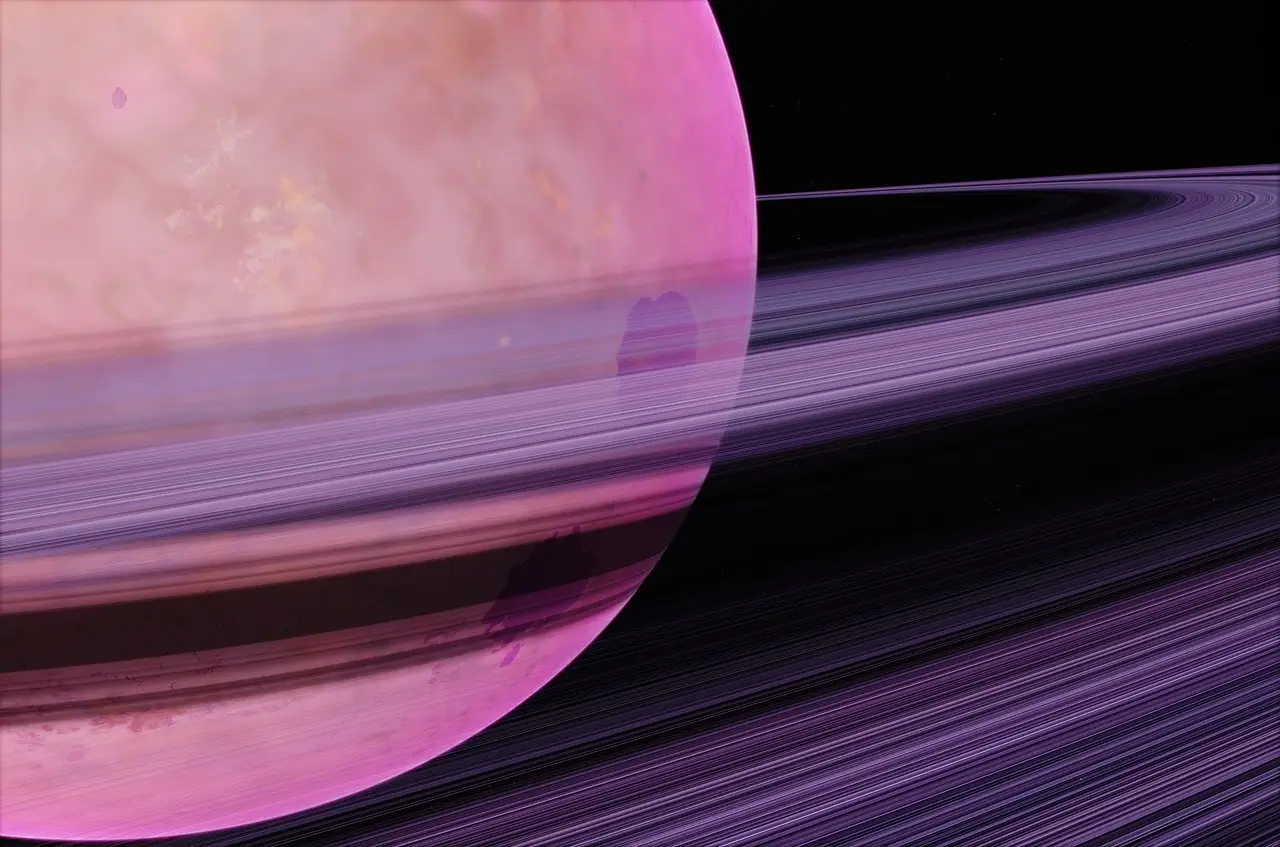
A planet roughly the size of Jupiter disappeared from astronomers' view in just seven years. Spotted in 2019 as it crossed its star 1,100 light-years away, it made its last detectable transit by March 2026.
The planet, TOI-2535 b, hasn't been destroyed. Something tilted its orbit just enough that it no longer passes in front of its star from Earth's vantage point — and the prime suspect is another planet nobody has ever seen.
What did astronomers actually watch vanish?
TESS, NASA's Transiting Exoplanet Survey Satellite, first caught the planet in 2019. The telescope hunts for tiny dips in a star's brightness as planets pass in front of it, much as a moth briefly dims a lamp. TOI-2535 b blotted out a sliver of starlight every 8.24 days, orbiting a star slightly smaller than our Sun. That tight, fast orbit — under eight and a quarter days per lap — makes it a "hot Jupiter," a gas giant roasting close to its star.
The first sign of trouble was timing. The crossings ran either 6 hours late or 6 hours early, hinting that another massive body was tugging on the planet. Then each transit grew shorter and shallower, meaning the planet was crossing progressively closer to the star's edge. By 2026, careful searches turned up nothing.
"The planet's orbit is tilting so quickly that its transit disappeared while we were watching," Samuel Yee, the study's lead author and an astrophysicist at UCLA, said in a statement.
The geometry is simple. An orbit only needs to shift slightly out of alignment with Earth for the planet to stop crossing the star's face from our line of sight. Picture a race car circling a track from the grandstands — shift your viewing angle a little and the car vanishes behind a wall every lap. The car keeps racing; you just can't see it.
Who is the invisible culprit?
Yee's team tested 300,000 possible planetary arrangements against the observations. They then tracked 100 promising configurations forward for a simulated million years. About two-thirds eventually went unstable, with planets swinging dangerously close to one another.
The durable survivors all pointed to the same culprit: a companion at least as massive as Saturn, orbiting near TOI-2535 b. The models also suggest the two planets' orbital planes are tilted by at least 5 degrees relative to each other, and their mutual gravity makes those planes wobble slowly like spinning tops.
For context, most planets in our solar system orbit in nearly the same plane. Mercury is the outlier, tilted 7 degrees relative to the ecliptic.
Every stable configuration shared one more feature: orbital resonance. The planets' orbital periods follow simple numerical relationships, such as 2:1 or 3:2 — one planet completes two orbits for every three by its neighbor. That gravitational rhythm can prevent dangerously close encounters and keep the system stable despite the odd tilts.
Still, the reconstruction isn't certain. The system is too far to observe directly, the data can't pin down exactly where the companion orbits, and even a third planet remains possible. More precise measurements of how the star wobbles under its planets' gravitational pull could settle the question.
How did the system get so twisted?
Hot Jupiters probably form farther out and move inward later. Having another giant nearby suggests TOI-2535 b migrated through a gas disk rather than arriving after a violent gravitational encounter. Disk migration can also naturally trap two planets in resonance when one moves inward faster than the other.
"They likely migrated in through the protoplanetary disk," Yee told ScienceAlert. "However, how their inclinations got excited remains an open question."
That's the catch. Gas disks tend to keep orbits neatly aligned, not tilted at odd angles. Something disturbed this system, either during formation or afterward — perhaps a passage through orbital resonance that amplified the tilts, or changes in the young star or its disk. The researchers can't yet say which, if either, happened.
Astronomers have seen the reverse trick before: a planet in the TOI-4504 system began transiting after its shifting orbit brought it into view. TOI-2535 b is the first confirmed case caught going the other way, its transits carried out of sight.
The disappearance may not be permanent. Researchers expect the transits to return in roughly 30 to 50 years, and the invisible companion might reveal itself even sooner. Until then, they're left with a vanished planet, a suspected unseen culprit, and a mystery that could take decades to unravel. The study appears in The Astrophysical Journal Letters.
via zmescience.com (Source)
More from Nathan Brooks
Show full bio
Market editor covering companies, deals and strategy in general science news at SciBeat.
563 articles
Nearby plates
- A Giant Planet Vanished From View — And a Hidden Neighbor May Be Why
- First known “disappearing planet” traced to an orbit-tilting neighbor
- Jupiter-Sized Exoplanet Vanishes From View 1,000 Light-Years Away
- Astronomers Watch a Hot Jupiter Vanish From View Mid-Observation
- Astronomers Watch an Exoplanet's Transits Vanish for the First Time