Plate Nº 80 · recorded November 13, 2026
Biology & EvolutionReported finding
Asian Elephant Social Networks Fracture After 12 Years of Decline
A 12-year study of 440 female Asian elephants in Sri Lanka shows slow population losses triggered sudden collapse of large social communities into isolated groups.
By Marcus Bennett3 min read665 words
In brief
- UC San Diego researchers studied more than 440 wild female Asian elephants over 12 years at Udawalawe National Park, Sri Lanka.
- Gradual population losses crossed a tipping point, shifting large connected communities into smaller, isolated groups.
- The study was led by postdoctoral researcher Anastasia Madsen and published in Science (2026), DOI 10.1126/science.aef6714.
- The park spans 119 square miles (308 square kilometers); likely drivers include poaching, human conflict, habitat disruption and food scarcity.
- Researchers warn the social fragmentation may be hard to reverse once the tipping point is passed.
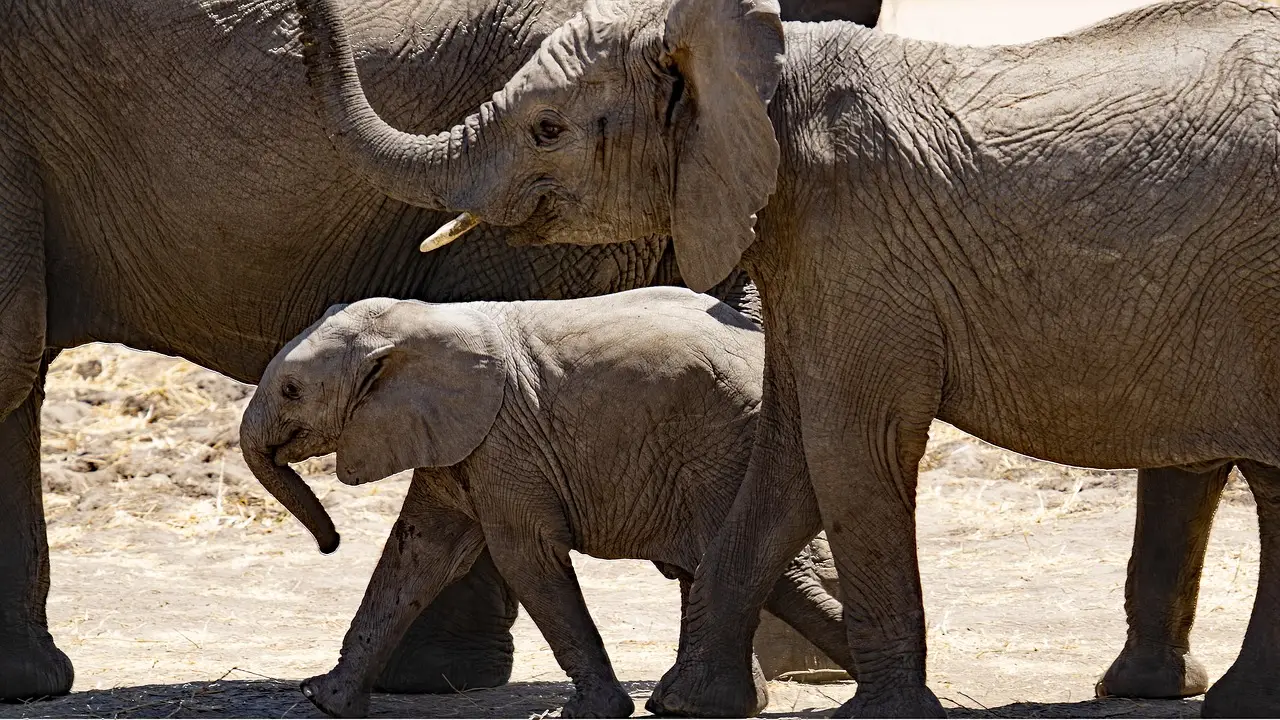
Twelve years of field data from more than 440 wild female Asian elephants show that gradual population losses can push elephant societies past a tipping point, abruptly shattering large, tightly connected communities into small, isolated groups.
The study, published in Science on the work of University of California San Diego biologists, tracked elephants at Udawalawe National Park in Sri Lanka — a 119-square-mile (308-square-kilometer) reserve. Postdoctoral researcher Anastasia Madsen led the analysis from the laboratory of Associate Professor Shermin de Silva in the Department of Ecology, Behavior and Evolution.
What did the researchers find?
The team observed a slow demographic drain: elephants left the population, likely died, or simply never arrived to replace them. For years the social fabric held. Then it didn't.
"We found that gradual accumulation of losses from turnover preceded sudden change in the social networks among females in a wild population of Asian elephants," the researchers wrote in the study.
In plain terms, the population crossed a critical threshold. Large, densely connected communities gave way to smaller groupings with far fewer links between them.
"We see individual elephants leaving and possibly dying at accelerating rates, but new individuals are not coming into the population," Madsen said. "With fewer individuals in the population, those who are left will naturally have fewer relationships. However, the remaining elephants are also changing their relationships with each other."
Why does fragmentation matter for elephants?
Asian elephants, like humans, depend on durable social networks. The animals use their connections to find food, share information and raise their young. When those links thin out, each remaining elephant loses practical support, not just company.
De Silva drew a comparison many readers will recognize: "We can probably all relate to the feeling of social isolation brought about, paradoxically, with the advent of digital communications that seem to remove the physical constraints of needing to be in the same place at the same time."
The core lesson, she said, is older than any app. "For many social species, which includes ourselves as much as elephants, we have to remember that social connectivity is very much a matter of sharing space and building relationships throughout our lives. Crucially, in order to have resilient communities, we need to be able to replace the relationships that are lost over time."
What caused the losses?
The researchers point to several pressures already documented in elephant populations:
- Deaths from poaching
- Deaths from conflicts with humans
- Disrupted habitat connectivity
- Reduced food availability as ecological conditions change across the park and its surroundings
The study documents the pattern of fragmentation; the exact weighting of each cause remains a question for future work.
Can the damage be reversed?
Probably not easily, the researchers caution. Tipping points of this kind tend to resist reversal.
"In general, we need to be more aware of these types of tipping points where we see sudden shifts after changes have been slowly building up," Madsen said. "Once we move past the tipping point, it's much harder to go back to previous states."
The findings give conservation biologists a new diagnostic tool. Rather than waiting for population counts to crash, researchers can watch social structure itself for early warning signs.
"We are gaining more evidence that studying social patterns is an important tool for us to see when things are going wrong in natural populations and, hopefully, to be able to do something about it," Madsen said.
The study also feeds an ongoing debate about how to protect elephants as humans expand into the areas where the animals historically thrived. Future research will build on the dataset to understand how animal societies shift, how to detect such transformations, and what factors make populations vulnerable.
The paper is Anastasia E. Madsen et al., "Increased demographic turnover and isolation precede social fragmentation in Asian elephants," Science (2026). DOI: 10.1126/science.aef6714.
For elephants, as for people, community is something you rebuild one relationship at a time — or lose the same way.
via phys.org/rss-feed/ (Source)
More from Marcus Bennett
Show full bio
News editor covering regulation, policy and their impact on general science news at SciBeat.
393 articles
Nearby plates
- Elephants synchronize rumbles during group decisions, study finds
- Fish Evolved Schooling 60 Times—and Lost It 320 Times
- Wild elephants use 40+ intentional gestures to say 'move away'
- Zoos Rarely Rearrange Collections When Species Risk Shifts
- Tracking 4,581 Animals Reveals a Hidden Human Effect on Wildlife