Plate Nº 52 · recorded November 14, 2026
Space & AstronomyReported finding
At 24,600 mph, 'Flames Soon Engulfed Us': An Artemis II Astronaut's Splashdown
Artemis II astronaut Jeremy Hansen describes his capsule engulfed in flame at 24,600 mph, in a new first-person account of the mission's riskiest moment: splashdown in the Pacific.
By Priya Raman4 min read767 words
In brief
- The Artemis II crew entered Earth's atmosphere at 7:53 p.m. on April 10, 2026, at over 10 km per second (24,600 mph).
- The crew traveled more than 250,000 miles from Earth — farther than any humans before them.
- Heatshield temperatures outside the Orion capsule exceeded 2,500°C during re-entry.
- Splashdown speed was slowed to 27 km/h by three main parachutes, each 35 meters in diameter.
- The account appears in 'Earthrise' by John Larsen with Jeremy Hansen (Hanover Square Press, 2026).
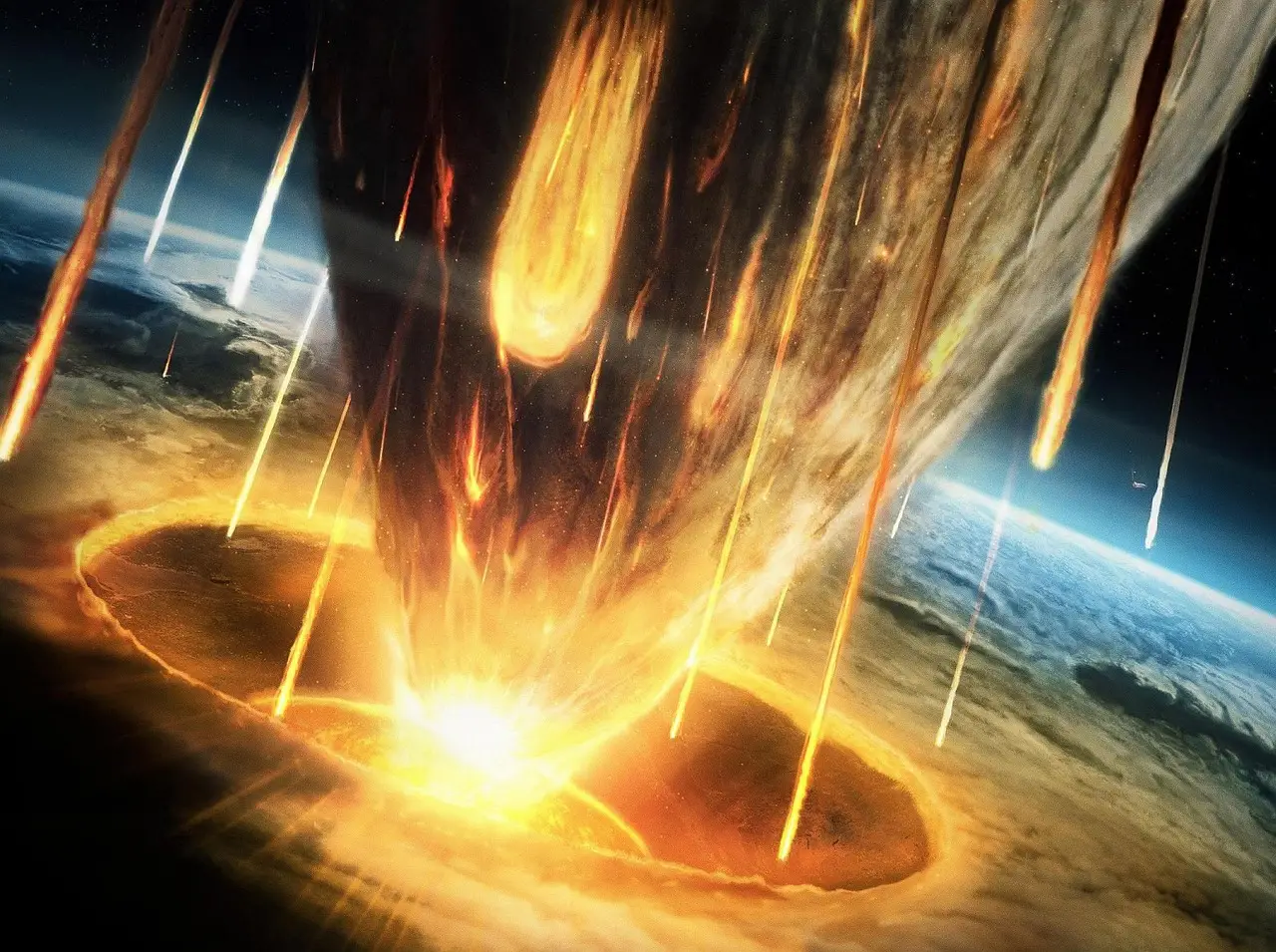
At 7:53 p.m. on April 10, 2026, the Artemis II crew slammed into Earth's atmosphere at more than 10 kilometers per second, wrapped in a fireball the capsule's sole Canadian astronaut describes as nothing short of breathtaking. Jeremy Hansen's first-person account of that plunge appears in "Earthrise: Inside Artemis II, the Groundbreaking Human Mission into Deep Space" (Hanover Square Press, 2026), co-written with John Larsen and excerpted this week.
The stakes were absolute. After nine days in space, the four crewmembers had traveled more than 250,000 miles (400,000 kilometers) from Earth — farther than any humans had ever gone. Splashdown would end humanity's first crewed lunar mission in more than 50 years, and it was the most dangerous phase of the flight.
What happened in the final half hour?
Exactly thirty minutes before splashdown, Mission Control initiated the crew module raise burn: a nineteen-second firing of small thrusters built into the Orion capsule, the first and only use of those engines on the mission. The maneuver slightly shallowed the entry trajectory, placing the capsule in the correct spot while adding distance from the jettisoned European Service Module. Hansen tightened his straps.
Then came entry. The thrusters fired almost constantly to stabilize the capsule — "loud thuds, as if Thor himself were hammering on our spacecraft," Hansen writes — as G-forces built up and scrubbed away the velocity the rocket had added nine days earlier.
Plasma formed at the windows within seconds, and the heat grew so intense that flames engulfed the vehicle, shifting from red to a bright, bluish-green, pulsating light. "It was breathtaking, the bright colors igniting our senses," Hansen recalls.
He admits the absurdity of the situation registered. "Astronauts must have a screw loose to do this," he writes. "Nobody in their right mind would strap themselves inside a metal canister that itself was sitting inside a giant fireball."
How hot and how fast?
Only centimeters of heatshield and aluminum separated the crew from temperatures exceeding 2,500°C outside. The cabin's internal temperature also rose, an increase engineers call "thermally benign" — Hansen says he could not feel it through his thermally controlled garments.
The plunge lasted six long minutes before the flames ceased. G-forces peaked at nearly four times Earth's gravity — a load Hansen had previously endured for more than five minutes in NASA's centrifuge trainer. Re-entry, he writes, ranks "absolutely on the short list of the most incredible experiences of my life."
Communications returned at exactly 8:00 p.m. "Integrity, Houston. Comms check, post-blackout," came the call. Mission commander Reid Wiseman replied: "Houston, Integrity. We have you loud and clear."
Why were the parachutes the hardest part?
Hansen did not consider himself safe yet. Without the three main parachutes, the capsule would strike the ocean as "a chunk of metal" at high speed, with survival chances "somewhere between minimal and non-existent."
He had reason for private worry beyond his own skin. His wife, Catherine, later told him she had a very bad feeling about the heatshield; when the crew emerged from blackout, she began crying and did not even focus on the parachutes. Hansen, meanwhile, sent his family a silent "don't worry, gang" message.
The sequence unfolded in stages:
- At 7,100 meters altitude, timed explosions released small chutes that pulled off the cover for two drogue chutes (parachutes designed to slow the capsule enough for the main canopies to open without ripping). The capsule jerked the crew "back and forth like a ride at the fair."
- One minute later, at 1,500 meters, the drogues cut loose.
- The three main parachutes then deployed in succession, blossoming slowly so they would not tear — each a red-and-white nylon canopy 35 meters in diameter.
"Integrity, we see three good-looking parachutes," the CAPCOM confirmed. The capsule's descent slowed to 27 kilometers per hour.
That, Hansen writes, was the moment of release. Mission specialist Christina Koch agreed; the two grabbed one another's hands in celebration.
What is the book behind the account?
"Earthrise" is written by John Larsen, a former Royal Canadian Air Force public affairs officer and Calgary-based writer, drawing on extensive interviews with Hansen. The publisher describes it as a record of what unity, teamwork and bold belief can achieve — the story of the first human journey into deep space in half a century, told from inside the fireball.
For Hansen, one line captures the experience of falling through the sky as a meteor: "I loved every second of it."
via livescience.com/feeds/news (Source)
More from Priya Raman
Show full bio
Senior reporter covering people, launches and day-to-day practice in general science news at SciBeat.
395 articles
Nearby plates
- NASA Confirms Artemis II Heat Shield Performed as Designed
- NASA Targets 2028 Moon Landing With Overhauled Artemis Plan
- Artemis III Will Rehearse Moon Landings in Earth Orbit in 2027
- Starship reaches Earth orbit for the first time — with 26 satellites and an engine failure
- NASA Reworks Moon Lander Plans for 2028 Crewed Landing