Plate Nº 89 · recorded November 14, 2026
Space & AstronomyReported finding
Starship Aims for First-Ever Catch After Booster Abort Marries Flight 15
SpaceX's 15th Starship test lost the booster catch to a guidance abort over the Gulf, but the healthy spacecraft stayed on course for a historic Saturday catch in Texas.
By James Calloway4 min read791 words
In brief
- Flight 15 launched a 124-meter Starship on Friday; the booster aborted its catch over a guidance issue and self-destructed over the Gulf of Mexico.
- Starship was set to orbit Earth 14 times, with a catch attempt at around 3:20 p.m. (2120 GMT) Saturday after 22+ hours in flight.
- The mission deployed 26 Starlink satellites.
- SpaceX says it can now produce a spaceship every two weeks and a booster every four.
- NASA relies on Starship as the Artemis lunar lander; in-orbit fuel transfer remains unsolved.
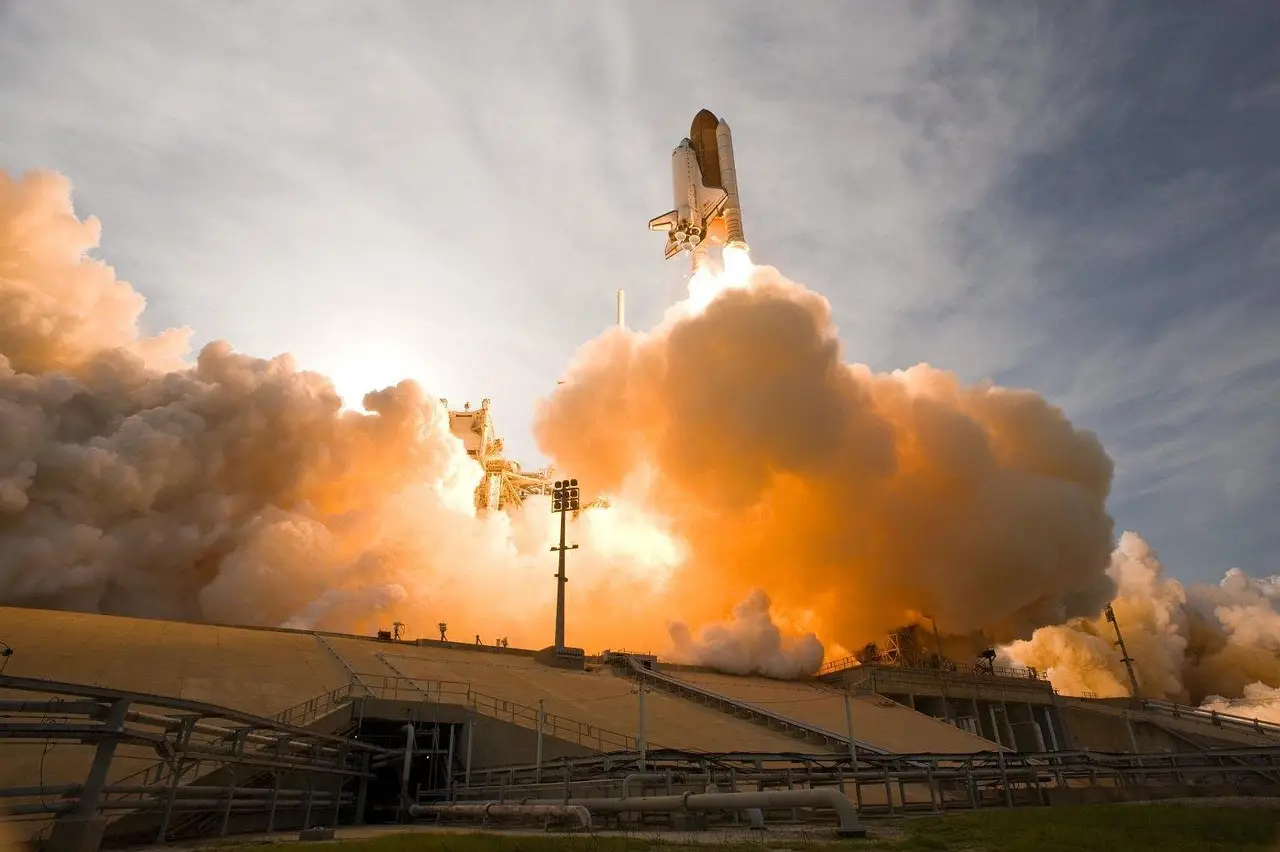
SpaceX's 124-meter (407-foot) Starship rocket lifted off Friday on its 15th test flight, watched a self-detected guidance glitch scrap the booster catch, and left the spacecraft itself healthy in orbit and cleared for a Saturday splashdown-and-catch attempt in Texas.
That's the split verdict. One half of the mission failed. The other half may still make history.
The flight was originally meant to deliver a groundbreaking twin capture — both the Super Heavy booster and the Starship upper stage caught midair back at the launch site. SpaceX had pulled off booster catches three times before, but never the ship. Nailing both would have marked a milestone in the industry's decades-long push toward fully reusable rockets, hardware that can slash mission costs and enable frequent launches.
That prize slipped away minutes after Friday afternoon's liftoff from Starbase, Texas.
What went wrong with the booster?
After the two stages separated, the Super Heavy booster headed for a capture at Launch Pad 2, SpaceX spokesman Dan Huot said. Near the end of its descent, something in the guidance system tripped a safety switch.
"The booster aborted itself for a GNC (guidance, navigation and control) issue that it detected," Huot told reporters. In plain English: the onboard computers that steer the booster concluded they couldn't guarantee a safe landing and pulled the plug.
The booster diverted to the Gulf of Mexico, just offshore from the launch site, and automatically self-destructed before hitting the water. No injuries, no pad damage — but no catch either.
What's still alive in the mission?
Plenty. The Starship spacecraft, which gives the whole rocket system its name, was circling the planet on a path that would take it around Earth 14 times before returning.
"Starship and its heat shield are healthy," SpaceX said roughly seven hours into the mission. Huot echoed that: "We're not tracking any issues right now with the vehicle or with the range for our return, so everything continuing to look good."
The ship also delivered real payload. Friday's launch carried 26 satellites into orbit, joining others in Musk's Starlink internet constellation — the first operational work some versions of Starship are built for. Other iterations are designed to fly people to the moon and Mars.
Clayton Swope, an aerospace expert at the Center for Strategic and International Studies, called the mission a "mixed bag so far" after the missed booster catch. Still, he noted: "At least the Starship made it to orbit, like on the last test flight."
NASA has a stake here too. The agency is counting on Starship as the lunar lander for its Artemis program, and administrator Jared Isaacman congratulated SpaceX on Friday for "another spectacular launch" — pointedly without mentioning the booster disappointment.
How do you catch a falling starship?
Carefully. SpaceX planned the return for around 3:20 p.m. (2120 GMT) Saturday, after more than 22 hours of flight. The catch is far harder than the booster's, because the spaceship falls much faster and from a much higher altitude.
Like those three previous Super Heavy recoveries, Starship is meant to perform a controlled descent and nestle between two mechanical "chopstick arms" at the launch site.
"We'll only go for it if the ship passes all of these system checks and decision gates along the way, and there are lots of them," SpaceX commentator Kate Tice said.
And if a check fails? SpaceX has contingency plans to shorten the flight and plunge the ship into the Pacific Ocean rather than risk losing control over land. Given what the guidance computer did to the booster, that fallback isn't hypothetical caution.
What does this change for SpaceX's bigger plans?
Not as much as a clean double catch would have — but more than a casual reading suggests. Musk's Falcon rockets, partially reusable, already transformed the sector, launching satellites and flying astronauts to the International Space Station. Starship is the fully reusable successor, and it remains behind schedule after years of delays.
One problem is still unsolved: transferring fuel to the spaceship while in orbit, a hard requirement for any moon or Mars journey. No catch, however elegant, fixes that.
Money isn't the constraint. After a June stock market debut that raised about $85.7 billion, SpaceX is pouring cash into production and launch capacity. During a Friday tour of its million-square-foot (93,000-square-meter) Starbase factory, officials said the company can now build a spaceship every two weeks and a booster every four.
The buildup, in short, is racing ahead of the engineering. Whether Saturday's catch happens or not, that gap — between factory output and flight-proven reliability — is the number to watch.
via phys.org/rss-feed/ (Source)
More from James Calloway
Show full bio
Staff writer covering regulation, policy and their impact on general science news at SciBeat.
388 articles
Nearby plates
- SpaceX Launches Starship Flight 15, Aborts Booster Catch, Eyes Historic Ship Return
- Starship reaches orbit, but booster explosion ends SpaceX double-catch bid
- SpaceX Aims to Catch Both Starship Stages for the First Time
- SpaceX Readies Double Catch of Starship Booster and Ship on Flight 15
- SpaceX Aims for First-Ever Orbiter Catch as Starship Flight 15 Launches