Plate Nº 23 · recorded November 14, 2026
Space & AstronomyReported finding
Starship reaches orbit, but booster explosion ends SpaceX double-catch bid
SpaceX's Starship reached orbit and deployed 26 Starlink satellites, but its booster exploded offshore, costing the company its first attempt at a double midair catch.
By James Calloway4 min read760 words
In brief
- Starship reached orbit Friday, but its booster diverted offshore, fell into the Gulf of Mexico and exploded.
- The 171-foot spacecraft will attempt the first-ever return to the launch pad from orbit on Saturday, in a flight lasting up to 22 hours.
- Starship deployed 26 advanced Starlink satellites and plans 15 orbits at about 170 miles (275 km).
- The full rocket stands 407 feet (124 meters), the world's biggest and most powerful.
- NASA is deciding a year before Artemis IV whether astronauts land via Starship or Blue Origin's Blue Moon; a moon touchdown could come as early as 2028.
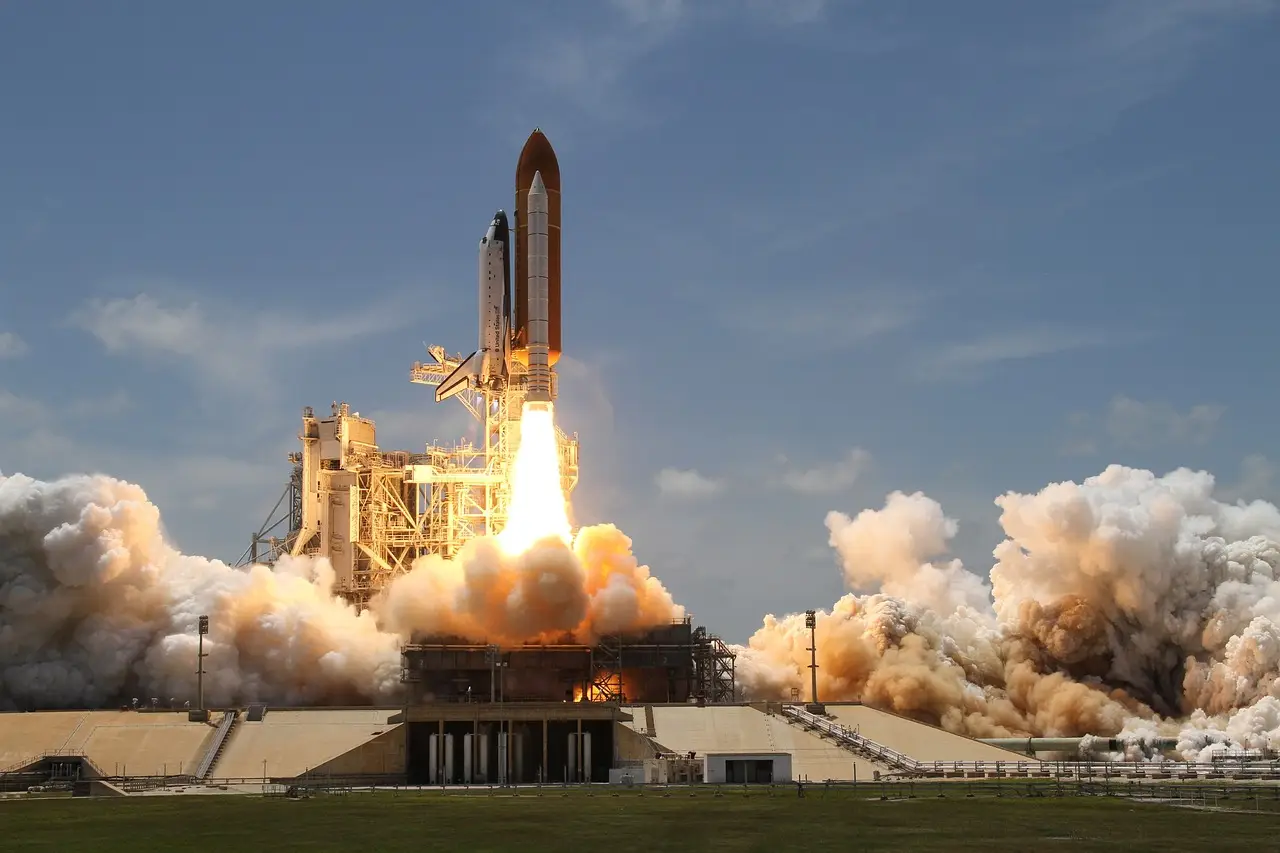
SpaceX flew its giant Starship into orbit Friday, but the booster meant to fly back to the Texas launch pad fell into the Gulf of Mexico and exploded instead. The miss cost the company its first shot at catching both stages of the world's largest rocket in midair, a feat no one has pulled off anywhere. The spacecraft itself carried on, and it will attempt a return to the pad Saturday, barring further trouble, in a flight that could last as long as 22 hours.
This is the first time Starship will try coming back to its launch site from orbit. Mechanical arms attached to the launch tower are supposed to pluck the 171-foot (52-meter) spacecraft out of the air. Nobody has ever recovered a rocket's upper stage this way.
What happened to the booster?
Instead of returning to the pad after liftoff, the first-stage booster diverted to a point offshore, where it hit the water and blew up. SpaceX gave no explanation for what went wrong. The miss stung precisely because the company had already pulled off three booster grabs at its sprawling Starbase complex near the U.S.–Mexico border.
"Well, that certainly isn't the news that we had hoped to hear for today," SpaceX launch commentator Kate Tice said during the broadcast, adding that the diversion was in line with the many rigorous safety checks protecting the pad.
Friday also marked the first catch attempt for the upgraded booster, which stretches 236 feet (72 meters) and serves as the production model for moon and Mars expeditions. Stack the two stages together and you get 407 feet (124 meters) — the tallest, most powerful rocket flying.
What does the failure actually change?
Not as much as you'd think, at least for now. The core goal — retrieving every single piece of the rocket for reuse — remains unmet, but the spacecraft is still in play. If it lands Saturday, SpaceX will claim half the prize. Elon Musk argues that full, fast reusability is the only path to the steady launch rates needed for moon bases and crewed Mars missions.
The history here counsels patience. The spacecraft portions of all 14 previous Starships ended up in the ocean, some by design, some as flaming wreckage. During the first full-scale test in 2023, multiple engines failed and the tumbling rocket triggered its own self-destruct system. The September test — the first to reach orbit — didn't even attempt recovery.
A busy orbit, then a finale
Shortly after reaching orbit, Starship deployed 26 of the company's most advanced Starlink satellites. The plan calls for 15 laps around Earth at roughly 170 miles (275 kilometers) before the spacecraft heads home for Saturday's grand finale.
"We are looking forward to some of that on-orbit Starlink capability on Artemis III," NASA Administrator Jared Isaacman wrote on X after Starship reached orbit.
Why full reusability matters
SpaceX's smaller Falcon rockets, which carry NASA astronauts to the International Space Station and haul Starlinks from both Florida and California, are only partly recyclable. "They are still not fully reusable. We still throw that second stage away every single flight. Starship, we're going to catch both the first stage and second stage," SpaceX vice president of launch Kiko Dontchev said ahead of Friday's flight.
Scaled-up infrastructure plus full reusability, Dontchev told a NASA tech summit at Kennedy Space Center last week, is "how you go from zero launches to 10 to 100 to 1,000 to 10,000 to 100,000." SpaceX plans to start launching Starships from Florida within a few months and from Louisiana in a few years. Musk wants Starship to eventually replace Falcons entirely.
The NASA stakes
NASA is paying SpaceX billions to land Artemis astronauts on the moon with Starships, though Jeff Bezos' Blue Origin is the other major contender. During next summer's Artemis III mission, astronauts will practice docking their capsule with a Blue Moon lander and then a Starship in Earth orbit — a rehearsal for a lunar touchdown as early as 2028. NASA expects to decide a year before the Artemis IV landing, which would be the first astronaut moonwalk in more than half a century, whether the moonwalkers ride Starship or Blue Origin's Blue Moon.
So one booster sits at the bottom of the Gulf, unexplained. The other half of the rocket is still circling overhead, one day from a catch that has never been tried. Saturday will tell us how close the future actually is.
via phys.org/rss-feed/ (Source)
More from James Calloway
Show full bio
Staff writer covering regulation, policy and their impact on general science news at SciBeat.
382 articles
Nearby plates
- SpaceX Launches Starship Flight 15, Aborts Booster Catch, Eyes Historic Ship Return
- Starship Reaches Orbit for First Time, Delivers 26 Starlink Satellites
- SpaceX Aims for First-Ever Orbiter Catch as Starship Flight 15 Launches
- SpaceX Aims to Catch Both Starship Stages for the First Time
- SpaceX Aims for First-Ever Double Catch of Starship's Two Stages