Plate Nº 10 · recorded November 9, 2026
Space & AstronomyReported finding
Blue Origin adds a third stage and a more powerful first-stage engine
Blue Origin's GS3 stage adds geostationary and lunar deployment options, while Northstar raises thrust and cuts mass and parts in a still-unflown engine program.
By Nathan Brooks4 min read753 words
In brief
- Blue Origin announced the GS3 third stage on Nov. 5, 2026; it uses one BE-7 engine.
- An unnamed government customer booked a GS3 cislunar mission targeted for 2028.
- Northstar targets 30% less mass and 50% fewer parts than BE-4, with 715,000 pounds-force of thrust.
- The standard 7x2 New Glenn stands 322 feet tall and targets 14.3 tons to GTO and 50 tons to LEO.
- After an April 19 satellite loss and a May 28 pad explosion, New Glenn’s fourth flight is expected in late 2026.
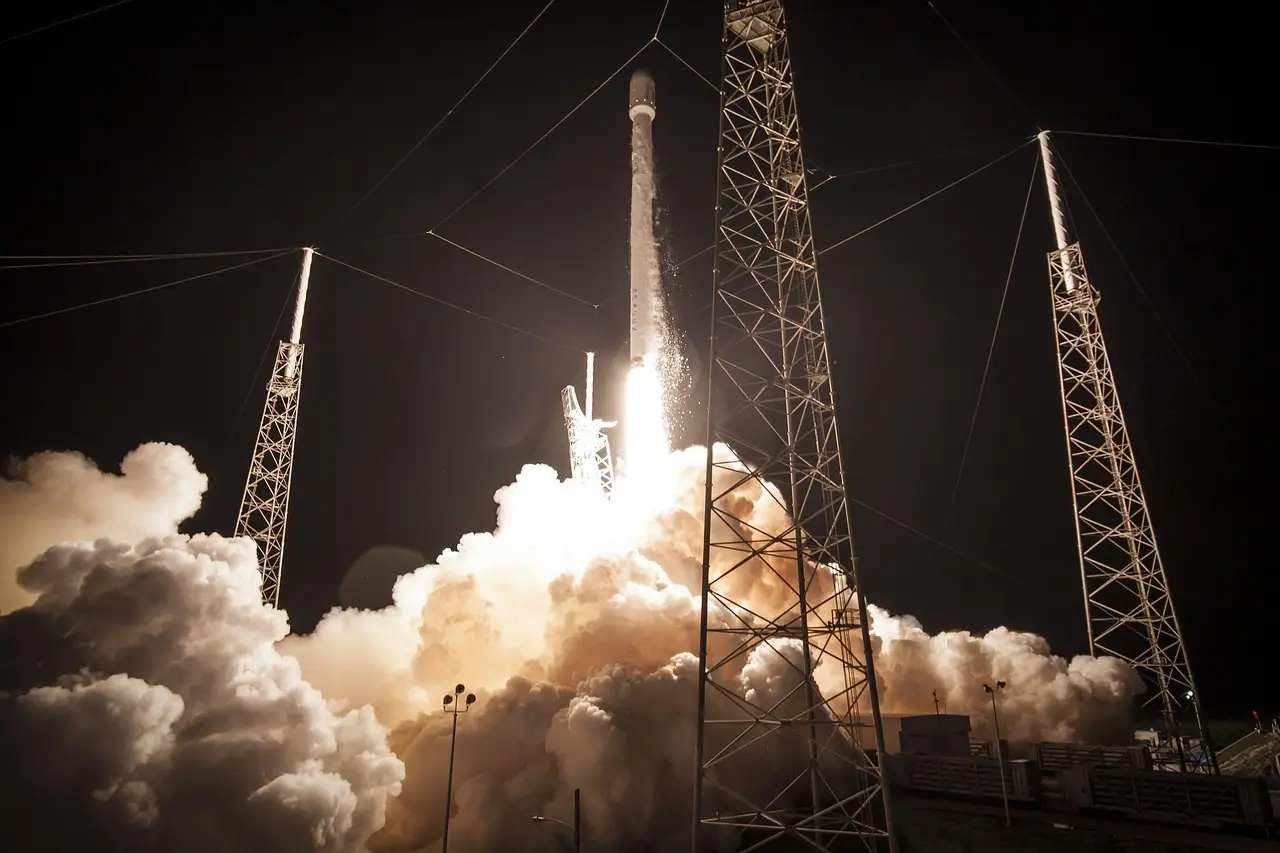
Jeff Bezos’s Blue Origin announced on Nov. 5, 2026, that it had developed a third stage for New Glenn and moved a higher-thrust first-stage engine into development testing. The two programs expand the rocket’s mission options, although Northstar has no announced first-flight date.
What can the third stage do?
Called GS3, the stage is designed to give New Glenn more capability and flexibility. Blue Origin said: “The third stage enables direct deployment of satellite constellations to GEO [geostationary orbit] and supports heavy-lift science and exploration missions to the moon and deep space.” GEO is an orbit in which a satellite appears fixed over one point on Earth.
GS3 will use one BE-7 engine, which the company developed for its Blue Moon lunar lander, a spacecraft intended to carry astronauts to the Moon. NASA selected Blue Moon and SpaceX’s Starship as the two private vehicles for crewed Artemis lunar landings. Blue Origin says Blue Moon landing missions do not require a GS3-equipped New Glenn.
The stage could nevertheless carry other payloads toward the Moon. It can deliver mass directly through trans-lunar injection, or TLI, a burn that sends a spacecraft from Earth orbit onto a Moon-bound path. Blue Origin says that route allows faster transit and preserves more propellant—fuel carried for spacecraft engines—for operations in orbit. It also says GS3 can support sustained operations around the Moon.
An unnamed government customer has booked a GS3 mission to cislunar space, the region between Earth and the Moon, with launch targeted for 2028. The customer’s identity and the mission’s payload were not disclosed.
How much can New Glenn carry?
The published payload, meaning cargo, figures describe the current standard “7x2” rocket, not a GS3-equipped version. Blue Origin did not announce revised payload capacity for the three-stage configuration.
- The two-stage 7x2 stands 322 feet (98 meters) tall.
- Its reusable first stage uses seven BE-4 engines; the second stage uses two BE-3U engines.
- It can haul 14.3 tons (13 metric tons) to geostationary transfer orbit, or GTO, an intermediate path used to move payloads toward GEO.
- It can haul 50 tons (45 metric tons) to low Earth orbit, or LEO, much closer to Earth.
Blue Origin announced the heavier 9x4 design in 2025. The company says it remains under development.
- The 9x4 will stand nearly 400 feet (122 meters).
- Nine BE-4 engines will power the first stage, with four BE-3Us above.
- Its stated capacity is 15.4 tons (14 metric tons) to GTO and 77 tons (70 metric tons) to LEO.
Those capacities are Blue Origin’s published targets for the 9x4, not demonstrated results from that configuration.
What happened before flight four?
New Glenn has flown three times, all as a 7x2. It debuted in January 2025, launched again in November 2025 and most recently flew on April 19, 2026. On that third flight, the rocket deployed AST SpaceMobile’s BlueBird 7 communications satellite into the wrong orbit, and the spacecraft was lost.
A second setback came on May 28, when New Glenn exploded on its pad during a routine engine test at Florida’s Cape Canaveral Space Force Station. Blue Origin has been rebuilding the pad and working to ready the rocket for a fourth flight, expected late in 2026.
The company continued developing GS3 while those repairs were under way. The announcement did not say whether flight four will carry the new third stage.
What changes with Northstar?
Northstar is a new first-stage engine designed to be more powerful and less complex than the BE-4. Both burn liquid oxygen and liquid methane, a mixture called methalox.
Blue Origin said: “Compared to the BE-4 engine, Northstar reduces mass by 30% and parts count by 50%, while increasing thrust from 640,000 to 715,000 pounds-force.” Pounds-force is a measure of the force an engine can produce.
The company also credits manufacturing advances for shortening production enough to assemble Northstar in less than a day. Northstar took 11 months to move from program approval to development testing, but the company did not disclose test results or say when it will first fly.
For now, the record is a set of company claims: GS3 has a booked 2028 mission, while Northstar remains in development. New Glenn’s immediate challenge is recovering from the April orbital failure and May pad explosion before its fourth flight can test the restored launch site.
via space.com (Source)
More from Nathan Brooks
Show full bio
Market editor covering companies, deals and strategy in general science news at SciBeat.
325 articles
Nearby plates
- Blue Origin Unveils Northstar Engine and Glenn Stage 3 for New Glenn
- Blue Origin Unveils New Glenn Third Stage and Northstar Booster Engine
- Artemis III Will Rehearse Moon Landings in Earth Orbit in 2027
- NASA Reworks Moon Lander Plans for 2028 Crewed Landing
- AST SpaceMobile's Blacklift Rocket Targets a 2028 Debut