Recorded November 22, 2026
Earth & ClimateReported finding
Earth's Ocean Wasn't Always Blue — It May Have Been Green
Earth's ocean is 3.8 billion years old, but Japanese researchers say cyanobacteria oxygen likely reacted with iron to tint ancient seas green for hundreds of millions of years.
By Nathan Brooks3 min read524 words
In brief
- Earth has had an ocean for roughly 3.8 billion years, but it may not always have been blue.
- A Japanese computer model suggests oxygen from cyanobacteria combined with dissolved iron to turn the ocean surface green for hundreds of millions of years.
- Engineered cyanobacteria with the pigment phycoerythrobilin flourished in green water in lab tanks.
- Waters around Iwo Jima, naturally rich in oxidised iron, are green and host cyanobacteria with higher levels of the green-light pigment.
- Exobiologists should consider green tints, not just blue water, as possible signs of life on other planets.
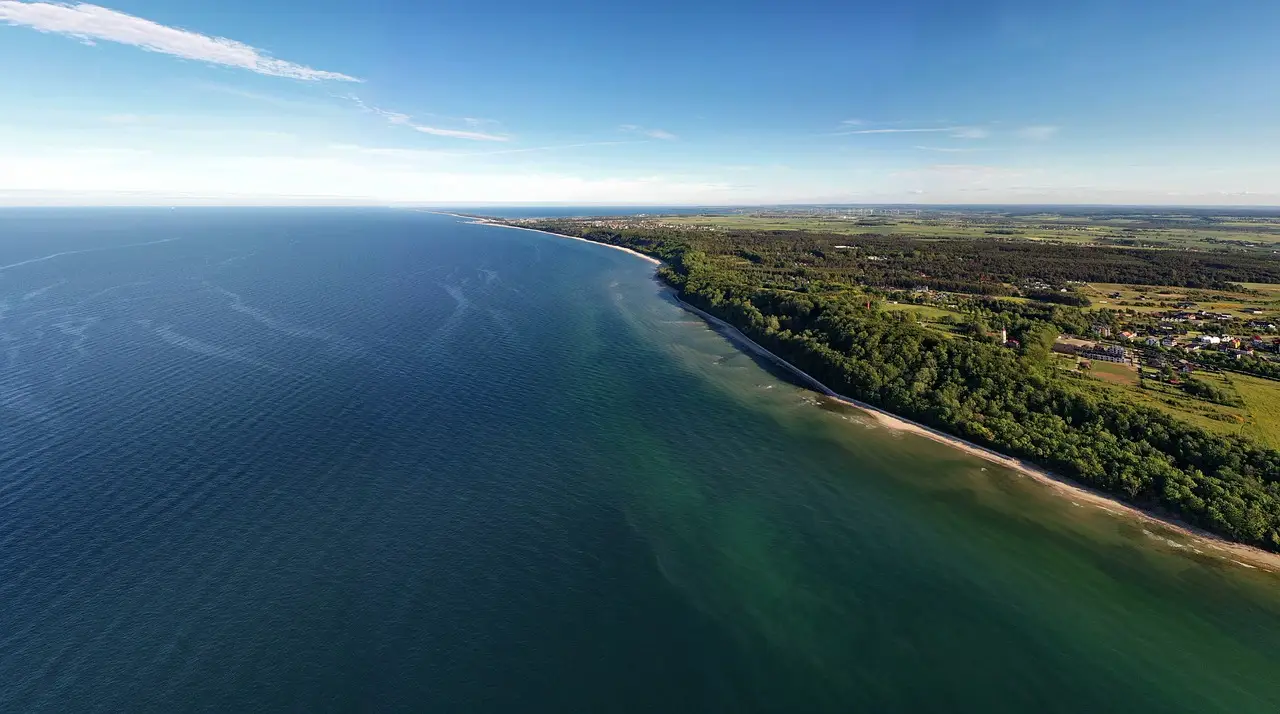
Earth has held an ocean for roughly 3.8 billion years, but new research suggests the water hasn't always been blue. According to a study published in Nature Ecology & Evolution, scientists from Japan have built a computer model indicating the ancient ocean's surface may have turned green for hundreds of millions of years — and early microbes may actually have preferred it that way.
Why is the ocean blue today?
Away from coasts, open-ocean water looks blue because of how it handles sunlight. Water absorbs the longer wavelengths of light toward the red end of the spectrum, while shorter, bluer wavelengths penetrate deeper, scatter, and reflect back into our eyes. That physics has been stable for a long time — but several billion years ago, other colours may have masked the blue.
What turned the ancient ocean green?
The culprit, according to the Japanese team's model, was a collision between biology and chemistry. The earliest life forms evolving in the ocean included single-celled cyanobacteria, microbes that harnessed sunlight through photosynthesis and produced the first freely available oxygen on Earth.
That oxygen didn't stay loose for long. The model shows the first oxygen released by cyanobacteria combined with iron dissolved in seawater, producing an oxidised form of iron that tinted the ocean's surface green. In plain English: the microbes' own waste product reacted with dissolved metal and repainted the sea.
Did life adapt to the green?
The study suggests it did — and the team tested the idea in the lab. The scientists genetically engineered cyanobacteria to carry a photosynthetic pigment called phycoerythrobilin, which harnesses green light rather than the red and blue light that today's chlorophyll-based plants prefer.
Under lab conditions, those engineered cyanobacteria flourished in tanks of green water. In other words, early cyanobacteria may have evolved specifically to thrive in iron-tinted, green waters — turning an apparent obstacle into an advantage.
Is there evidence in nature?
Yes. Around the Japanese island of Iwo Jima, seawater is naturally rich in oxidised iron and is distinctly green. The cyanobacteria growing along that coastline show higher levels of the same green-harnessing pigment the researchers engineered in the lab.
That real-world match gives the lab results a field data point, though the findings remain model-based and preliminary when applied to the deep past. A computer simulation of ocean chemistry billions of years ago can't be checked directly, so the Iwo Jima comparison — and the lab tanks — serve as the closest available proxies.
What does this mean for the hunt for alien life?
The study carries a practical implication for exobiologists — the scientists who search other planets for signs of life. The authors suggest they shouldn't only look for blue, liquid water as a biosignature. Greener tints on an ocean world could hint at the earliest stages of life, the kind Earth itself may have passed through.
So the next time an ocean world shows an unexpected colour, it might be worth a closer look. Green, in this scenario, isn't a glitch — it could be the fingerprint of microbes just starting to change their planet.
via sciencefocus.com (Source)
More from Nathan Brooks
Show full bio
Market editor covering companies, deals and strategy in general science news at SciBeat.
563 articles
Nearby plates
- Zircons Show Earth Absorbed Oxygen 3.4 Billion Years Ago
- Ancient Ocean Chemistry Kept Earth Breathing, Study Finds
- Monterey Bay Turned a 'Blue Desert' as El Niño Collapses Plankton
- Lifeless Earth Simulation Stayed Habitable for 4.5 Billion Years
- Living Light: How Ocean Creatures Glow Without Electricity