Plate Nº 75 · recorded November 17, 2026
Space & AstronomyReported finding
ESA's Hera Spacecraft Begins Rectangle Orbits at NASA's Asteroid Crash Site
Hera has arrived 25-30 km from the Didymos pair to investigate NASA's DART crash, flying slow rectangular paths to map what the 2022 impact really did to Dimorphos.
By James Calloway3 min read645 words
In brief
- ESA's Hera spacecraft arrived at the Didymos asteroid pair and is observing from 25-30 km away.
- NASA's 580-kg DART struck Dimorphos on September 26, 2022, at 6.1 km/s, shortening its orbit by 33 minutes.
- Hera flies at ~12 cm/s in rectangular paths because the asteroids' gravity is up to 200,000 times weaker than Earth's.
- Hera is 196.5 million km from Earth; controllers keep contact about 8 hours a day via four 35-m antennas.
- The mission's two shoebox-sized CubeSats will approach Dimorphos even closer, leading to landing operations.
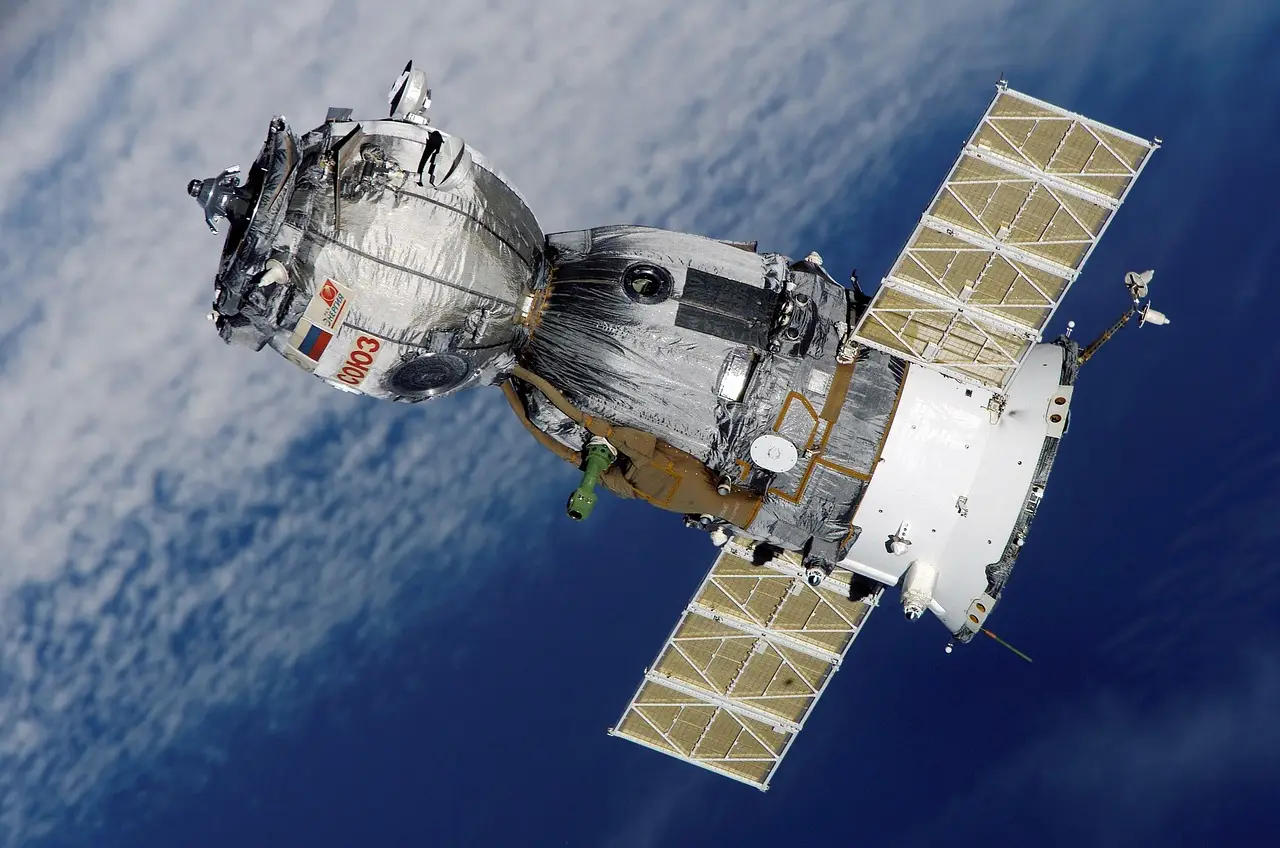
Europe's Hera spacecraft has arrived at the two asteroids NASA struck in 2022, and it is now surveying the crash site from 25 to 30 kilometers away while flying a deliberately odd path: a series of rectangles. The small-car-sized probe reached the Didymos system this month to find out what NASA's DART collision actually did to the asteroid Dimorphos. That answer matters, because kinetic impact is currently humanity's best-tested method for deflecting a dangerous space rock.
"Our aim right now is to gather the big-picture findings of relevance to supporting the mission's planetary defense goals," said mission scientist Michael Kueppers. He added that Hera's images "will reveal for the first time what a small asteroid looks like globally, having experienced a hypervelocity impact" during the first asteroid deflection test.
What happened when DART hit?
On September 26, 2022, NASA's 580-kilogram DART spacecraft slammed into Dimorphos at roughly 6.1 kilometers per second. The collision blasted a debris cloud across 10,000 kilometers of space and shortened Dimorphos's orbit around its companion Didymos by about 33 minutes. That was a genuine first: proof that crashing a spacecraft into an asteroid can change its path.
But the experiment left holes in the record. Scientists don't know whether the impact dug a large crater or reshaped the whole 151-meter-wide body. They also lack precise figures for Dimorphos's composition, internal structure, and mass. And one result still needs explaining: the orbital change far exceeded what computer simulations predicted.
Kueppers was candid about the uncertainty. "Previous predictions by our impact models suggested many different ways the asteroid body might react, but Hera will reveal which forecast was the correct one — if any!" That "if any" is doing real work. The models may all have missed something.
Why fly in rectangles?
Here's the mechanical problem. Didymos, the larger asteroid, spans about 780 meters and has gravity roughly 40,000 times weaker than Earth's. Dimorphos is smaller and weaker still, about 200,000 times weaker than Earth's pull. Gravity that feeble cannot hold a spacecraft in a normal circular orbit.
So Hera cruises around the pair's shared center of gravity at roughly 12 centimeters per second — the pace of a fast-crawling insect. It flies nearly straight lines, firing thrusters every three or four days to turn 90 degrees. Those maneuvers trace out the rectangular orbits keeping it 25 to 30 kilometers out.
The strategy, adapted from ESA's Rosetta comet mission, has a built-in safety margin. If a thruster firing fails, Hera drifts farther from the asteroids rather than toward a collision. Slow speeds also mean each correction burns very little propellant.
What does this change for planetary defense?
Plenty, potentially — with caveats. Hera is now in its "early characterization phase," a broad first look at both asteroids. Next month it should begin the "detailed characterization phase," closing to about 20 kilometers and switching to bowtie-shaped hyperbolic trajectories. Over the coming months it will examine Dimorphos closely with several instruments and release two shoebox-sized CubeSats for even nearer measurements, eventually advancing to landing operations.
Controllers at ESA's ESOC center in Darmstadt, Germany, run the mission despite the spacecraft sitting about 196.5 million kilometers from Earth. Contact lasts about eight hours daily, routed through four 35-meter Deep Space Antennas in Argentina, Spain, and Australia. ESA's Flight Dynamics team crunches Hera's data to pin down its exact position and compute each course change.
The payoff, if the data cooperates, is a dependable version of kinetic impact deflection. Different asteroids will respond differently to being struck. Until scientists understand how and why Dimorphos reacted the way it did, the 2022 success remains a single promising data point — encouraging, but not yet a reliable shield for Earth.
via esa.int (Original)
More from James Calloway
Show full bio
Staff writer covering regulation, policy and their impact on general science news at SciBeat.
474 articles
Nearby plates
- Europe's Hera Spacecraft Begins Close Investigation of NASA-Impacted Asteroid
- Europe's Hera Spacecraft Arrives at Asteroid Pair Hit by NASA
- Hera’s first close look reveals Didymos after DART impact
- Hera spacecraft will fire 3 thrusters for 93 minutes to brake toward asteroid
- Hera Sees Two Asteroids for the First Time — and a Puzzle Worth Billions