Recorded November 20, 2026
Earth & ClimateReported finding
Ethiopia's Fentale volcano leaked 38 kilotonnes of methane without erupting
Satellites caught Fentale volcano in Ethiopia releasing at least 38 kilotonnes of methane in three months without erupting. A Bristol-led team blames underground magma that cracked open a buried gas trap.
By Nathan Brooks3 min read680 words
In brief
- Fentale volcano in Ethiopia released at least 38 kilotonnes of methane between December 2024 and March 2025 without erupting.
- The study, led by the University of Bristol, was published in Nature Geoscience on Nov. 19.
- The outburst was roughly four orders of magnitude higher than methane rates at other volcanoes.
- Fentale also released at least 2.9 megatonnes of CO2 over the same three months.
- The volcano sits about 100 km from Addis Ababa.
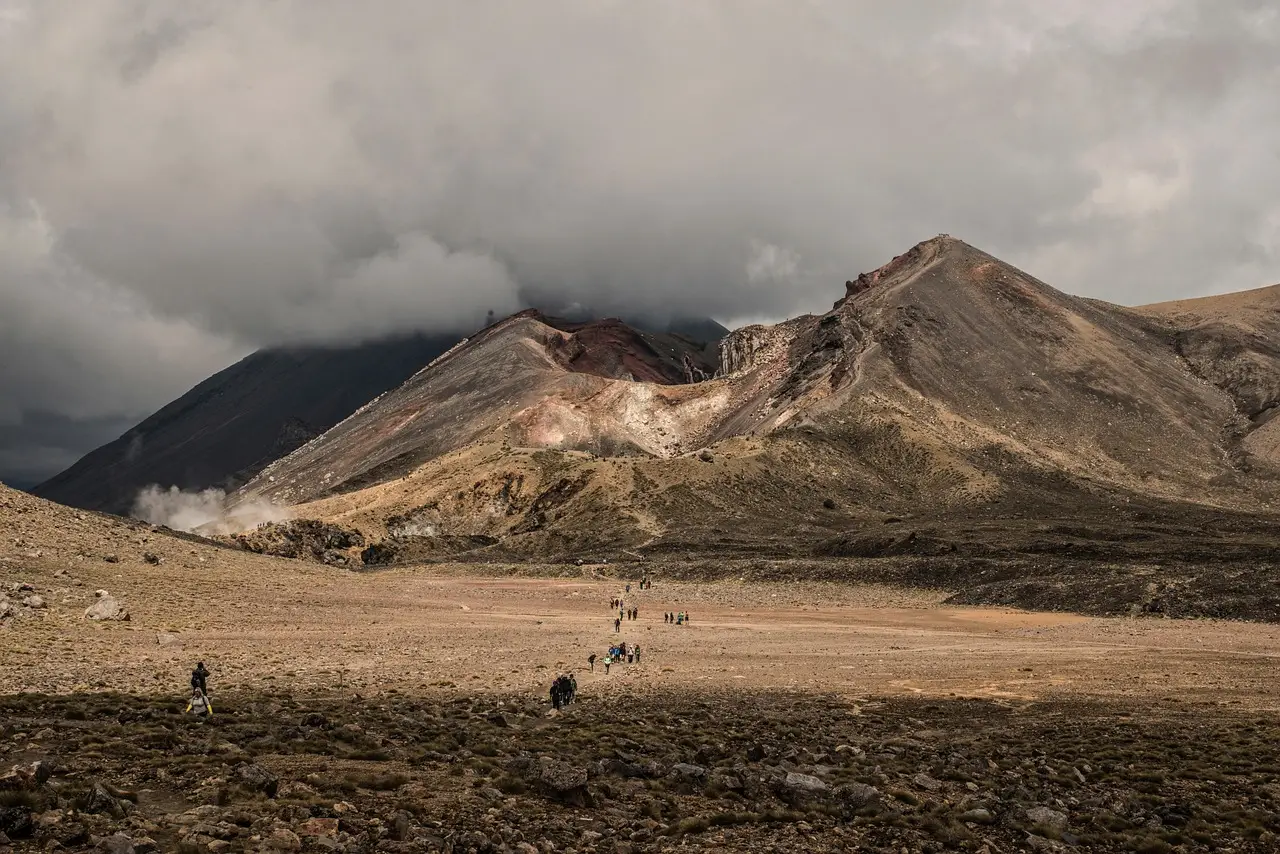
Satellite observations show Fentale volcano in Ethiopia released at least 38 kilotonnes of methane in roughly three months—without erupting. That outburst, logged from December 2024 to March 2025, is the first confirmed methane release of this magnitude from a volcano, and it caught experts completely off guard.
A team led by the University of Bristol now thinks it knows what happened. Their study, published in Nature Geoscience on November 19, points the finger at magma that never reached the surface.
What broke the methane trap?
The researchers' answer is a "mega-dike intrusion." In plain English, that's a sheet of magma forcing its way through cracks in the Earth's crust. At Fentale, they suggest, that magma punched through an impermeable cap—a sealed layer of rock—beneath which methane had accumulated in hydrocarbon-rich sediments.
Once the seal cracked, the gas escaped. For scale, the release was comparable to a major industrial blowout and roughly four orders of magnitude higher than methane emission rates measured at other volcanoes. That's a factor of about 10,000.
"The observation of a methane outburst from a volcano was a complete surprise," said lead author Dr. Edna Dualeh, a senior research associate in Bristol's School of Earth Sciences. "It's brilliant that we were able to bring together so many types of observations and collaborators to understand the source of the methane."
How did scientists catch it?
Luck and preparation intersected. Researchers were already working with colleagues in Ethiopia to monitor Fentale—located about 100 km (62 miles) from the capital, Addis Ababa—during a period of seismic unrest. Carbon-monitoring organizations GHGSAT and the Space Research Organisation Netherlands (SRON) then contacted them after spotting the methane outburst in their satellite data.
"Thankfully we had access to a remarkable data set of remote sensing observations including thermal, optical, SAR and gas measurements, which allowed us to construct the sequence of events, understand the shallow subsurface and interpret the possible mechanisms associated with this outburst," Dualeh said.
SAR—synthetic aperture radar—uses radar from orbit to map ground deformation. Combined, the different data streams let the team reconstruct the timeline of the intrusion and gas release.
Does this affect the climate?
Not today's, at least not noticeably. The released methane is only a small fraction of present-day annual global emissions. The significance is scientific: the event reveals a previously unknown way that methane can escape naturally in sudden bursts.
That matters for Earth's deep past. The findings may help explain how magma moving through underground rock layers released greenhouse gases during continental rifting, potentially driving periods of rapid warming. "It will be exciting to explore the implications of these observations for past climate change, particularly linking methane release during continental rifting to periods of rapid warming," Dualeh said.
There's a precedent-shaped angle, too. Volcanoes normally emit only trace amounts of methane, though old, unanalyzed measurements hint that the East African Rift already shows elevated background methane levels compared with other volcanic systems. The team suggests its methods could identify other volcanoes prone to similar outbursts—but more research is needed to pin down how often such events occur.
It wasn't just methane
Fentale also released at least 2.9 megatonnes of carbon dioxide over the same three-month window. CO2 is a common volcanic gas, but an outburst of this size without an eruption is unusual.
The team frames Fentale as a small-scale modern analogue of "large igneous provinces"—enormous volcanic episodes in Earth's history believed to have vented vast quantities of greenhouse gases and reshaped the climate.
"The episode at Fentale revealed the potential for large, episodic emissions of greenhouse gases from rift volcanoes—something that is not accounted for in the natural atmospheric methane budget, volcanic hazard assessments, or climate models," Dualeh concluded. "It highlights the need for continued research."
The paper: E. W. Dualeh et al., "Methane outburst driven by magma–sediment interactions at Fentale Volcano detected by satellite," Nature Geoscience (2026), DOI: 10.1038/s41561-026-02137-4.
via phys.org/rss-feed/ (Source)
More from Nathan Brooks
Show full bio
Market editor covering companies, deals and strategy in general science news at SciBeat.
563 articles
Nearby plates
- Tonga Plume Broke Down Methane for 10 Days, Study Finds
- Study suggests Earth’s core carbon came from outer solar system
- Earth's Carbon May Have Arrived Late, From the Outer Solar System
- Two Hidden Magma Reservoirs Found Beneath Nicaragua's Masaya Volcano
- 3.1-Billion-Year-Old Rocks Show Water Fueled Early Volcanoes