Plate Nº 43 · recorded November 17, 2026
Science Policy & FundingReported finding
FAA Ground Stop Spurs $50 Billion Push for Congress Funding
A rare nationwide FAA ground stop lasted more than four hours, prompting the Trump administration to seek $50 billion as a watchdog warned that faster air traffic upgrades could cause disruptions.
By Nathan Brooks4 min read753 words
In brief
- The FAA’s nationwide ground stop lasted more than four hours Friday.
- The administration’s request rose from $30 billion to $50 billion after the outage.
- Congress has provided $14.5 billion for FAA modernization; Democrats say $9 billion remains unspent.
- A September GAO report warned that accelerated upgrades could disrupt airspace and raise costs.
- A 2025 midair collision in Washington, D.C., killed 67 people and intensified the safety debate.
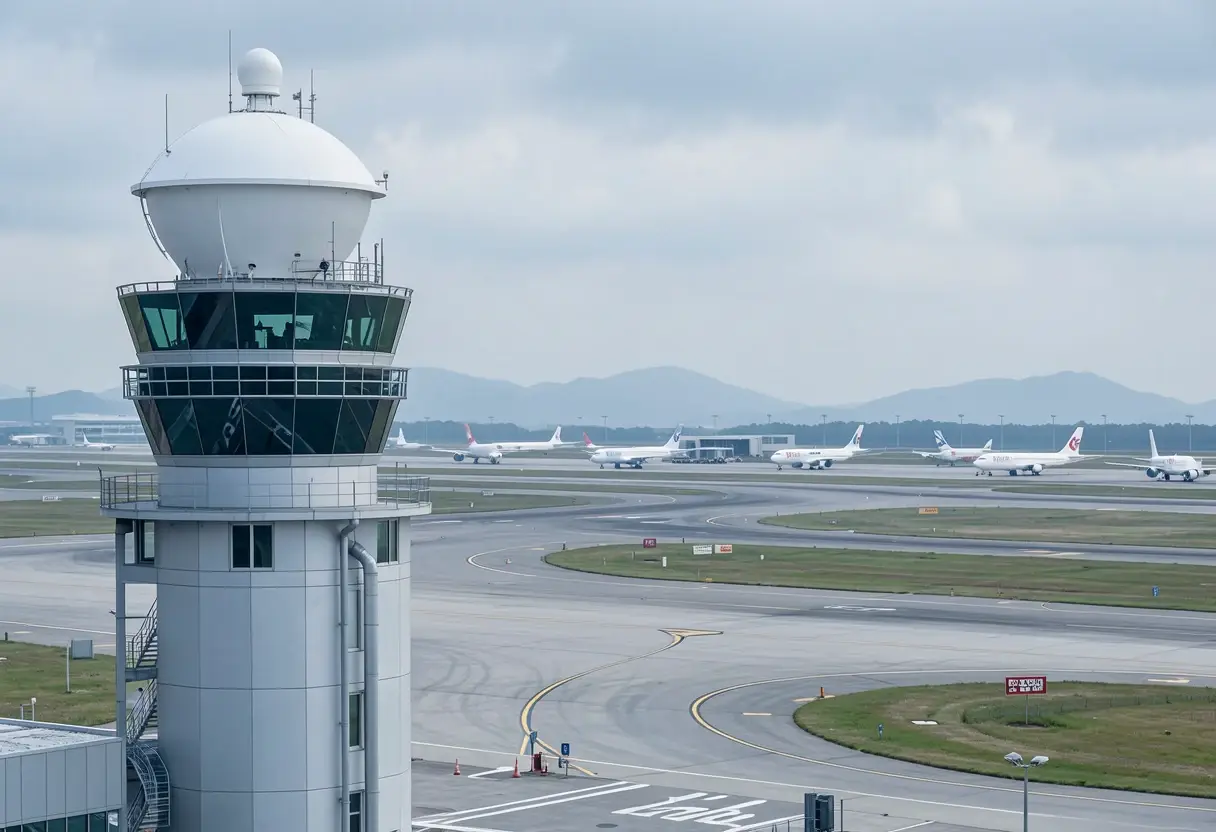
The Federal Aviation Administration (FAA) issued a rare nationwide ground stop for more than four hours Friday, and the Trump administration then raised its request to Congress from $30 billion to $50 billion. The order halted departures nationwide after a problem affecting communications and radar equipment across a large part of the agency’s network. Passengers were stranded at airports from coast to coast as officials, Congress and watchdogs sought answers.
By Monday, three days later, commercial air traffic was nearly back to normal after several days of disruption. Cancellations fell to the low hundreds, rather than the thousands on Friday and Saturday, making the day resemble a normal Monday ahead of Thanksgiving travel. United Airlines also had an unrelated technology problem that delayed flights for about an hour.
What caused the nationwide ground stop?
The FAA said the problem seemed to originate with a longtime contractor replacing older copper wire with new fiber-optic cable, a communications line that carries data as light. That work apparently disrupted FAA communications and radar equipment across a big part of the country, although the exact details remain under investigation.
A September General Accountability Office (GAO) report had warned that accelerating the modernization could disrupt airspace. It said the administration had sped up work already underway, including work on the telecommunications network that apparently failed on Friday.
Kevin Walsh, who directs the GAO’s Information Technology and Cybersecurity Team and led the report, said: “They are basically buying speed at the risk of cost uncertainty and the potential for disruptions in the national airspace.”
Walsh said the faster schedule increases outage risk, particularly when crews work with old systems prone to failure. Despite that warning, the modernization has broad support because the air traffic control systems are old and need replacement. The report also warned of major cost overruns without careful planning and budgeting.
How large is the congressional funding fight?
The political dispute centers on several concrete amounts:
- Before the outage: Transportation Secretary Sean Duffy requested an additional $30 billion, including $10 billion for air traffic control modernization.
- After the outage: The administration’s request grew to $50 billion.
- Funding already provided: Congress has supplied $14.5 billion through the annual bipartisan transportation budget and the One Big Beautiful Bill Act that Republicans passed last year.
- Money still unspent: Democrats say about $9 billion remains.
President Donald Trump said he was confident Congress would now provide money to fix the system. He blamed decades of inaction across multiple administrations for what happened and faulted the current Congress for not supplying more. House Speaker Mike Johnson said he wants the request approved during the lame-duck session, the final stretch of the congressional term.
Democrats have resisted a larger allocation. Rep. James Walkinshaw of Virginia said: “If money is the barrier, I’ll support more money to modernize the air traffic control system. They haven’t presented a plan or demonstrated that money is the barrier here, and money or lack of money was not the the cause of Friday’s incident.”
Rep. Rosa DeLauro, the top Democrat on the House Appropriations Committee, said cabinet heads must take responsibility for mismanagement of the funds. Some lawmakers also suggested redirecting billions allocated to U.S. Immigration and Customs Enforcement, or ICE, last year with few conditions attached.
What does the 2025 crash change?
A midair collision in Washington, D.C., between a passenger jet and a U.S. Army Black Hawk helicopter killed 67 people in 2025. The crash, together with communication problems in Newark and other Eastern airports that year, galvanized the administration’s push to modernize the air traffic control system.
The National Transportation Safety Board recommended wider use of a safety system that investigators said could have prevented the crash. The Senate unanimously approved a bill that would have required that system in all aircraft.
The bill stalled in the House, where it came up a few votes short after the Pentagon withdrew its support at the last minute. Families of the victims want a compromise that can pass both chambers and are pressing for another vote during the lame-duck session. They also planned a Washington, D.C., event for the following day to promote their case.
What happens next in Congress?
FAA administrator Bryan Bedford is scheduled to testify before Congress next month. Once Democrats take control in January next year, their House Transportation and Infrastructure Committee says it will revive an investigation staff, with the deployment of upgrades a top priority.
via feeds.npr.org (Source)
More from Nathan Brooks
Show full bio
Market editor covering companies, deals and strategy in general science news at SciBeat.
413 articles
Nearby plates
- Every U.S. Flight Grounded Three Days After Nationwide AI Traffic Rollout
- 63% of Remote First Nations Homes Lack Working Free-to-Air TV
- NASA Greenlights New Boeing Starliner Missions After Troubled Test Flight
- Science Escapes Deepest Cuts in Latest Budget Bills
- The Data Centre Problem Bigger Than Water or Power: the Money