Recorded November 26, 2026
Space & AstronomyReported finding
FCC Clears SpaceX's One-Million-Satellite AI Data Center Plan
The FCC has conditionally approved SpaceX's Starmind: one million satellites to run AI data centers on solar power. Astronomers warn of a night sky rivaling the stars and images up to 28% obscured.
By Elena Vasquez4 min read758 words
In brief
- The FCC granted conditional approval on Wednesday for one million Starmind satellites, versus 15,800 satellites in orbit today.
- SpaceX must deploy its first satellite by November 2033, 100,000 by 2035, 500,000 by 2038, and the full constellation by 2040.
- ESO simulations show up to 28% of Very Large Telescope images could be obscured by satellite streaks two hours after nightfall.
- US local resistance derailed or delayed at least 120 data center projects worth $198 billion in the first half of 2026.
- SpaceX told regulators ahead of its June IPO that the technology 'may not achieve commercial viability.'
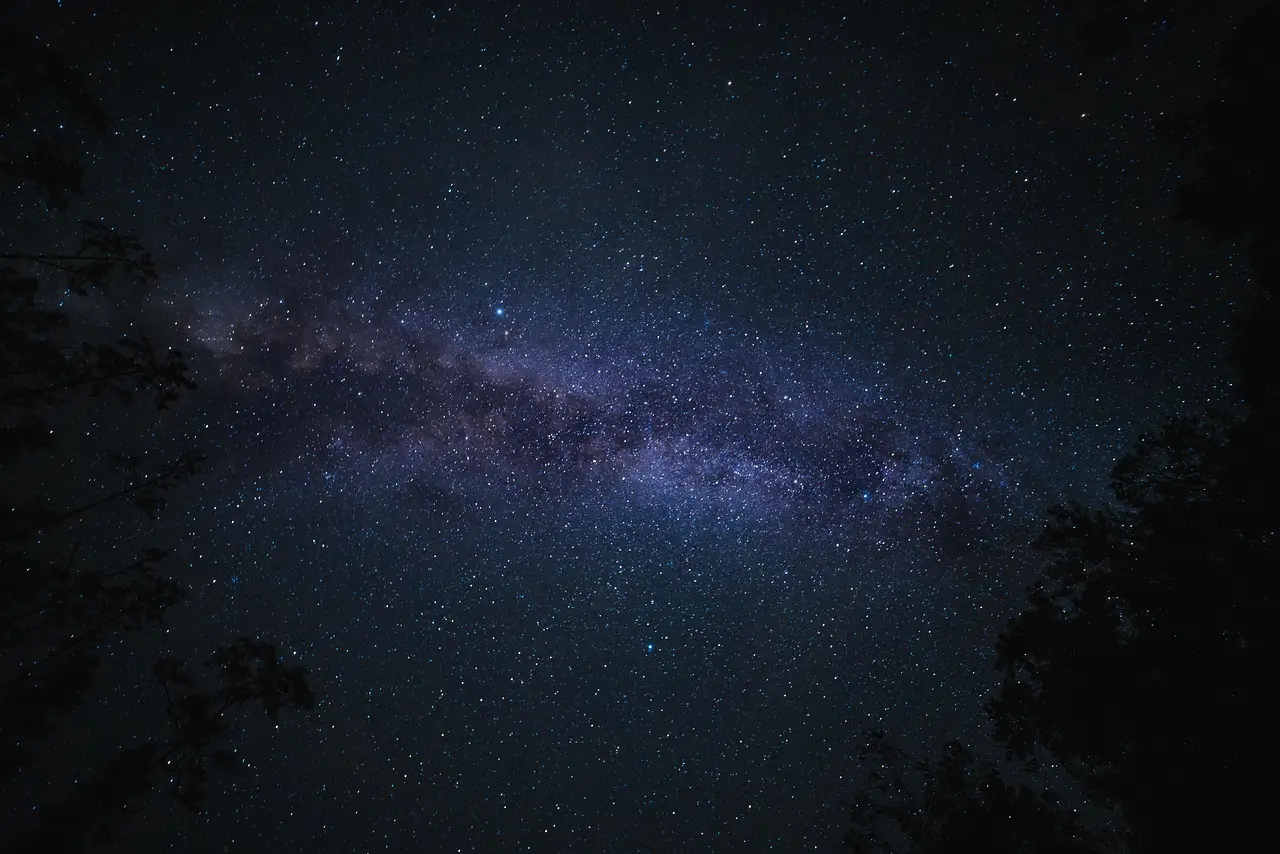
The US Federal Communications Commission granted conditional approval on Wednesday for SpaceX to launch one million satellites — an orbital constellation that would run artificial intelligence data centers powered directly by the Sun. Roughly 15,800 functioning satellites currently orbit Earth. Starmind would multiply that population by more than sixty.
The project, announced as Starmind, aims to solve a growing problem on the ground: AI's enormous appetite for electricity, land, and water. But astronomers say it could severely compromise ground-based observation, pollute the atmosphere, and fundamentally change the night sky for everyone on Earth.
Why put AI data centers in orbit?
Tech companies and frontier AI labs are struggling to power their data centers, and local resistance is growing. An October Washington Post-ABC News-Ipsos poll found seven in ten Americans oppose new data centers in their communities. In the first half of 2026 alone, community pushback derailed or delayed at least 120 US data center projects worth a combined $198 billion, according to Data Center Watch.
SpaceX's answer sits hundreds of kilometers overhead. Starmind satellites would operate between 500 and 2,000 kilometers altitude, drawing power from solar panels to run onboard computer chips. They would exchange information through laser links with SpaceX's existing Starlink satellites — more than 10,000 of which are already in orbit — which would relay the data back to Earth.
Google, through its Project Suncatcher, and Jeff Bezos' Blue Origin are pursuing similar orbital computing concepts. SpaceX, though, is the first to receive a regulatory green light at this scale.
The FCC has set a deployment schedule: the first satellite by November 2033, 100,000 satellites by 2035, 500,000 by 2038, and the full constellation by 2040. SpaceX hopes to launch its first satellite as early as 2027. The bottom line is that the company now holds permission to launch a million spacecraft, provided it meets those deadlines.
Can it actually work?
The engineering hurdles are steep. Cooling computers in space is, counterintuitively, very difficult. An unshielded object swings from roughly 120°C (250°F) in direct sunlight down to -160°C (-250°F) or colder in Earth's shadow. With no air to carry heat away, satellites would need very large radiators to dump excess heat.
Data transmission is a second obstacle. "That has not yet been perfected to the level at which it would be able to support the huge amounts of data that are likely to be transferred backwards and forwards," Sir Martin Sweeting, founder of Surrey Satellite Technology, told BBC Radio 4.
SpaceX itself acknowledged the risk in a regulatory filing ahead of its June initial public offering, stating the technology "may not achieve commercial viability." The company's own paperwork concedes the plan may not work.
What happens to the night sky?
Astronomers already fight interference from Starlink's 10,000-plus satellites. Starmind would make the problem worse by multiple orders of magnitude, according to their simulations.
Olivier Hainaut, an astronomer at the European Southern Observatory (ESO), modeled the effects of existing and proposed constellations in a peer-reviewed study published earlier this year. He found that a million-satellite constellation could put hundreds, even thousands, of satellites simultaneously visible to the naked eye — rivaling the number of stars visible under pristine conditions.
At ESO's Very Large Telescope in Chile, satellite streaks could obscure up to 28% of the area captured in individual images taken two hours after nightfall. That holds even if SpaceX substantially dims its satellites.
Hainaut's recommendation is stark: cap Earth's entire satellite population at roughly 100,000 sufficiently dim spacecraft to protect astronomy. Starmind alone is ten times that limit.
"As approved, this project would not only have profound consequences for astronomy, but also fundamentally alter the night sky for everyone on the planet," ESO director general Andreas Kaufer said in a statement.
The American Astronomical Society added its own warnings, flagging radio interference and infrared radiation from the satellites' waste heat as risks to sensitive scientific instruments.
What did the regulator require?
The FCC declined to impose additional conditions specifically protecting optical astronomy. It judged SpaceX's commitment to coordinate with the National Science Foundation sufficient.
Astronomers also worry beyond the sky. Launching and replacing hundreds of thousands of satellites could introduce substantial atmospheric pollution and raise the odds of collisions that generate dangerous clouds of orbital debris.
ESO is now calling for international oversight of satellite megaconstellations. One regulator, in one country, authorized a million satellites. The consequences will reach everyone on Earth.
via zmescience.com (Source)
More from Elena Vasquez
Show full bio
Correspondent covering money, funding and market shifts around general science news at SciBeat.
659 articles
Nearby plates
- FCC Approves 1 Million SpaceX AI Satellites for Orbital Data Centers
- FCC Approves 1 Million SpaceX Satellites for Orbiting Data Centers
- The Data Centre Problem Bigger Than Water or Power: the Money
- First 'Humanitarian Satellite' Set for July 2027 Launch
- U.S. hyperscale data centers rival states in electricity use