Recorded November 24, 2026
Biology & EvolutionReported finding
Gulf of Thailand study finds juvenile bycatch partly offset
Researchers using monthly Gulf of Thailand trawl surveys from 2016 to 2023 found density-dependent mortality in 21 of 25 taxa, suggesting juvenile bycatch losses are partly offset by higher survival among remaining fish.
By Marcus Bennett3 min read617 words
In brief
- Researchers found the density-dependent mortality pattern in 21 of 25 taxa, statistically significant in 17, with no significant opposite trend in any
- Data came from monthly Department of Fisheries trawl landing surveys in the Gulf of Thailand covering 2016 to 2023
- The 25 analyzed taxa account for about 40% of total trawl landings
- Fish lengths were used to estimate growth and age, then calculate month-to-month juvenile survival
- Study: Jeeratorn Yuttharax et al., 'Early-life density-dependent mortality in the Gulf of Thailand,' Fisheries Science (2026), DOI 10.1007/s12562-026-02025-1
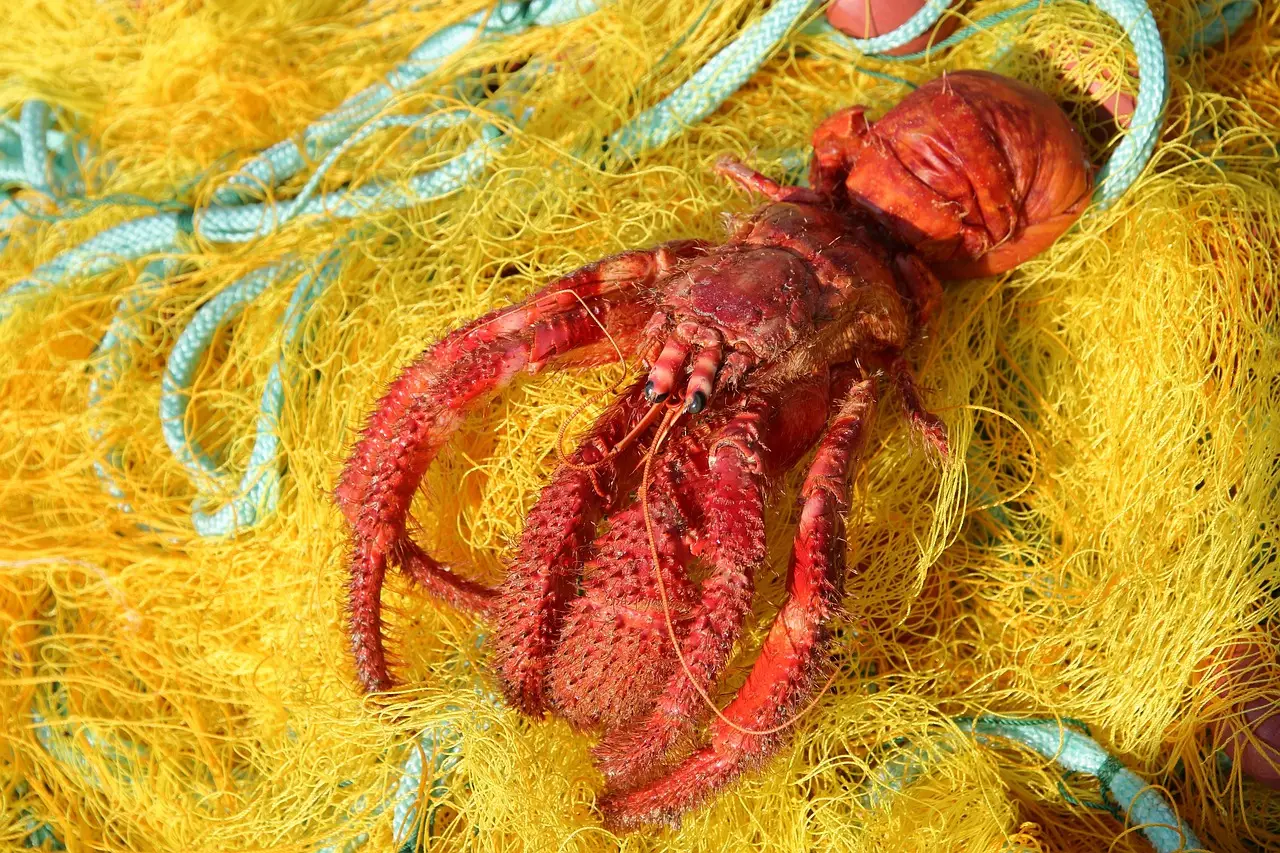
Catching juvenile fish in tropical trawl fisheries may cost the population less than the catch size suggests: in a study of Gulf of Thailand landings, researchers found that the loss of juveniles was partly offset by higher survival among those remaining.
The team, led by scientists from Thailand's Department of Fisheries and Hokkaido University, reported the pattern in 21 of 25 taxa (species or groups of species) they examined, and the relationship held up statistically in 17 of them. No taxon showed a significant trend in the opposite direction. The work appears in Fisheries Science as "Early-life density-dependent mortality in the Gulf of Thailand," by Jeeratorn Yuttharax and colleagues.
What is density-dependent mortality?
The mechanism is straightforward. When fewer juvenile fish occupy a given area, they face less competition for food and habitat, so a larger share of them survives. In dense populations, competition is fiercer and more fish die before reaching adulthood. Previous studies had confirmed this dynamic in temperate regions, but evidence from tropical fisheries has been limited, where ecosystems are richer and more complex.
In practice, for fishers and managers, the finding means a juvenile-heavy catch does not translate one-for-one into a smaller future spawning stock. It does not, however, mean the catch is free.
What did the researchers actually measure?
The analysis drew on monthly surveys of trawl landings in the Gulf of Thailand run by Thailand's Department of Fisheries between 2016 and 2023. Continuous long-term records of the species composition of "trash fish" — bycatch retained and processed into fishmeal, mainly for aquaculture feed — are rare worldwide.
The researchers focused on the 25 taxa caught in the largest volumes, which together account for roughly 40% of total trawl landings. They used each fish's length to estimate growth and calculate age, then worked out how much of the juvenile population survived from one month to the next. That monthly survival rate let them test the core question: does a drop in juvenile numbers produce a rise in survival, and does the reverse hold too?
The answer in the analyzed taxa was yes, in both directions.
Does this make juvenile bycatch harmless?
No, and the authors do not claim it does. Some species appear to have a natural capacity to compensate for early losses, but that capacity has limits and may weaken under sustained high fishing pressure.
The researchers write in the paper that "resilience alone does not eliminate the need for effective management." Their recommendation is that density-dependent mortality be folded into broader assessment and management frameworks, and that "explicitly recognizing [trash fish] as a managed output," with stronger monitoring and size-based rules to protect fish populations over the long term.
Their conclusion points toward "a more nuanced understanding of balanced harvest strategies that recognize both ecological resilience and species-specific vulnerability." The effect varied by species, and several taxa showed no clear pattern at all.
What changes for those who set the rules?
For fisheries managers, the study shifts how trash-fish landings and juvenile catch rates get interpreted: the catch number alone no longer predicts the population response. For the industry, it strengthens the case for treating retained bycatch as a managed output rather than an incidental byproduct, which points toward monitoring and size-based restrictions on what can be landed.
The short version: nature can cushion the blow of a juvenile-heavy bycatch in the Gulf of Thailand, but only for some species, and only within limits that managers still have to find.
More information: Jeeratorn Yuttharax et al., "Early-life density-dependent mortality in the Gulf of Thailand," Fisheries Science (2026), DOI: 10.1007/s12562-026-02025-1.
via phys.org/rss-feed/ (Source)
More from Marcus Bennett
Show full bio
News editor covering regulation, policy and their impact on general science news at SciBeat.
602 articles
Nearby plates
- Deep-Sea Fish Lost 8% of Genetic Diversity in Just 12 Years
- Fish Evolved Schooling 60 Times—and Lost It 320 Times
- Food-Chain Index Outperforms Temperature for Lobster Forecasts
- Green turtles rebound to 'least concern' amid steep global wildlife declines
- South Korea Could Catch Zero Squid by 2043 as Seas Warm