Recorded November 27, 2026
Earth & ClimateReported finding
Hawaii's Volcanoes May Be Leaking Carbon From Earth's Core
Carbon isotopes in olivine crystals from Hawaiian eruptions suggest primordial carbon from Earth's core is leaking to the surface — and may have come from the outer solar system.
By Priya Raman4 min read789 words
In brief
- Magma from the plume's central axis showed a carbon signature of about −1‰, versus −7‰ for ordinary mantle material.
- The team analyzed melt inclusions in olivine crystals from Hawaiian eruptions including Kīlauea Iki in 1959.
- A 2025 Nature study found ruthenium and tungsten evidence of core leakage; an October 2026 Science Advances study pointed to hydrogen escaping the core.
- Earth holds roughly two billion billion tons of carbon, mostly stored deep underground.
- The inferred core carbon matches carbonaceous chondrites, primitive meteorites formed in the outer solar system.
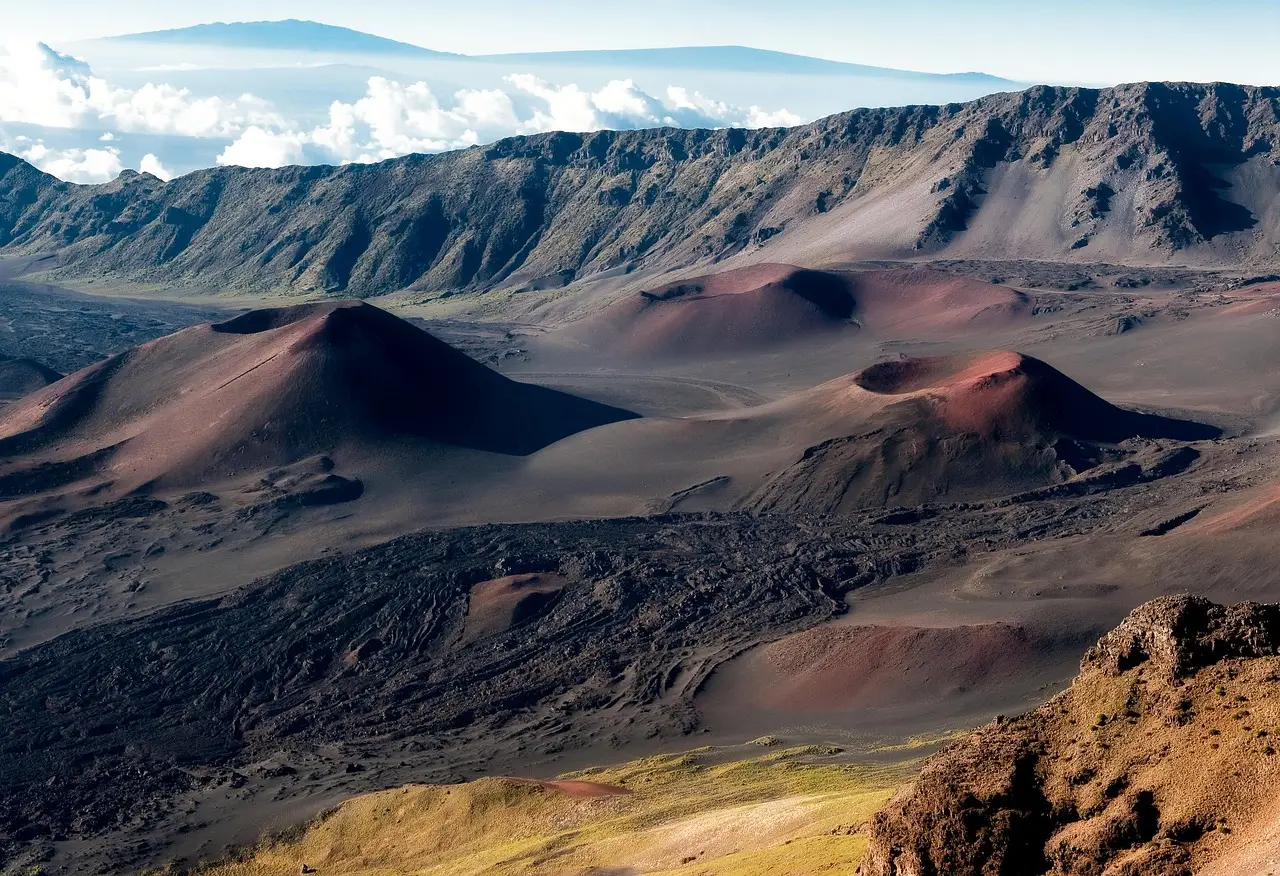
A chemical signature measured at roughly −1‰, six points heavier than ordinary mantle carbon, suggests that carbon trapped inside Earth since the planet's birth is leaking out through Hawaiian volcanoes. The study, led by Yves Moussallam of Columbia University's Lamont-Doherty Earth Observatory and published in the Proceedings of the National Academy of Sciences under the title "Isotopically heavy carbon in the core," traces a possible journey that began in the outer solar system and passed through the heart of the planet.
What did the researchers actually measure?
Moussallam and his colleagues analyzed rocks from several Hawaiian eruptions, including the spectacular 1959 eruption of Kīlauea Iki. The rocks themselves were not the target. The team focused on microscopic droplets of magma trapped inside green crystals of a mineral called olivine.
As crystals grow inside molten rock, they sometimes engulf tiny pockets of melt. These pockets, known as melt inclusions, preserve dissolved gases that would otherwise escape during an eruption. "These melts are fossils of the magma," Moussallam says.
Earth holds roughly two billion billion tons of carbon, and most of it sits far below our feet. The carbon in your DNA and the carbon dioxide in the atmosphere represent only a small fraction of the planet's total inventory. Scientists suspect the largest reservoir lies in the metallic core, at a depth beyond the reach of any instrument.
How does a piece of the core reach the surface?
Nature may deliver it. Deep inside Earth, at the boundary between the rocky mantle and the liquid outer core — nearly 3,000 kilometers down — hot material can become buoyant and slowly rise. Geologists call these ascending columns of rock mantle plumes. As they near the surface, parts of a plume can melt into the magma that feeds volcanoes like Hawaii's. If core material crosses into the mantle, a plume can carry it upward.
Not all carbon atoms are identical. Most have six protons and six neutrons (carbon-12); a small proportion carry an extra neutron, making the slightly heavier carbon-13. These variants are called isotopes, and different geological sources contain them in different proportions.
That difference proved decisive:
- Samples from the Tantalus Rift, associated with the plume's outer reaches, yielded an ordinary mantle signature of approximately −7‰ (parts per thousand).
- Samples tied to the plume's central axis, which potentially originates near the core, yielded approximately −1‰.
Something had enriched the central magma in carbon-13. "We interpret this as carbon leaking from the core," said co-author Damanveer Grewal, a cosmochemist at Yale University.
Is the core explanation secure?
Not entirely, and the researchers acknowledge this. Carbon in the rising material might not come straight from the core. Earth's mantle contains ancient chemical reservoirs, and geological processes can recycle surface carbon into the interior. Telling these sources apart remains one of the field's great challenges.
Still, the core case keeps strengthening. When the young Earth grew hot enough to separate, dense metallic iron sank toward the center, and elements that preferentially bond with metals — carbon among them — followed it down. That separation appears not to have been permanent:
- A 2025 study in Nature found unusual isotopic signatures of ruthenium and tungsten in Hawaiian volcanic rocks, strong evidence that core material had entered the mantle.
- In October 2026, a study in Science Advances suggested primordial hydrogen could also be escaping the core, potentially contributing to water in the mantle.
Carbon now joins the list.
Where did the carbon come from originally?
The team compared their inferred core carbon signature with measurements from ancient meteorites and found a striking resemblance to carbonaceous chondrites — primitive meteorites rich in carbon, water, and organic compounds, formed in cold regions far beyond Earth's orbit from the solar system's earliest material.
The match implies Earth acquired some of its carbon from far outside its own orbit. Timing mattered. Had the carbon arrived too early, collisions during the planet's violent assembly would have stripped much of it away. Had it arrived too late, after the core had largely finished forming, it would have struggled to sink into that deep reservoir. The researchers propose that carbon-rich material arrived during the closing stages of Earth's main formation, when the planet could both retain substantial carbon and incorporate some of it into its core.
If they are right, the fingerprint of those ancient extraterrestrial deliveries has survived inside Earth for billions of years. Life on this planet needs carbon to survive, and life may owe part of its existence not only to material from the distant solar system, but also to geology operating thousands of kilometers beneath our feet.
The core, it seems, does not keep its secrets forever.
via zmescience.com (Source)
More from Priya Raman
Show full bio
Senior reporter covering people, launches and day-to-day practice in general science news at SciBeat.
611 articles