Plate Nº 73 · recorded November 13, 2026
Earth & ClimateReported finding
2021 Heat Dome Was a 'Near Miss,' Simon Fraser Study Argues
A Simon Fraser study of a forgotten 1941 heat wave that ringed Vancouver with wildfires recasts the 2021 heat dome, which killed 600+, as a near miss.
By Marcus Bennett4 min read735 words
In brief
- The 2021 heat dome caused more than 600 heat-related deaths in British Columbia and peaked at 49.6°C (121.3°F).
- The 1941 heat wave set the previous BC record of 44.4°C (111.9°F) and was linked to about 350 deaths, mostly in eastern North America.
- Thunderstorms on July 17, 1941 ignited hundreds of wildfires surrounding Vancouver to the north, east and south.
- The two-year study, led by Sam Anderson, is published in Communications Earth & Environment (DOI: 10.1038/s43247-026-04055-0).
The 2021 heat dome, which killed more than 600 people in British Columbia and set a Canadian temperature record of 49.6°C (121.3°F), could have been far worse. That is the central finding of a two-year study by Simon Fraser University postdoctoral fellow Sam Anderson, published in Communications Earth & Environment, which reconstructs an overlooked heat wave from 1941 and uses it to reinterpret the 2021 catastrophe as a near miss.
The 1941 event set the previous provincial record of 44.4°C (111.9°F) — a mark that stood for eighty years until Lytton broke it and then burned to the ground. Anderson spent two years scouring thousands of historic newspaper articles and archives to map the 1941 heat wave's true extent across British Columbia and North America. Its weather and climate conditions were documented long ago; its impacts, until now, were not.
What did 1941 actually look like?
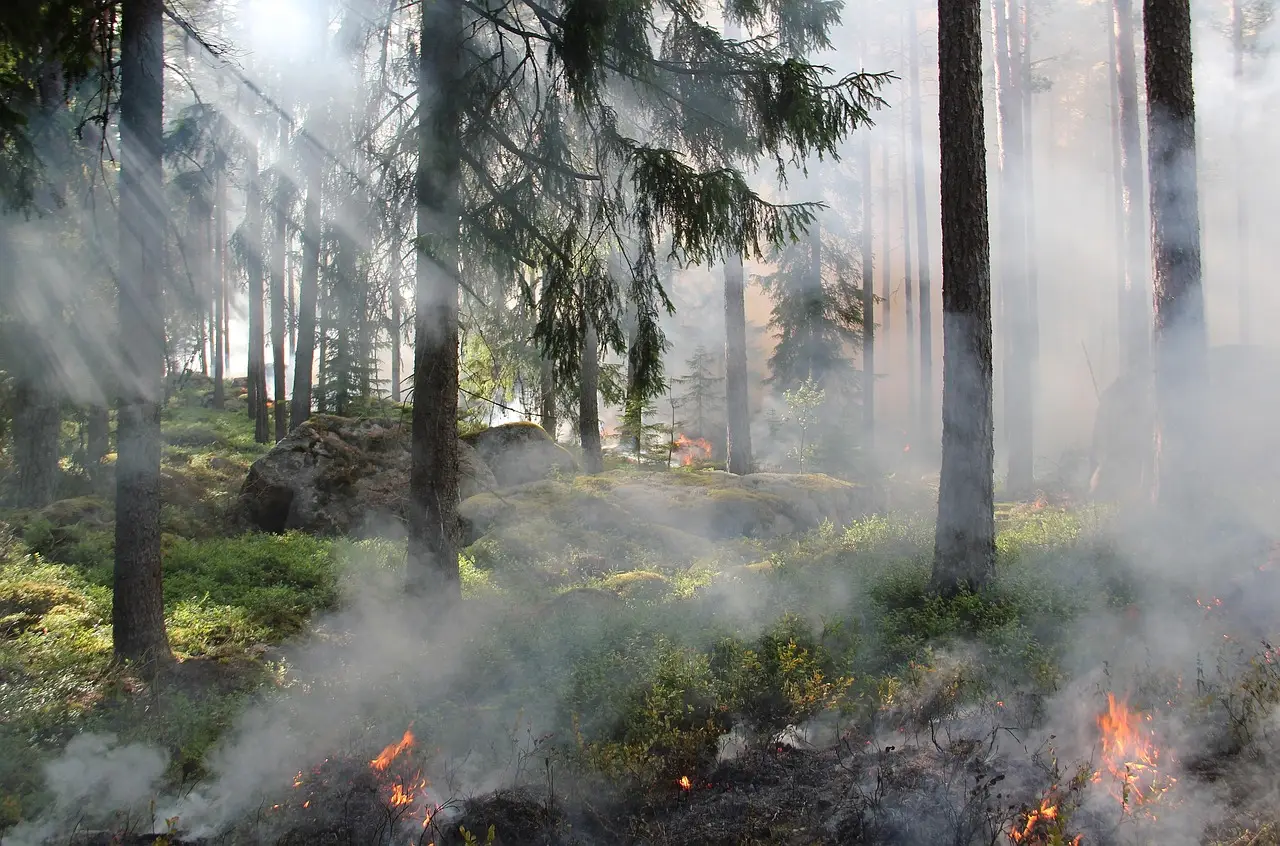
On the evening of July 17, 1941, thunderstorms sparked hundreds of wildfires that surrounded Vancouver to the north, east and south. The fires raged while the city sweltered. When the heat wave ended, cool and wet weather moved in and suppressed the blazes.
"Vancouver, unlike Lytton, did not burn to the ground in 1941," Anderson said. But the comparison unsettles him. "1941 reminds us that lightning is capricious in how and where it ignites wildfires, and from the perspective of a sweltering sky, there is little difference between a place like Vancouver and a place like Lytton."
In 2021 the script flipped: a major city escaped mass ignition, but the heat wave's aftermath stayed hot and dry, feeding out-of-control fires that destroyed Lytton.
Why call 2021 a near miss?
"The wildfires of 1941 are the main reason I've now reinterpreted 2021 as being a near miss," said Anderson, who works in SFU's School of Environmental Science. "You can imagine a future heat wave that could very plausibly initiate many wildfires around Vancouver, like 1941, and then amplify them with post–heat wave fire weather, as in 2021."
In other words, the region has already experienced both halves of a worst-case scenario — mass ignition around a major city in 1941, and fire-amplifying weather after the heat in 2021 — just never in the same summer.
"The 1941 event is the most direct and maybe the only comparison to the 2021 heat wave, considering its magnitude, extent, location and timing," Anderson said. "Both 1941 and 2021 were similarly shocking in their severity. But 1941 had a significantly different impact... It essentially left Vancouverites trapped between water to the west and fires everywhere else."
How did the death tolls differ?
Around 350 deaths were attributed to the 1941 heat wave at the time, either directly through heatstroke or indirectly, mostly by drowning. Most of those deaths occurred in eastern North America, because the 1941 heat wave migrated east across the continent while the 2021 heat dome stayed parked over the west.
"The reported geographical spread of deaths in 1941 suggests that the increased humidity and population density in the East could have been factors," Anderson said. "In some ways, the fact that the 2021 heat dome did not persist in the East means we may have avoided an even higher death toll."
What can planners take from this?
The study's release coincides with the fifth anniversary of the 2021 event, and Anderson frames the pair of heat waves as a working dataset for how impacts shift as the climate warms. His conclusion is less fatalistic than it sounds.
"Heat waves are climate events, as well as social and cultural events, meaning that their impacts are in part determined by the world that we choose to build," he said.
One detail from the archives surprised him: even in the middle of World War II, the 1941 heat wave pushed the war off the front pages. "It overtook the war as being the topic of conversation," Anderson said. "The coverage really paints this picture of an event that was really recognized as being meaningful at the time that it happened."
A society that took a heat wave that seriously in 1941, he implies, has little excuse in 2026.
The paper — Sam Anderson et al., "Extreme North American heatwaves in 1941 and 2021 drove widespread but contrasting impacts" — appears in Communications Earth & Environment (DOI: 10.1038/s43247-026-04055-0).
via phys.org/rss-feed/ (Source)
More from Marcus Bennett
Show full bio
News editor covering regulation, policy and their impact on general science news at SciBeat.
391 articles
Nearby plates
- US Wildfire Building Losses Could Nearly Triple by 2060
- Marine Heatwaves Hide Months of Extra Ocean Warming, Study Finds
- Climate Change Tripled Iberia's Record 2025 Fire Burned Area
- COP31: Record ocean heat, sea levels and four years of ice loss
- Global warming has accelerated to 0.35°C per decade, study finds