Recorded November 23, 2026
Space & AstronomyReported finding
JWST Finds Black Holes Too Big Too Early, Rattling Galaxy Origins
JWST has spotted black holes nearly as massive as their host galaxies just a few hundred million years after the Big Bang, upending the idea that galaxies formed first.
By Nathan Brooks3 min read679 words
In brief
- Black holes weighing millions of suns appear just a few hundred million years after the Big Bang.
- In nearby galaxies, central black holes are typically about 1,000 times less massive than their hosts; some early ones nearly match them.
- A Nature study of Abell2744-QSO1 found its black hole holds most of the object's total mass.
- Current samples contain only about 20–40 early-universe objects, per Johns Hopkins' Joseph Silk.
- The Milky Way's Sagittarius A* weighs over 4 million suns.
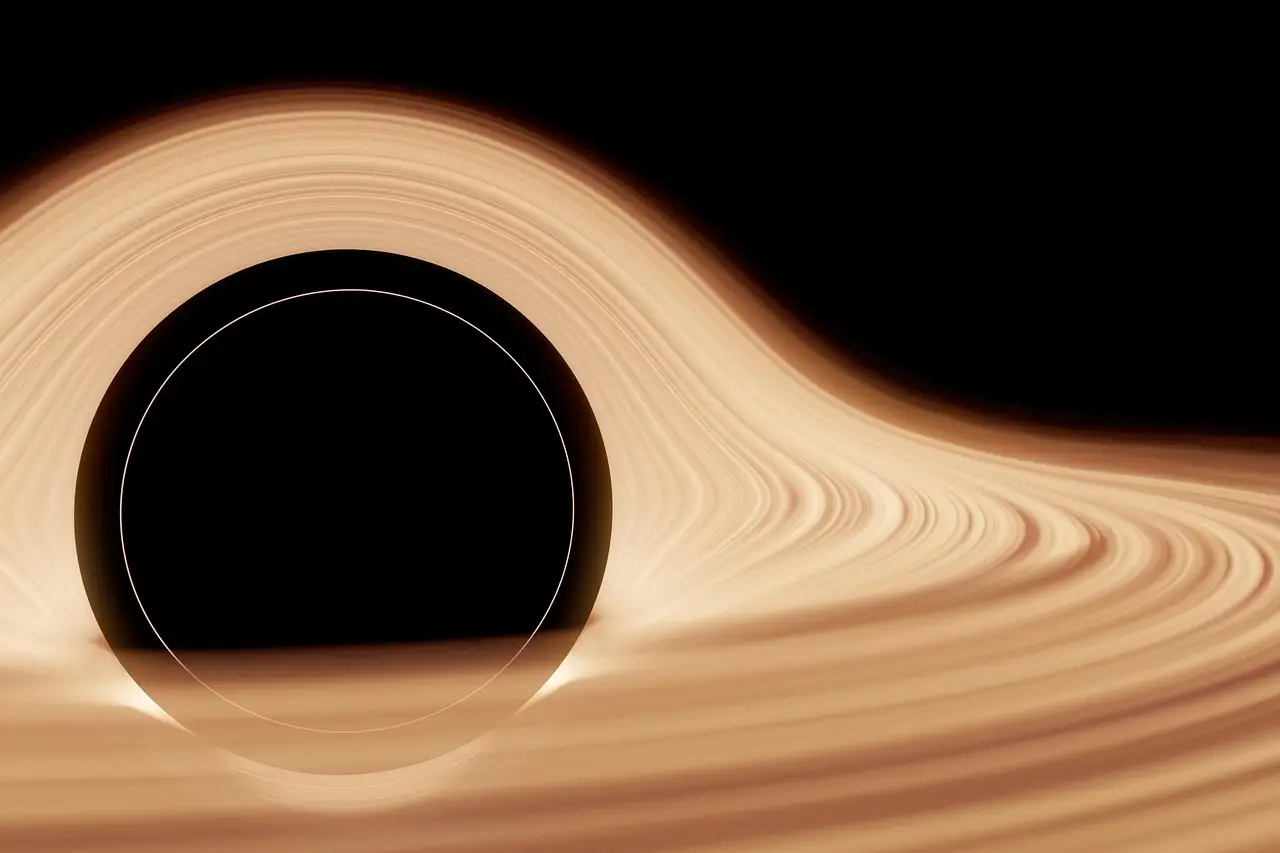
Astronomers have found black holes weighing hundreds of millions of suns just a few hundred million years after the Big Bang — and some appear almost as massive as all the stars in their host galaxies combined. That's roughly a thousand times beefier, relative to their galaxies, than the central black holes we see nearby. The discovery is forcing scientists to question a decades-old assumption about cosmic history: that galaxies came first.
"Recent observations are challenging this picture, or at least showing us that it cannot be the whole story," Roberto Maiolino, a professor of astrophysics at the University of Cambridge, told Live Science by email. "We are finding extremely massive black holes just a few hundred million years after the Big Bang."
What did astronomers used to believe?
For decades, the standard model ran like this: galaxies formed first, then black holes grew inside them. Dying massive stars leave behind stellar-mass black holes, which merge and feed on gas until they swell to millions of times the sun's mass, explained Joseph Silk, an astrophysicist and professor at Johns Hopkins University.
Nearly every large galaxy is thought to host a supermassive black hole at its center. Our own Milky Way's, called Sagittarius A*, weighs more than 4 million suns.
Then the James Webb Space Telescope started peering into the early universe, and the tidy sequence started to wobble.
How weird are these early black holes?
Pretty weird. In nearby galaxies, a central black hole typically holds about one-thousandth of its galaxy's mass, Maiolino said. Some early-universe black holes "appear to be almost as massive as the stars in their host galaxies."
In a study published in the journal Nature, Maiolino and colleagues directly measured one of these objects, called Abell2744-QSO1. The black hole, they found, holds most of the object's total mass — the opposite of the usual arrangement.
Where could such giants come from?
Maiolino outlined several possibilities, and more than one could be right:
- Runaway growth: Ordinary stellar remnants that grew unusually fast.
- Born big: Direct collapse of enormous gas clouds, which "would give the black hole a head start in its growth," Maiolino explained.
- Primordial seeds: Black holes that formed "shortly after the Big Bang, before the first stars and galaxies existed."
How do black holes and galaxies shape each other?
The relationship runs both ways. A feeding black hole releases enormous energy that can heat or expel gas, curbing or shutting down star formation, Maiolino said. But it can also compress gas and potentially trigger new star birth.
"Black holes and galaxies influence one another throughout their evolution, and neither can be understood entirely in isolation," he said.
Silk said the balance varies by galaxy type. In giant elliptical galaxies, black holes weighing billions of suns can have "histories of extreme violence" that limited their hosts' growth. In spirals like the Milky Way, feedback from stars tends to dominate instead.
So which came first?
Nobody knows yet, and the data remain thin. Right now, "we have samples of tens of objects, maybe 20, 30, 40," Silk said. Astronomers need far more JWST observations to tell whether oversize black holes are typical of the early universe or rare outliers.
The pattern will decide the argument. If black holes outweigh their galaxies the farther back astronomers look, that would strongly suggest black holes formed first, Silk said. If stars dominate instead, galaxies likely led the way.
Maiolino thinks the question itself may be too crude. "Asking which came first may be too simplistic," he said. "The more interesting question may be how black holes and galaxies formed, grew and influenced one another at different stages of cosmic history."
There may be no single sequence at all. "Different black holes, in different environments and at different cosmic epochs, may have formed and evolved through different pathways," Maiolino added.
For now, the cosmic chicken-and-egg puzzle stays open. Astronomers, as Maiolino put it, are "beginning to explore a period of cosmic history for which we still have many unanswered questions."
via livescience.com/feeds/news (Source)
More from Nathan Brooks
Show full bio
Market editor covering companies, deals and strategy in general science news at SciBeat.
563 articles
Nearby plates
- Three active black holes found in a galaxy 12.5 billion years away
- Star-Eating Black Holes Could Reveal Dark Matter, MIT Study Says
- Twin Black Holes From Cosmic Dawn Break Formation Models
- Millions of Planets Could Orbit Supermassive Black Holes, Simulations Show
- Atom-Sized Black Holes Could Blow Up Stars, Simulations Show