Recorded November 19, 2026
Space & AstronomyReported finding
MAVEN’s 12.5-year Mars mission ends after spacecraft goes silent
NASA ended MAVEN’s 12.5-year Mars mission in June 2026 after the orbiter lost contact in December 2025, capping 11 years of atmospheric-loss measurements from orbit.
By Nathan Brooks4 min read717 words
In brief
- NASA launched MAVEN on Nov. 18, 2013, and it entered Mars orbit on Sept. 21, 2014.
- MAVEN operated for about 11 years in orbit, far beyond its planned one-Earth-year mission.
- The spacecraft sent its final signal on Dec. 6, 2025, before an uncontrollable spin caused a loss of power.
- NASA declared the 12.5-year mission over in June 2026.
- MAVEN used three instrument groups, including a six-instrument setup for studying the ionosphere.
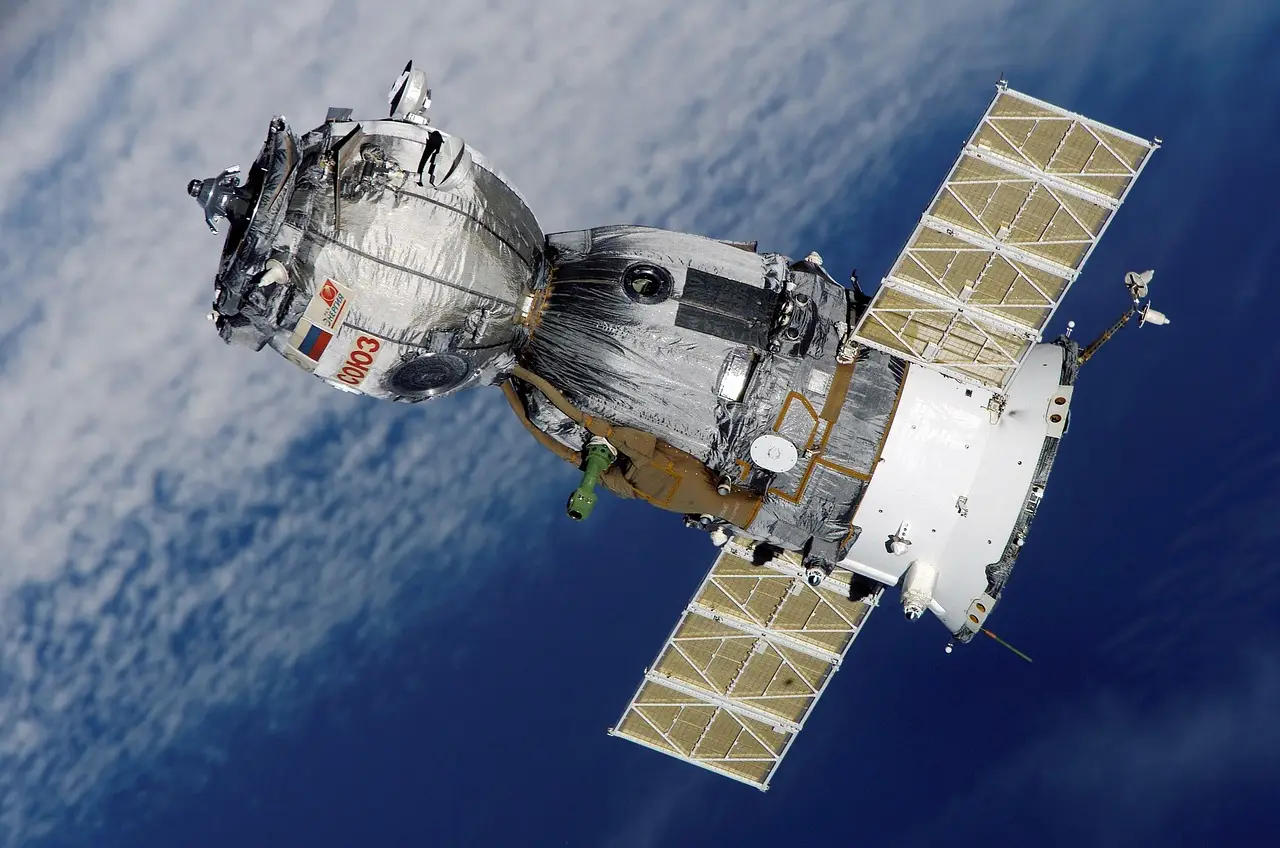
NASA declared the MAVEN mission over in June 2026 after the 12.5-year Mars orbiter lost contact in December 2025. The probe sent its final signal on Dec. 6, 2025, while passing behind Mars from Earth’s viewpoint, and never recovered after emerging in an uncontrollable spin.
MAVEN launched on Nov. 18, 2013, and entered Mars orbit on Sept. 21, 2014, after a journey of about 10 months. The name stands for Mars Atmosphere and Volatile EvolutioN, reflecting the mission’s focus on atmospheric gases and the disappearance of Mars’s water.
What was MAVEN built to find out?
MAVEN was an orbiter, a spacecraft designed to circle another planet rather than land on it. NASA built it to help scientists determine how Mars lost much of its atmosphere and why liquid water disappeared from much of the surface.
Data from several earlier Mars missions suggest that ancient Mars was much wetter than it is today. The planet now has a super-thin atmosphere that has been leaking into space for a few billion years.
Scientists think carbon dioxide in the early atmosphere acted like a greenhouse blanket, trapping enough heat for liquid water on the surface. As that gas escaped, Mars lost the warmth needed to keep water liquid, leaving a colder, drier planet. Solar storms appear to have stripped away some of the atmosphere by driving radiation through the solar system.
MAVEN tracked the rate of atmospheric loss from Mars. It was the first Mars orbiter designed to measure how the atmosphere interacts with the solar wind, a constant stream of particles flowing from the Sun. Those measurements targeted the slow process by which solar-wind interactions strip gas from the planet.
“The science MAVEN has given us is key to informing what kind of radiation protection and safety measures we must take before sending humans to Mars,” said Louise Prockter, NASA’s director of planetary science, in June 2026. “The data collected from MAVEN will continue to provide valuable insight into Mars for decades to come.”
How did the spacecraft study Mars?
MAVEN spent the better part of 11 years in orbit using three groups of instruments:
- An imaging ultraviolet spectrograph studied the global characteristics of the Martian atmosphere. A spectrograph separates light into wavelengths, helping identify atmospheric substances.
- The Neutral Gas and Ion Mass Spectrometer measured the atmosphere’s composition. A mass spectrometer determines chemical makeup by weighing atoms and molecules.
- A six-instrument setup studied how Mars’s ionosphere reacted to the solar wind. The ionosphere is the planet’s upper atmosphere, where solar radiation creates electrically charged particles.
Together, the systems measured the atmosphere’s global structure, chemical composition and electrical response to the Sun. That combination let researchers examine atmospheric loss through several related processes rather than a single measurement.
How did a one-year mission last 12.5 years?
NASA originally planned MAVEN to study Mars for one full Earth year after it arrived. That mission ended in 2016, but the spacecraft survived for another 10 years while adding observations for scientists. The extended campaign stretched to roughly 11 times the planned observing life.
As MAVEN aged, NASA used it as a communications relay for other Mars missions. In that role, the orbiter passed data between Earth and other spacecraft around the planet.
Why did MAVEN go silent?
MAVEN stopped responding to NASA in December 2025. An investigation later found that the probe sent its last signal on Dec. 6 while heading behind Mars, as seen from Earth.
When MAVEN emerged on the far side, it had entered an uncontrollable spin. The spin caused a loss of power, dooming the spacecraft and ending communication.
NASA tried to recover MAVEN over several months. The agency ultimately declared the mission over in June 2026.
“Best. Mars. Mission. Ever,” Shannon Curry, MAVEN’s principal investigator, said of the probe’s entire 12.5-year mission. The team “really experienced the loss of a loved one with the end of the mission here.”
MAVEN leaves behind more than a decade of measurements of how a thin Martian atmosphere responds to the Sun. Before humans travel to Mars, NASA can use that record to inform radiation protection and safety measures, while the dataset continues to support studies of the planet.
via space.com (Source)
More from Nathan Brooks
Show full bio
Market editor covering companies, deals and strategy in general science news at SciBeat.
590 articles
Nearby plates
- Mars Orbiter Finds Gas Leaks Hinting at Volcanoes Alive Today
- Nov. 13, 1971: NASA's Mariner 9 Became First Craft to Orbit Mars
- Curiosity's Decade of Mars Air Data Hints at Surface Water
- Perseverance Finds Early Mars Hosted Complex, Hot Water Systems
- Hydrogen Chloride on Mars Hints at Continuing Volcanic Activity