Recorded November 19, 2026
Earth & ClimateReported finding
Most modeled climate comparisons favor single-use polyethylene
A 2026 life-cycle assessment found single-use polyethylene had lower modeled climate impacts than alternatives in most U.S. and European comparisons, while highlighting recycling and reuse trade-offs.
By Nathan Brooks4 min read795 words
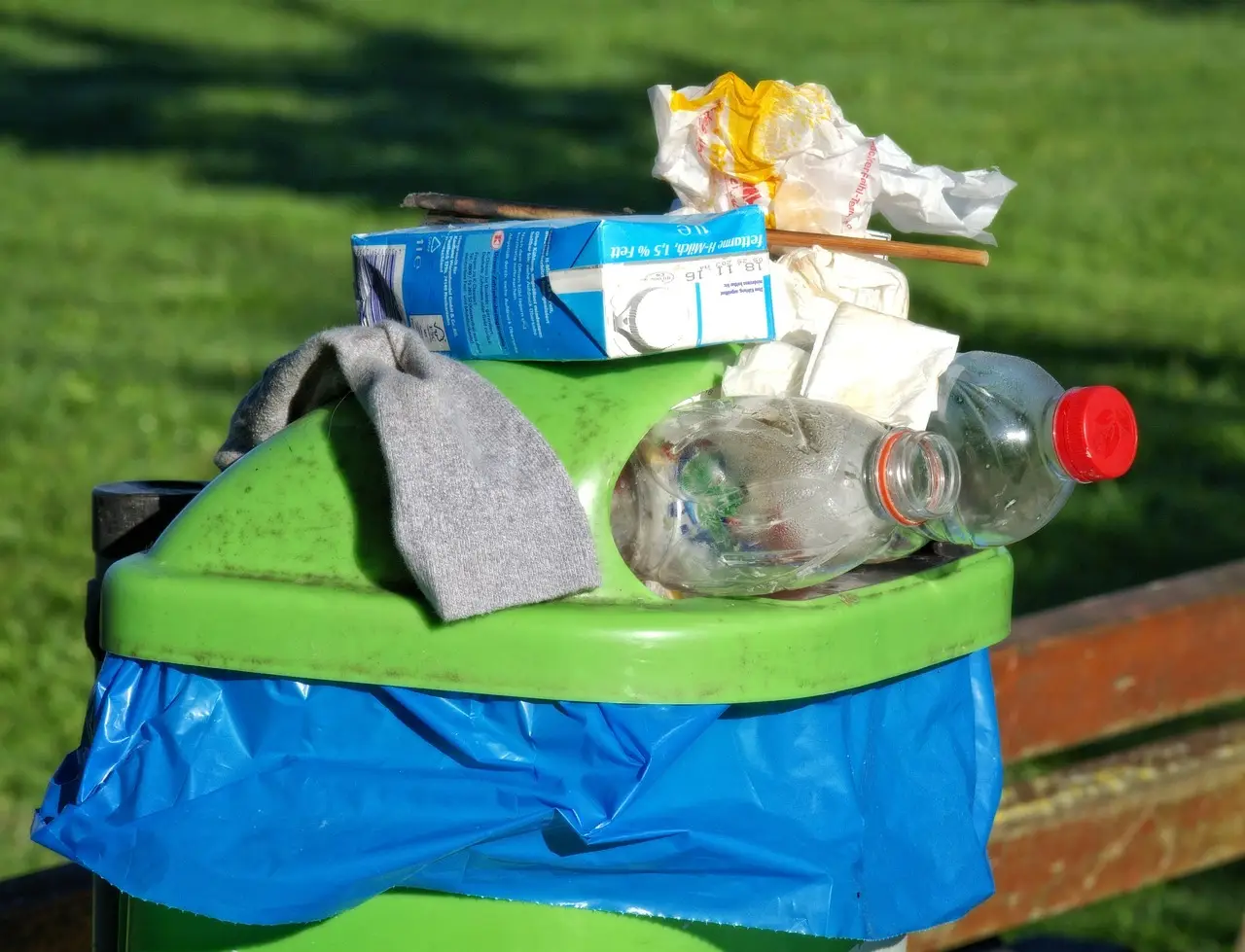
Single-use polyethylene (PE) packaging had lower modeled global-warming potential—a measure of the warming influence of greenhouse gases—than paper, glass or metal alternatives in 84% of U.S. comparisons and 68% of European comparisons, a 2026 study found.
That result does not make PE universally greener. Researchers from the United States and Austria assessed five major PE packaging applications and published their life-cycle assessment in Resources, Environment and Sustainability.
A life-cycle assessment, or LCA, estimates environmental effects across production, transport and end of life, rather than only after disposal. The team organized the study around three questions:
- How does PE compare with paper, glass and metal alternatives?
- How do reuse, post-consumer recycled content and end-of-life recycling change potential impacts?
- What happens when package-level differences scale to projected demand through 2030 and beyond?
How did polyethylene compare with alternatives?
The direct comparison used functionally equivalent packaging systems, meaning packages designed to do the same job. Across most environmental impact indicators, single-use PE generally had lower potential impacts, although the pattern varied by application and region.
PE also frequently had lower acidification, eutrophication, water-related midpoint indicators and land use. Eutrophication refers to nutrient enrichment of water; midpoint indicators are intermediate measures used to track environmental effects.
“Packaging environmental impact depends on more than whether it is made of plastic, paper, glass, or metal,” said Manfred Tacker, a corresponding author from the University of Applied Sciences in Vienna. “The amount of material used, how it is produced and transported, and what happens at the end of its life all influence the environmental outcome.”
Can recycling and reuse always improve results?
Across both regions, increasing post-consumer recycled content tended to reduce multiple environmental impacts. Post-consumer recycled material comes from products discarded after consumer use.
Higher recycling rates alone did not consistently reduce every environmental indicator. Outcomes varied with material type, whether recycled production displaced virgin, or non-recycled, material, and the impacts of collection, sorting and reprocessing.
In Europe, raising recycling of PE pallet stretch-wrap film from 41% to 70% reduced modeled global-warming potential by up to 15%. The same change increased eutrophication by up to 21%, so an improvement in one indicator did not mean an environmental gain across the board.
Aluminum showed more consistently favorable modeled results when higher recycling displaced impact-intensive primary aluminum production.
Reuse produced similar trade-offs. Transport distance, number of reuse cycles, washing and return logistics all influenced whether a reusable system delivered an environmental advantage.
“Reuse and recycling are not single numbers that can be separated from the system around them,” said Elizabeth Avery of Trayak, Inc., in Ohio, and a co-author of the study. “The results depend on how often a package is actually reused, how far it travels, cleaning cycles, and what virgin and recycled production is truly displaced by reuse.”
What changes when demand grows through 2030?
The U.S. forecast put demand for the five evaluated PE applications about 30% higher in 2030 than in 2020. Conservative European modeling projected about 3% growth over the same period.
Material efficiency became more consequential at that scale. In substitution scenarios, replacing PE with alternative material combinations could increase packaging material mass five to sixfold.
That change increased modeled global-warming potential by about 190% to 280% in the U.S. and 50% to 95% in Europe.
The model also indicated possible increases in acidification, eutrophication, fossil resource consumption, water impacts and land use. The magnitude varied by indicator and region.
Michigan State University School of Packaging professor Rafael Auras, a corresponding author, said the 2030-and-beyond projection shows why scale matters. A substitution that looks modest for one package can require substantially more material across the supply chain and a growing market. Future packaging decisions therefore need to weigh material efficiency against expected demand.
What did the study not capture?
The authors cautioned that the study does not establish PE as universally environmentally superior; the results depend on the packaging application under consideration.
The analysis excluded littering, environmental leakage, microplastics and packaging-related product losses. The researchers said those factors remain important considerations in broader environmental assessments.
Two panels of independent experts evaluated the original studies to check that their findings aligned with internationally accepted ISO life-cycle-assessment standards.
The researchers recommend that policies and designs use region-specific life-cycle data for functionally equivalent packages and track multiple environmental indicators. Material efficiency, recycled content, collection and reprocessing, reuse logistics, regional infrastructure and expected demand all shape the result.
The paper, “Environmental consequences of replacing polyethylene packaging in the United States and Europe,” appeared in Resources, Environment and Sustainability in 2026 (DOI: 10.1016/j.resenv.2026.100390).
via phys.org/rss-feed/ (Source)
More from Nathan Brooks
Show full bio
Market editor covering companies, deals and strategy in general science news at SciBeat.
592 articles
Nearby plates
- New polystyrene is half plant-based and designed to fall apart for recycling
- One 'Biodegradable' Plastic Hit 99.9% Breakdown in 17 Days. Another Stalled at 2.7% in 320
- Laser Method Cuts Solar Panel Recycling Energy Use by 84 Percent
- Molten Salt Process Turns Plastic Bags Into Gasoline at Oven Temperatures
- A zero-waste economy could avoid 149 gigatonnes of CO2e by 2050