Recorded November 27, 2026
Space & AstronomyReported finding
NASA's Shortlist for Space Food: Strawberries, Cucumbers, Lemon Basil
A wild strawberry doubled Delizz's fruit yield under simulated space conditions and still lost its NASA audition — too many runners, too little cabin room. Cucumbers and lemon basil advanced too.
By James Calloway3 min read697 words
In brief
- A wild strawberry produced twice as many buds, flowers and fruit as NASA's candidate 'Delizz' in simulated space conditions, per a September study in Life Sciences in Space Research.
- NASA kept Delizz because the wild strawberry's excessive runners would take up too much spacecraft room.
- Cucumber plants produced a steady stream of edible fruit under spaceflight conditions despite enlarged leaves, per an August HortScience study.
- Lemon basil passed preliminary space crop testing and seed sanitization at NASA Kennedy.
- A first-of-its-kind prototype growth chamber is set to launch to the International Space Station.
A wild strawberry grown at NASA's Kennedy Space Center produced twice as many buds, flowers and fruit as the space agency's leading strawberry candidate — and NASA still passed on it. The reason was geometry, not taste: the wild plant grew too many runners, the trailing stems that would eat up precious cabin space on a spacecraft. The decision appears in a study published in September in Life Sciences in Space Research, and it sits at the center of a quiet but consequential effort to figure out what astronauts on future moon and Mars missions will actually eat.
Why fresh crops matter beyond the plate
As NASA prepares for longer crewed missions, researchers are testing crops that could supply fresh food, nutrition and menu variety far from Earth. The stakes go past flavor. Space crops absorb carbon dioxide, produce oxygen and recycle water — functions that grow in importance as missions push farther from home. A new investigation from NASA's Biological and Physical Sciences Division is set to launch to the International Space Station, carrying a first-of-its-kind prototype growth chamber meant to inform crop production systems for future moon base habitats and Mars missions. A prototype is a prototype, of course. Nothing has fed an astronaut yet.
What happened in the strawberry showdown?
Researchers at NASA Kennedy, the University of Melbourne and the University of Western Australia tested a wild strawberry against 'Delizz,' NASA's leading candidate, under simulated space conditions. The results split cleanly:
- Delizz grew large, red fruit.
- The wild strawberry produced small, yellow fruit, the result of a recessive genetic mutation.
- From seed, the wild plant churned out twice as many buds, flowers and fruit as Delizz.
Twice the yield sounds like a win. It wasn't. The wild strawberry's excessive runners made it a poor fit for the tight confines of a spacecraft, so Delizz kept the top spot. Strawberries remain attractive for spaceflight for other reasons: they're among the few sweet fruits under consideration, they're nutritious and aromatic, and they pollinate themselves — a real advantage when there are no bees aboard. The work builds on a partnership with the Australian Research Council Centre of Excellence in Plants for Space.
Could cucumbers be the first gourd in orbit?
Many crops have already been grown in space, but none from the gourd family. Cucumbers could change that. Researchers recently evaluated cucumbers for growth, yield and nutrition under spaceflight conditions, and the plants showed some signs of enlarged leaves — a possible stress response — yet still produced a steady stream of edible fruit. That finding appeared in a study published in August in the journal HortScience. The broader argument for variety is practical: a wider mix of crops benefits astronauts' diets and mental well-being, and increased plant biodiversity improves the odds that some crop succeeds on a long-duration mission.
What's next for lemon basil?
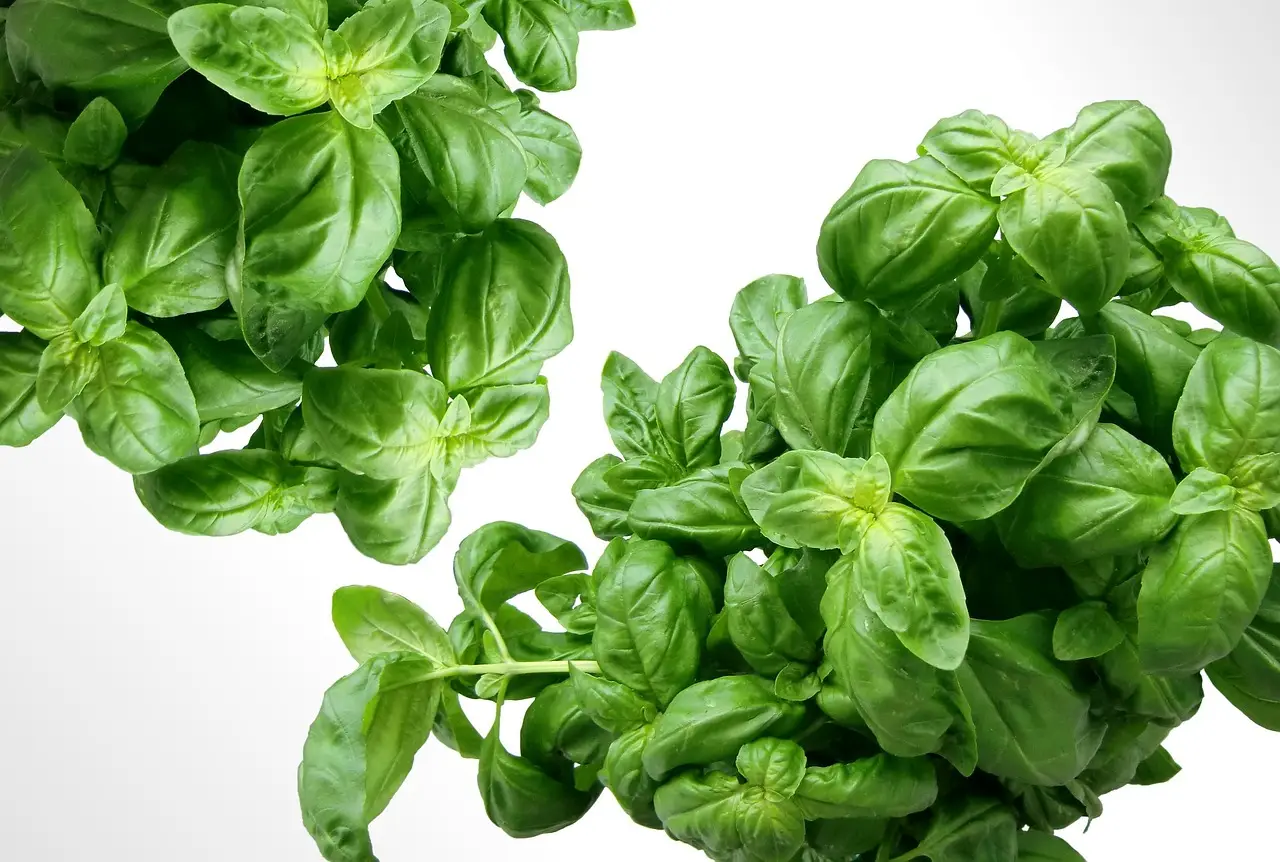
Herbs solve a different problem: menu fatigue, which can quickly erode morale on packaged-meal diets. Lemon basil, an edible herb with a citrus scent and taste, has passed its preliminary round of space crop testing at NASA Kennedy, including seed sanitization — a mandatory step that removes microorganisms before spaceflight. Its next hurdle is an assessment of growth in plant pillows, the modules that house plants aboard the space station. Preliminary rounds are exactly that. Passing one is not the same as flying.
So what does this change for the future moon or Mars menu? Nothing is locked in, and no launch date for a space-grown salad exists. What has changed is the candidate list: one strawberry survived a head-to-head test, one gourd cleared its first real evaluation, and one herb moved one paperwork step closer to orbit. That's modest progress. In space agriculture, modest is the norm.
The published papers: K. Nakashima et al., Identifying a new candidate space crop: the alpine strawberry Fragaria vesca, Life Sciences in Space Research (2026), DOI: 10.1016/j.lssr.2026.06.007; and Lillian F. Wang et al., Evaluation of Cucumber and Melon Cultivars as Space Crop Candidates for Long-term Space Missions, HortScience (2026), DOI: 10.21273/hortsci19482-26.
via phys.org/rss-feed/ (Source)
More from James Calloway
Show full bio
Staff writer covering regulation, policy and their impact on general science news at SciBeat.
625 articles