Recorded November 28, 2026
Space & AstronomyReported finding
Nuclear vs. solar in orbit: the messy math of powering space data centers
A JPL paper weighs nuclear reactors against solar panels for orbital data centers. Fission saves ~10 tons per megawatt, but reactor lifespan can flip the economics from $190 in savings to a $783 deficit.
By Nathan Brooks3 min read671 words
In brief
- A 1 MW solar-powered orbital data center needs about 43 metric tons of panels, batteries and radiators before computing hardware.
- A compact fission reactor is roughly 10 metric tons lighter per megawatt than today's solar arrays.
- An 80/20 nuclear/solar hybrid weighs ~36 metric tons when 24-hour backup power is required—about a third of standalone options.
- A 10-year reactor lifespan saves ~$190 per kilowatt-year in launch costs; a 2-year lifespan costs $783 per kilowatt-year extra.
- NASA and DOE this week finalized the architecture for Space Reactor-1 Freedom for a future Mars propulsion system.
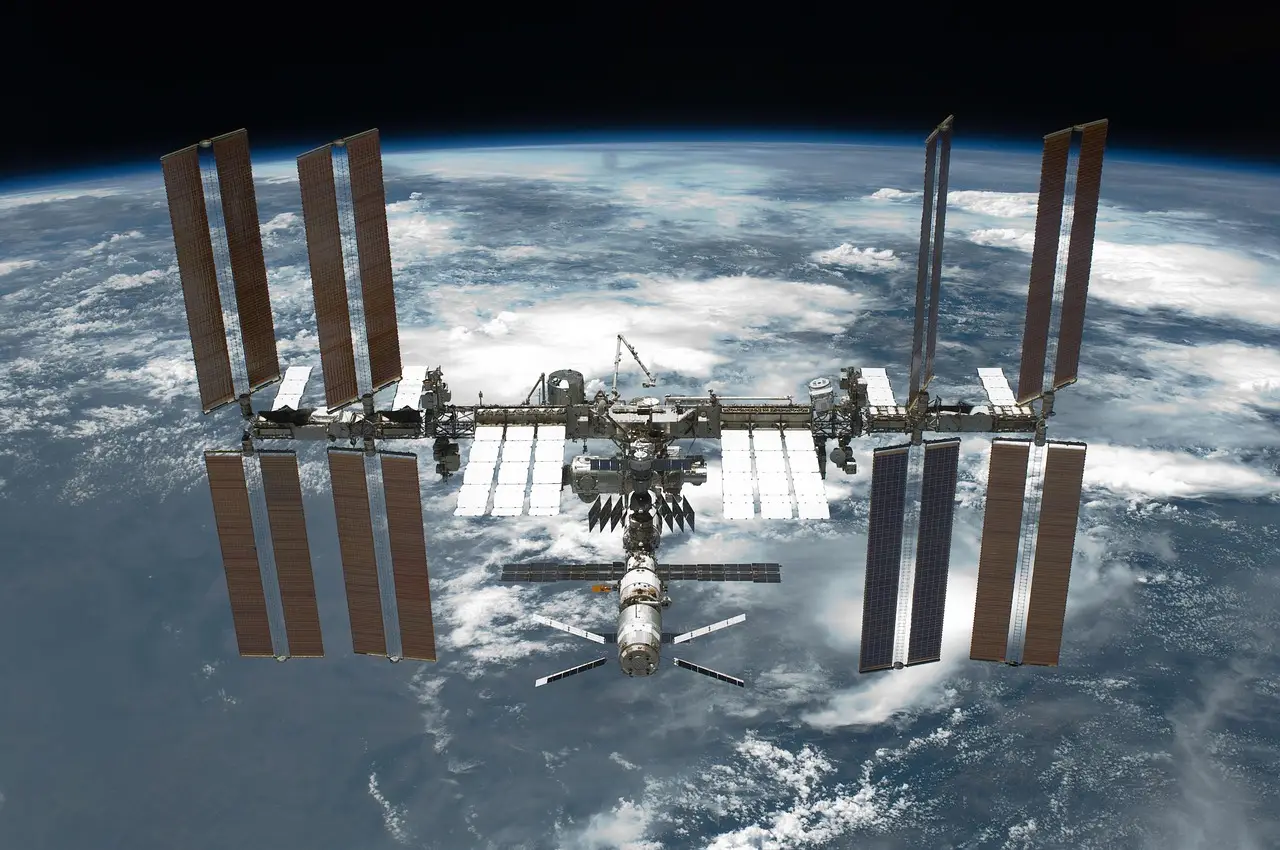
A 1-megawatt data center cluster orbiting Earth would need to haul roughly 43 metric tons of solar panels, batteries and radiators before a single processor leaves the ground, according to a new paper by Dr. Slava Turyshev of NASA's Jet Propulsion Laboratory. His conclusion: whether nuclear fission beats solar in space depends entirely on mission requirements—and on how long your reactor lives.
Why sunlight alone doesn't cut it
Satellites in these orbits circle Earth about 15 times a day, and during some seasons each pass sends them through Earth's shadow for up to 21 minutes. Add it up and the spacecraft spends about 5 hours and 13 minutes of every 24-hour day in darkness.
Batteries can bridge those blackouts, but they're heavy. Turyshev calculates that covering a 21-minute outage for a 1 MW cluster would require 6.46 metric tons of batteries. Stack on the solar panels and the radiators needed to dump waste heat as infrared light, and the 43-metric-ton total balloons before any computing hardware counts.
What does a fission reactor fix?
A reactor kills two problems at once: no solar wings, no batteries. But it runs at about 25% efficiency—standard for thermal-to-electric conversion—which means it generates roughly 3 megawatts of waste heat for every 1 megawatt of power produced.
That heat sits at around 700 kelvins, more than double the temperature processors must stay below to avoid frying themselves. The chips want to stay near 320 kelvins. So a nuclear-powered cluster needs two separate radiator systems, one hot and one cold. When the dust settles, a nuclear setup needs only about 6% less low-temperature radiator area than a solar one.
Still, on raw mass, fission initially looks like a winner. A compact reactor comes in about 10 metric tons lighter per megawatt than today's standard solar arrays—and in space, weight is money.
Where does the nuclear advantage fall apart?
Turyshev's paper flags three caveats:
- Next-generation solar. Lighter, more efficient arrays under development could erase nuclear's mass advantage entirely.
- A higher orbit. Boost the satellite to 1,450 kilometers and Earth's shadow problem vanishes—though that brings space debris, trapped radiation and pricier communications gear.
- Radiation. Space data centers already suffer stray cosmic rays flipping bits. Parking one next to an active reactor adds gamma rays and neutrons. Separating the two with a long boom and a dense "shadow shield" works, but the boom and cabling eat into the weight savings.
There's also the end-of-life problem. A solar satellite can simply burn up in the atmosphere. A spent reactor must be boosted to a "graveyard" orbit around 2,000 km, where it stays indefinitely.
Is a hybrid ever the best call?
Yes, under one specific mission rule. If a data center must survive a 24-hour failure of its main power system while keeping 20% emergency power online for safe mode, an 80/20 nuclear/solar split tips the scales at roughly 36 metric tons—about a third of the weight of either standalone option, because the batteries required to meet that requirement alone are so massive. Without that constraint, either standalone system wins on weight.
Does the money favor nuclear?
That hinges on reactor lifespan, Turyshev finds. A reactor lasting 10 years saves about $190 per kilowatt-year in launch costs. A reactor lasting just two years—as many experimental space reactors are designed to do—flips that into a $783 per kilowatt-year deficit.
The paper skips one question entirely: whether the public would accept tens of thousands of small nuclear reactors in orbit. This week, NASA and the U.S. Department of Energy locked in the architecture for Space Reactor-1 Freedom, a nuclear reactor meant to power propulsion on a future Mars mission—so at least the government thinks support exists.
As more orbital data centers launch, the weight-versus-cost-versus-safety-versus-capability debate isn't going anywhere.
via phys.org/rss-feed/ (Source)
More from Nathan Brooks
Show full bio
Market editor covering companies, deals and strategy in general science news at SciBeat.
624 articles
Nearby plates
- Moon Craters Could Shield Nuclear Reactors for Lunar Bases
- Princeton Lab Claims a Cheaper Path to Igniting Star Power
- NASA’s First Fission-Powered Spacecraft Clears Key Nuclear Hurdle
- One Nuclear Blast in Space Could Kill 98% of Low-Orbit Satellites
- Final iROSA Solar Panel Installed on ISS, Closing Five-Year Power Upgrade