Plate Nº 76 · recorded October 20, 2026
Space & AstronomyReported finding
NASA’s First Fission-Powered Spacecraft Clears Key Nuclear Hurdle
NASA has signed contract actions advancing SR-1 Freedom, the first fission-powered spacecraft to fly beyond Earth orbit, set for a late 2028 launch toward Mars.
By Nathan Brooks3 min read546 words
In brief
- SR-1 Freedom is scheduled to launch in late 2028.
- It will be the first fission-powered spacecraft to travel beyond Earth's orbit.
- Sierra Lobo Inc. will build the closed Brayton cycle power conversion system under a contract awarded in 2024.
- The Mars mission carries SkyFall: three helicopters evolved from Ingenuity's design.
- The reactor stays inactive until the spacecraft leaves Earth orbit.
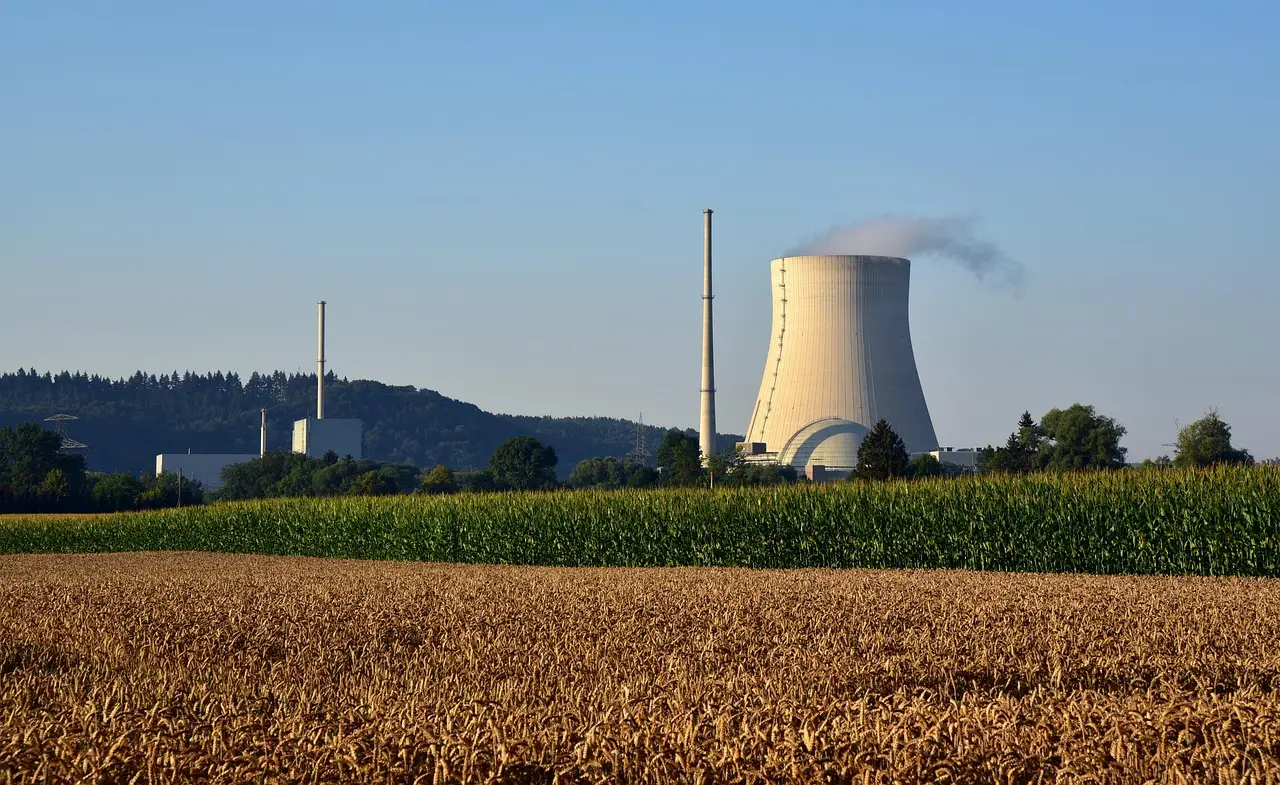
NASA has locked in contract actions to speed up development of SR-1 Freedom, the spacecraft set to become humanity's first fission-powered vehicle to fly beyond Earth's orbit when it launches in late 2028. The agency announced the milestone during its "Ignition" event, and it centers on the mission's most critical piece: the nuclear power module.
Steve Sinacore, SR-1 Freedom program director, said the deals do double duty. "These contract actions not only reduce technical risk and help us maintain momentum toward our 2028 launch, but they also strengthen collaboration across our partners," he said in a statement.
What does the nuclear power module actually do?
The module sits at the end of a long boom extending from the spacecraft. It has two jobs. A fission reactor generates heat by splitting atomic nuclei, and a power conversion system turns that heat into electricity.
That electricity feeds the spacecraft's systems and its electric thrusters — a setup NASA calls nuclear electric propulsion. If it works, SR-1 Freedom will be the first demonstration of this technology in deep space.
Sierra Lobo Inc. will build the power conversion piece, a closed Brayton cycle system. In plain terms, that's a turbine-based machine that uses heated gas to spin a generator, much like a conventional power plant but sealed for space. The company will do the work under the Space Flight Systems Development and Operations Contract III, awarded in 2024, supporting hardware design, development, testing, and operations at NASA's Glenn Research Center in Cleveland.
The reactor itself is a separate effort. The Department of Energy's Idaho National Laboratory is designing and developing it, and the two components will be integrated to complete the module.
How is NASA handling the safety questions?
Nuclear hardware in space raises obvious concerns, and NASA lists the safeguards it has in place:
- Interagency safety reviews throughout design and development
- Continuous oversight by a NASA chief safety officer
- Regulatory compliance across agencies
- A safety design process focused on hazards, failure tolerance, and nuclear safety
One measure matters most: the reactor stays inactive until the spacecraft has left Earth orbit. It won't run during launch or while passing through the space near our planet.
Why is NASA going nuclear for Mars?
SR-1 Freedom's destination is Mars, where it will deliver the SkyFall science mission: a team of three helicopters evolved from the design of Ingenuity, the rotorcraft that flew on the Red Planet. The helicopters will collect scientific data, demonstrate exploration zones, and hunt for potential water sources.
The bigger picture extends beyond one mission. NASA sees fission power as the answer to a hard energy problem: the Moon's nights stretch roughly two Earth weeks, and solar panels can't carry a base through that darkness. The agency says next-generation fission systems could keep its planned Moon Base running where solar power alone falls short.
The 2028 launch date still sits a few years out, and deep-space nuclear propulsion remains unproven in flight — this is a first demonstration, not an operational system. Still, with contracts signed, partners assigned, and safety oversight in place, the first fission-powered voyage beyond Earth orbit has taken a concrete step from concept toward the launch pad.
via science.nasa.gov (Original)
More from Nathan Brooks
Show full bio
Market editor covering companies, deals and strategy in general science news at SciBeat.
246 articles
Nearby plates
- NASA's Solid-State Batteries Survive Minus 274°F in Lunar Cold Tests
- Princeton Lab Claims a Cheaper Path to Igniting Star Power
- DOE Budget Proposal Boosts Supercomputers, Cuts Research Funding
- Vienna hosts world's first self-stabilizing nuclear clock
- Nuclear Clock in Vienna Hits One-Second-in-30-Million-Year Precision