Recorded November 27, 2026
Space & AstronomyReported finding
Europe's Largest Satellite Factory Opens in Belgium, Aiming at Starlink
Belgium inaugurated Europe's largest satellite factory on November 24, a €100m plant able to build 500 satellites a year for the IRIS² constellation meant to end reliance on SpaceX.
By Marcus Bennett4 min read796 words
In brief
- Belgium opened Europe's largest satellite factory in Charleroi on November 24, capable of producing up to 500 satellites a year.
- The €100 million plant will build 264 of 348 satellites for the €15.6 billion IRIS² constellation; first launches come in 2029.
- Each IRIS² satellite costs an estimated €33 million, about 28 times the €1.2 million cost of a Starlink satellite.
- Starshield restrictions on Ukrainian forces in October 2026 forced abandoned missions and let Russian drones evade interception.
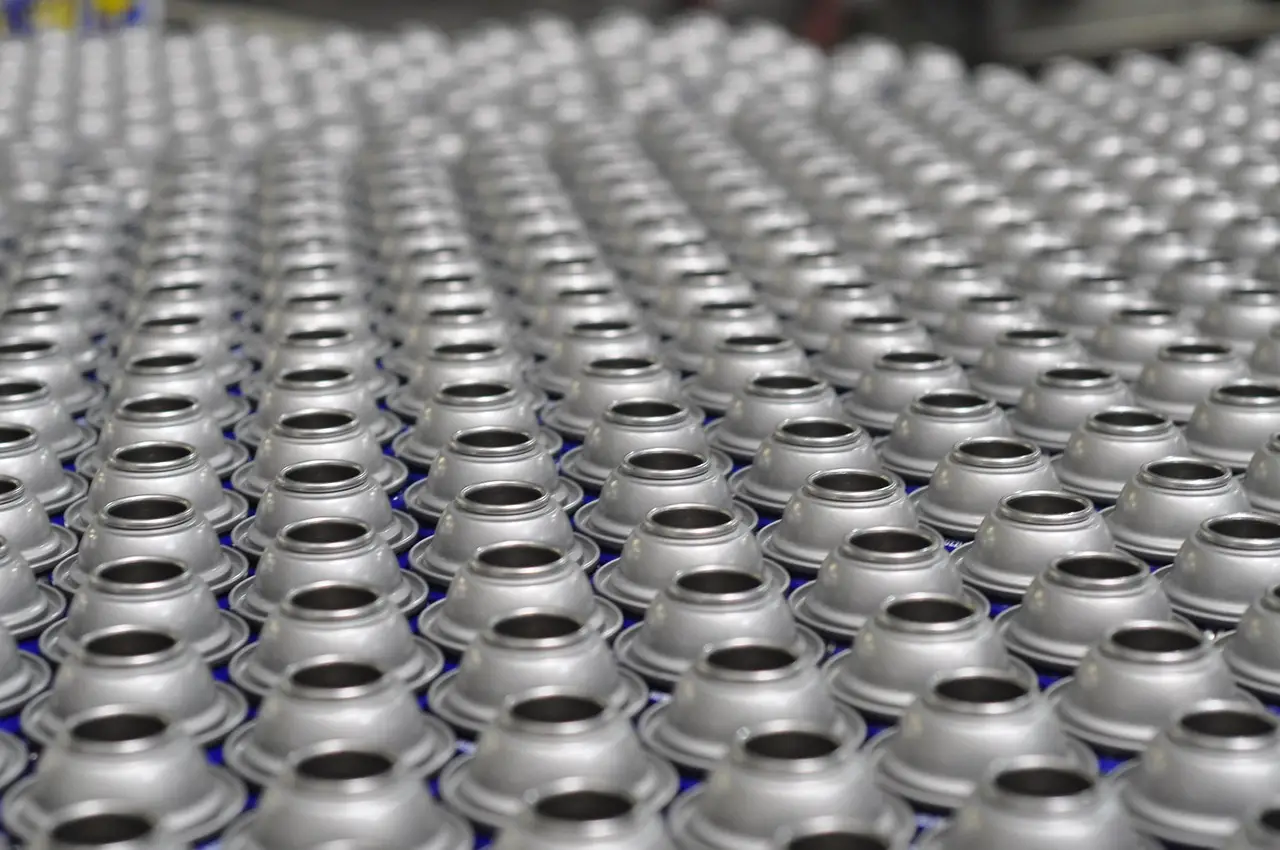
On November 24, Belgium inaugurated Europe's largest satellite manufacturing plant, a €100 million facility in Charleroi that can produce up to 500 satellites a year and will anchor a €15.6 billion network built to break Europe's dependence on SpaceX. The move comes months after Ukraine's forces watched their Starshield terminals go dark at exactly the moments they mattered most.
What has opened in Charleroi?
Belgian company Aerospacelab — which will rename itself Ectro on November 30 — operates the 20,000-square-meter factory, including 4,000 square meters of specialized cleanrooms where engineers will assemble satellites. Founded in 2018, the company won a €2.4 billion contract in September to manufacture and deliver 264 of the 348 satellites forming the core of IRIS², Europe's planned multi-orbit communications constellation.
Airbus, Thales Alenia Space and OHB are also involved in the project, while a consortium of satellite operators — SES, Eutelsat and Hispasat — will run the network. Unlike Starlink's thousands of satellites in low Earth orbit, IRIS² will combine satellites at different altitudes: lower ones for faster communications, higher ones for wider geographic coverage.
Takeaway: Europe now has its first industrial-scale satellite plant, sized to churn out constellations rather than one-off spacecraft.
What does IRIS² change for governments?
In August, the European Commission added 66 satellites dedicated to defense, security and emergency services, raising the network's secure communications capacity for EU governments by 60%. The first satellites will not reach orbit until 2029, however, and government services should become operational in 2030.
That timeline sits awkwardly against recent experience. Starlink restored Ukrainian connectivity after Russian strikes destroyed terrestrial infrastructure, and its military counterpart, Starshield, became essential for battlefield communications, drone operations and intercepting incoming Russian attacks.
Then the leverage became visible. In mid-October 2026, Ukrainian forces discovered their Starshield terminals lost connectivity when moving faster than roughly 160 kilometers per hour. The restrictions forced Ukraine to abandon some missions and compromised interceptions of Russia's increasingly sophisticated jet-powered attack drones. On October 15, Reuters, citing two US officials and a Western official, reported that the order originated inside the White House — amid tensions over Ukrainian strikes on Russian oil refineries, which President Donald Trump blamed for rising fuel prices. Musk said the US government controlled the military service; a senior American official denied Trump had requested the restrictions.
Zelensky announced restored connectivity on October 24. Less than three weeks later, on November 12, he reported renewed restrictions across the front line and occupied territories, saying some Russian drones had already slipped through. SpaceX denied any change, telling Axios: "This is false. There has been no change." As recently as November 26, Zelensky told the BBC that restrictions persisted over occupied territories. Asked who was responsible, he said: "Technically SpaceX, politically – I don't know, I really don't know."
British Defense Minister Wes Streeting told Reuters on November 23 that the affair had "really dented confidence and trust" among European defense ministers.
Takeaway: the episode converted satellite autonomy from a strategic preference into what Laurynas Mačiulis, CEO of Lithuanian laser-communications startup Astrolight, called a necessity: "Alternative systems are now becoming a must for the whole Western world, so we're not relying on a single operator for such a critical technology."
Why does independence cost so much?
A new report from the Kiel Institute for the World Economy puts the price of each low-orbit IRIS² satellite at around €33 million — nearly 28 times the estimated €1.2 million cost of a Starlink satellite. Eutelsat's existing OneWeb constellation, which offers a partial alternative today, costs €6.2 million per satellite. Germany's separate proposed military constellation, SATCOMBw 4, ranges from €40 million to €100 million per satellite.
SpaceX enjoys mass production, years of experience and its own reusable rockets. Europe, meanwhile, splits its purchasing power across overlapping national projects. Germany alone plans to spend €8–10 billion on a separate military constellation of 100 to 200 satellites, despite already contributing billions toward IRIS². "Instead of closing this gap together, Europe is ordering two networks at once," said Johannes Binder, a defense economist and co-author of the report.
The researchers estimate that IRIS², the German constellation and OneWeb's expansion together require €27–29 billion, including roughly €20 billion in public funding. Even then, capacity may fall short: a 2026 computer simulation study found Starlink outperformed the proposed European constellation in overall connectivity, though IRIS² held advantages in certain strategic applications.
Takeaway: Europe is paying roughly twenty-eight times SpaceX's unit cost for the assurance that no outside actor can switch its network off.
The Charleroi factory brings that ambition closer. Whether Europe's governments can cooperate enough to realize it remains the open question.
via zmescience.com (Source)
More from Marcus Bennett
Show full bio
News editor covering regulation, policy and their impact on general science news at SciBeat.
638 articles
Nearby plates
- Amazon schedules 36-satellite Ariane 6 launch after 40-satellite loss
- FCC Clears SpaceX's One-Million-Satellite AI Data Center Plan
- Astronomers Propose AI 'Supertelescope' From $6 Billion of Sky Surveys
- First 'Humanitarian Satellite' Set for July 2027 Launch
- FCC Approves 1 Million SpaceX AI Satellites for Orbital Data Centers