Recorded November 26, 2026
Space & AstronomyReported finding
Record quasar reveals 360-million-solar-mass black hole in cosmic dawn
Euclid researchers have found the most distant quasar yet, with a 360-million-solar-mass black hole seen 13.1 billion years ago, 630 million years after the Big Bang.
By Priya Raman3 min read669 words
In brief
- The quasar formed within 630 million years of the Big Bang and appears as it was 13.1 billion years ago.
- Webb measurements put the central black hole's mass at 360 million Suns.
- The discovery extends the previous record by nearly 40 million years in lookback time.
- Euclid, launched in 2023, found the object among millions of observations; Hubble, Webb and other observatories corroborated it.
- The 2026 paper lists J. Wolf, S. Belladitta and colleagues and carries DOI 10.1051/0004-6361/202662243.
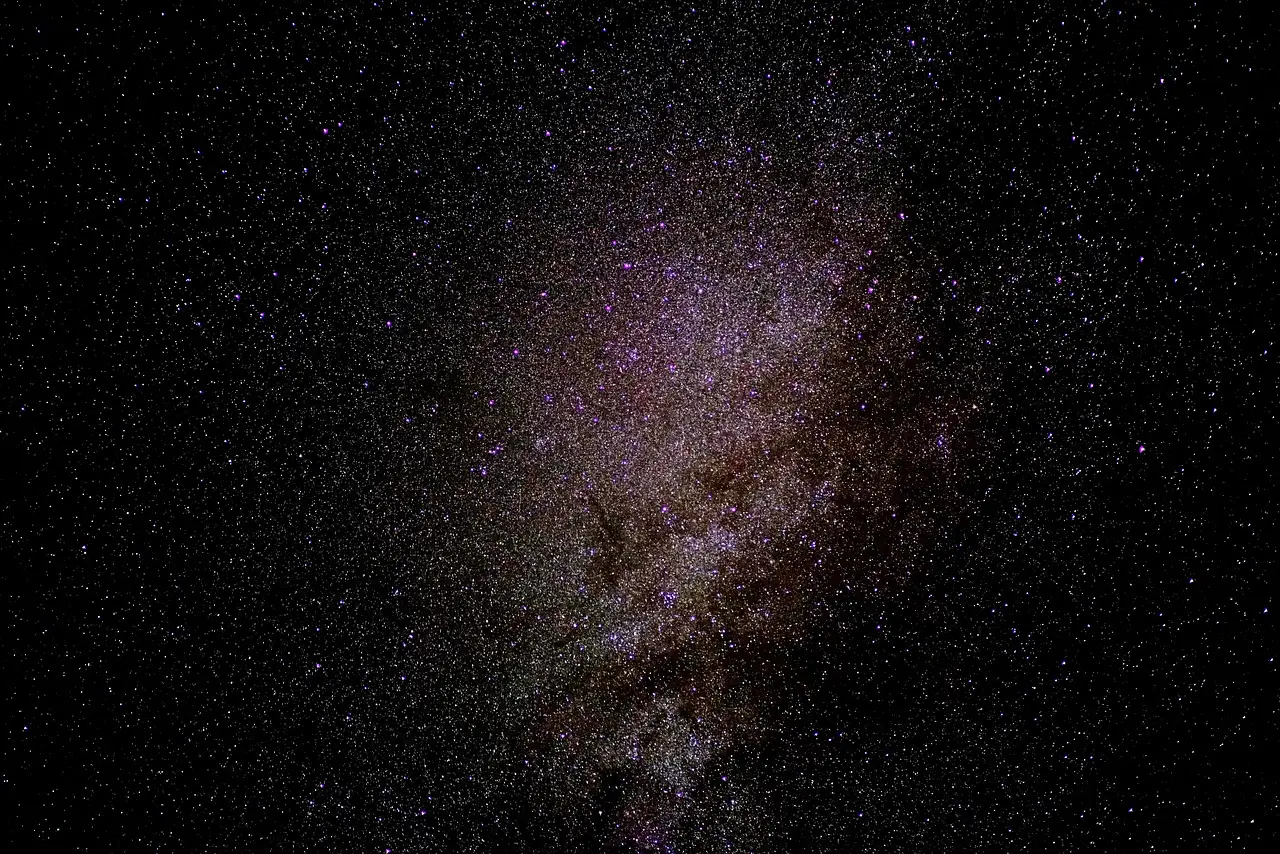
A quasar that formed within 630 million years of the Big Bang (the event that began the universe's expansion) has become the most distant such object found, with a central black hole carrying 360 million times the mass of the Sun.
The discovery came from a German-led team led by Julien Wolf of the European Southern Observatory, who described the result in an email.
The quasar appears as it did 13.1 billion years ago, less than 5 percent of the universe's present age, in a cosmos now known to be 13.8 billion years old. The team reported the result on Tuesday, and Astronomy & Astrophysics published the final findings in 2026.
What makes this quasar unusual?
A quasar (the exceptionally bright core of a galaxy) is powered by material feeding its central black hole (an object whose gravity is strong enough to trap light). Finding one this early is rare. Wolf said this example is even rarer because the black hole was so massive despite consuming its surroundings relatively slowly.
The observations establish that the black hole already possessed that mass near cosmic dawn (the early era following the universe's formation). They do not, by themselves, explain how it formed or grew so quickly.
How did Euclid find the quasar?
The team searched through millions of observations from the European Space Agency's Euclid telescope, launched in 2023. Euclid surveys galaxies to shed light on dark matter (invisible matter inferred chiefly through gravity) and dark energy (the term for the component associated with cosmic expansion).
Within this broad survey, the researchers identified the exceptionally luminous source that Wolf named Dún Aonghasa.
How much farther back does the record reach?
“This time the leap in cosmic time is huge!” Wolf said. “The previous two records each took us back by about 15 million years or less. This one takes us back by nearly 40 million years, the biggest advance in nearly a decade!”
Lookback time (how far into the past observed light reveals the universe) is the relevant measure. The new object extends that interval by nearly 40 million years beyond the previous records.
Why is it called Dún Aonghasa?
The name came from Dún Aonghasa, a prehistoric stone fort in Ireland's Aran Islands. Wolf's wife and daughter are Irish, and a visit to the fort left him awestruck. He said its promise of a vast horizon still to explore echoed the scientific prospect offered by the quasar.
How did other telescopes confirm it?
The Hubble and Webb space telescopes, along with other observatories on and off Earth, corroborated the team's findings. Webb measurements showed that the black hole powering the quasar carries a mass equivalent to 360 million Suns.
What did the paper report?
The paper, “Euclid: Discovery of Dún Aonghasa, a quasar at z = 8.13 hosting a 360-million-solar-mass black hole,” appeared in Astronomy & Astrophysics in 2026. The paper lists J. Wolf, S. Belladitta and colleagues as authors.
The designation z = 8.13 is a redshift value (a measure of how much the universe expanded while the quasar's light traveled to Earth). The paper carries the DOI (digital object identifier) 10.1051/0004-6361/202662243 and is available at www.aanda.org/10.1051/0004-6361/202662243.
What remains unexplained?
“Dun Aonghasa gives us a new deadline” for the early universe, Wolf said. “About 630 million years after the Big Bang, its black hole had already grown to about 360 million times the mass of the sun. But how?”
The study sets a demanding target for models of early black-hole growth without identifying the mechanism behind that growth. Wolf cautioned that the record could fall again in a few months or stand for years, while the team continues its search through cosmic dawn.
The next test is whether an explanation can meet that deadline: how a 360-million-solar-mass black hole assembled within 630 million years of the universe's birth.
via phys.org/rss-feed/ (Source)
More from Priya Raman
Show full bio
Senior reporter covering people, launches and day-to-day practice in general science news at SciBeat.
611 articles