Plate Nº 91 · recorded November 18, 2026
Space & AstronomyReported finding
Rocket Lab's Electron Hits 100 Flights Faster Than Any Commercial Rocket
Rocket Lab's Electron rocket completed its 100th mission on Nov. 14, faster than any commercial rocket, while Neutron hardware reached Wallops Island for a 2027 debut and twin spacecraft sped toward Mars.
By Nathan Brooks3 min read693 words
In brief
- Electron flew its 100th mission on Nov. 14, 2026, faster than any commercially developed rocket in history.
- Rocket Lab's total backlog has reached a record $3.57 billion after roughly $1 billion in new Q3 contracts.
- Electron has a 96% reliability rate, with another 100 launches already on the manifest.
- Neutron's debut is targeted no earlier than 2027, with 16 missions booked through the end of the decade.
- Twin ESCAPADE spacecraft Blue and Gold are on track to enter Mars orbit in September 2027.
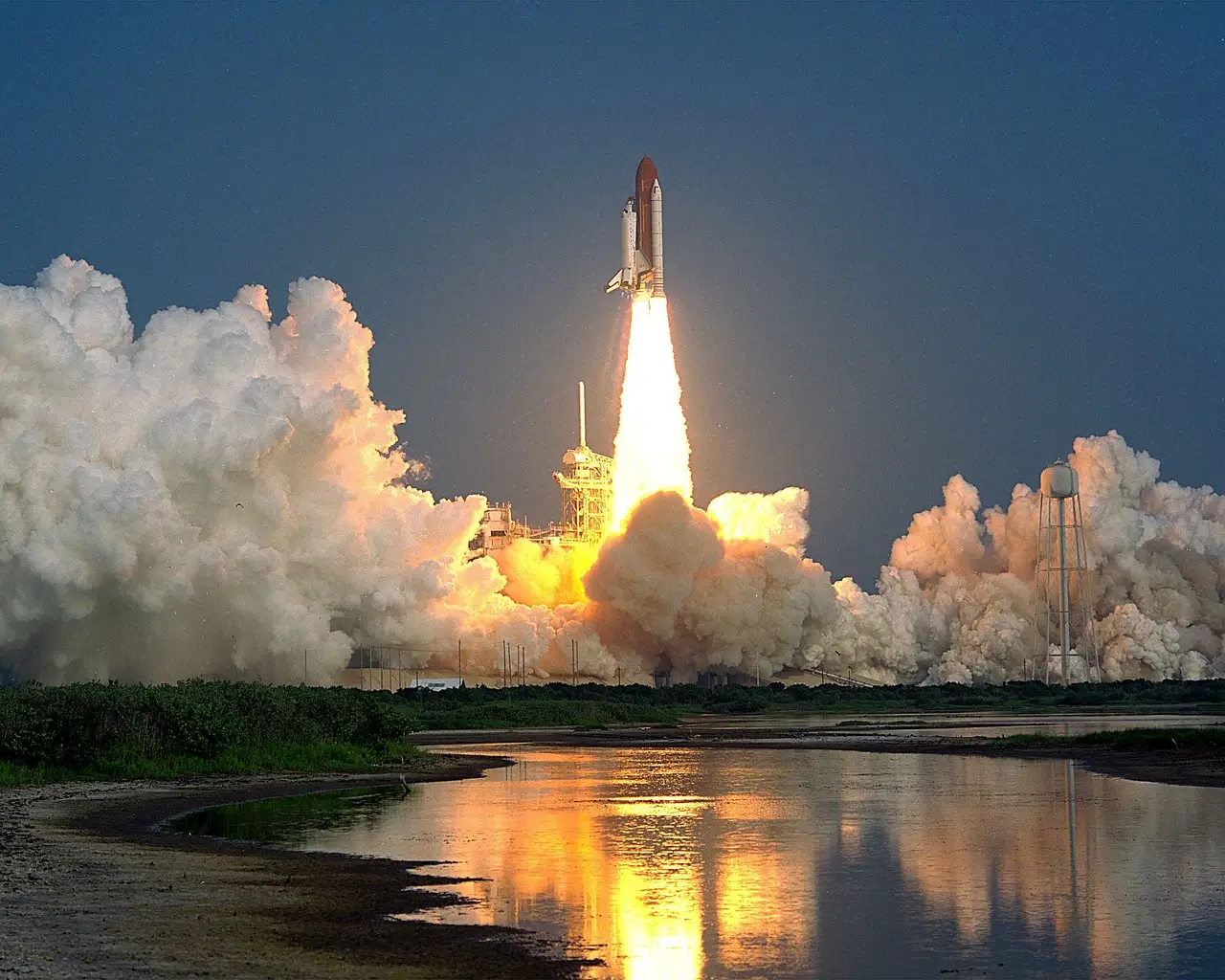
Rocket Lab's Electron rocket flew its 100th mission on Saturday, Nov. 14 — faster than any commercially developed rocket in history. The company celebrated the milestone with a blunt message: "Triple digits. Electron has reached 100 launches faster than any commercially developed rocket in history. With another 100+ launches in backlog, we're just getting started."
The numbers back that up. In the third quarter alone, Rocket Lab signed contracts for eight additional Neutron missions, bringing roughly $1 billion in new launch contracts across its fleet. That pushes the company's total backlog to a record $3.57 billion.
What happened on mission 100?
The 100th flight, named "The Mountain God Rises," lifted off at 05:30 UTC from Launch Complex 1 on New Zealand's Māhia Peninsula. Electron carried the YAMATSUMI-II synthetic aperture radar satellite — a spacecraft that images Earth through clouds and darkness — into low-Earth orbit for the Japanese company Institute for Q-shu Pioneers of Space (iQPS).
The road to 100 wasn't smooth from the start. Electron's maiden flight in May 2017 failed when the range safety officer triggered the rocket's Flight Termination System after telemetry was lost. Investigators traced the fault to third-party ground tracking equipment, not the vehicle. Rocket Lab changed no hardware, only ground procedures.
The rocket reached orbit on its second try in January 2018, after six weather and vehicle-related delays, delivering three small satellites: two Lemur-2 satellites for Spire Global and Planet Labs' Dove Pioneer. Nearly nine years on, Electron has logged a 96% reliability rate across orbital flights and suborbital HASTE missions, with another 100 launches already on the manifest.
How is the Neutron rocket coming along?
Rocket Lab's next vehicle, the partially reusable Neutron, is targeting a debut no earlier than 2027. Hardware is now moving to the pad: the second stage and thrust module recently arrived at Wallops Island, Virginia, where teams placed the thrust structure on the Launch Complex 3 mount for testing.
Because the mount has no strongback or tower, the thrust module is the only physical link between rocket and ground — so Rocket Lab plans integrated fluid tests and interface checks to confirm the quick disconnects mate properly. After that, the second stage heads to a test stand for cryogenic proof testing and wet dress rehearsals, then integration with a single vacuum-optimized Archimedes engine ahead of static-fire testing.
At the company's Middle River, Maryland facility, teams are building structures for Neutron's first flight plus the second stage and thrust module for the second. On Nov. 6, Rocket Lab announced that Stage 1's Forward Dome had been built and cured, coming off the Automated Fiber Placement machine as planned and completing its heat-and-pressure cycle to cure the carbon composite. Analysis and material tests come next.
Neutron already has its first 16 missions booked through the end of the decade.
What about robotics and Mars?
Launch is no longer Rocket Lab's only business. On Oct. 30, Rocket Lab Robotics announced a robotic arm built with NASA that can "walk" across spacecraft, use tools, and perform repairs and upgrades in orbit. It's scheduled to fly in late 2027 on NASA's Fly Foundational Robots demonstration mission, where it will install an Orbital Replacement Unit to prove autonomous in-space servicing. The capability follows Rocket Lab's May 2026 acquisition of robotics firm Motiv Space Systems.
Deep space is on the itinerary too. Blue and Gold, the twin Rocket Lab-built spacecraft flying NASA's ESCAPADE mission to Mars, executed autonomous 10-minute powered Earth flyby burns on Nov. 7 and Nov. 9 — the first time the complex maneuver has succeeded with this class of spacecraft, according to the company. After launching in November 2025 and loitering near Sun-Earth Lagrange Point 2, the pair is now on a trans-Mars trajectory and should enter Martian orbit in September 2027.
The coming year will test whether Rocket Lab can scale from small-satellite workhorse into medium-lift and interplanetary operations — with 100 flights down and 100 more queued, plus a Mars arrival on the calendar.
via nasaspaceflight.com (Source)
More from Nathan Brooks
Show full bio
Market editor covering companies, deals and strategy in general science news at SciBeat.
456 articles