Recorded November 24, 2026
Earth & ClimateReported finding
Russia's Shiveluch volcano grows a toothpaste-like lava dome
A new Landsat 9 image captures a rapidly growing lava dome at Shiveluch, Russia's northernmost active volcano, which has been erupting nearly continuously since 1999.
By James Calloway3 min read688 words
In brief
- Landsat 9 captured the image of Shiveluch's lava dome on April 23, 2026
- Shiveluch is a 10,771-foot (3,283 m) stratovolcano erupting since 1999, with at least 15 eruptions in 100 years
- The volcano produces about 530 million cubic feet (15 million cubic meters) of lava per year
- Ash patches from a 2023 eruption that burned nearby forest are visible in a zoomed-out view
- Volcanologist Janine Krippner felt heat from lava flows more than 5 years old during fieldwork
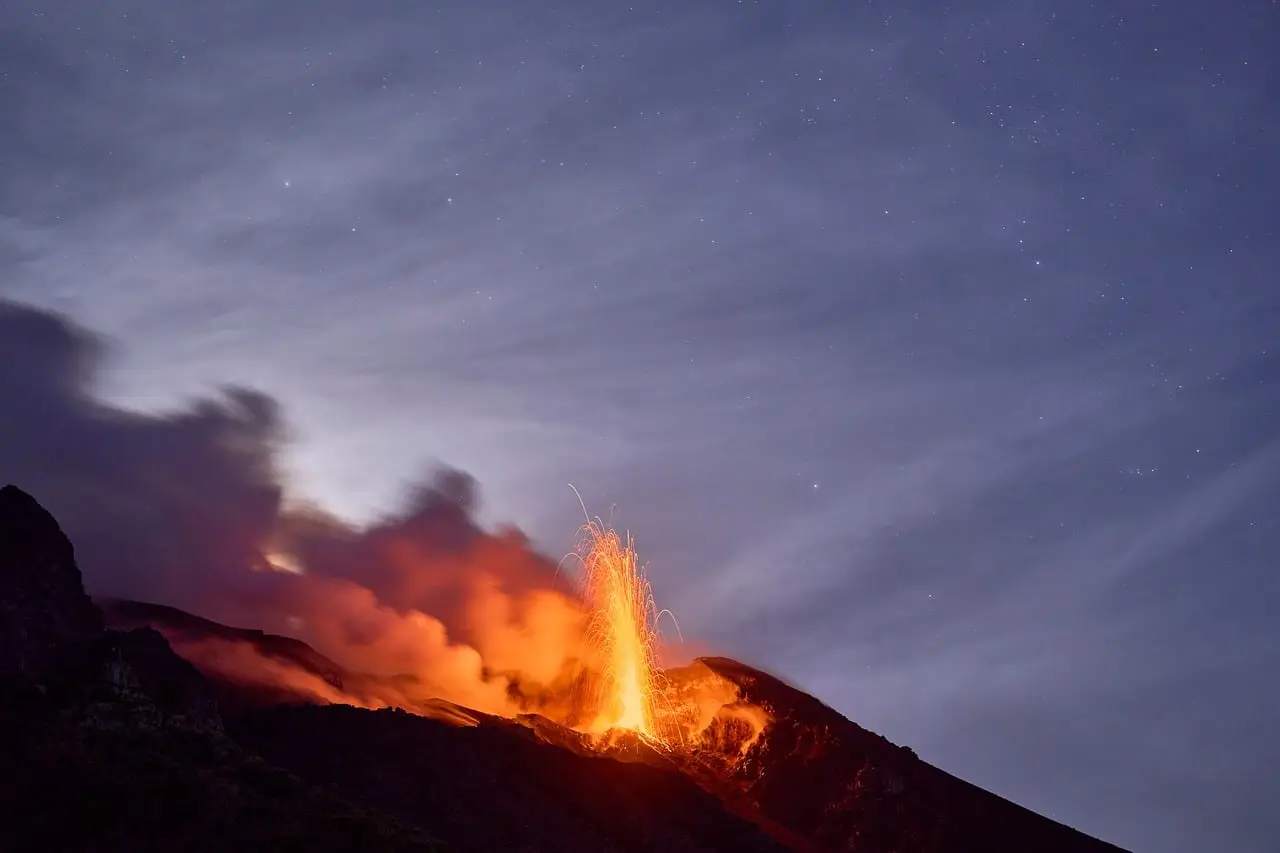
A satellite image taken on April 23, 2026 shows a dark lava dome swelling at the summit of Shiveluch, one of the world's most active volcanoes, surrounded by snow it keeps melting away. The eruption feeding that dome has run nearly nonstop since 1999.
What does the photo show?
The image comes from NASA and the U.S. Geological Survey's Landsat 9 satellite. It frames the 10,771-foot-tall (3,283 meters) peak on Russia's Kamchatka Peninsula, the northernmost active volcano there. The name Shiveluch, spelled in several ways, loosely translates to "smoking mountain" in the language of the region's Indigenous Itelmen people.
The headline feature is a dark circle inside the volcano's horseshoe-shaped caldera, the collapsed basin at its summit. That's the lava dome — a steep-sided mound that builds when thick lava piles up over a vent instead of flowing away. The Earth Observatory says it has been growing rapidly in recent months.
Why "toothpaste"?
The lava in this dome doesn't gush. It squeezes.
"[It is] extruded slowly and piles up into lobed, sloped, or spine-like shapes akin to those that form when toothpaste is squeezed from a tube," Earth Observatory representatives wrote.
That slow behavior matters for the volcano's stability. Domes grow until they can't hold their own weight, then shed material — sometimes collapsing the caldera walls with them. Shiveluch rebuilds quickly afterward. Whether the dome in this particular photo later collapsed, nobody has confirmed.
"Shivelyuch is an incredible volcano that has collapsed over and over again, on several scales, ranging from enormous flank collapses to more modest dome-collapse events," Janine Krippner, a volcanologist based in New Zealand, told the Earth Observatory. "It goes through cycles of collapse but then builds itself up again and again through constant volcanic activity."
Just how active is Shiveluch?
Very, by any reasonable measure.
Kamchatka hosts unusually powerful eruptions, and Shiveluch stands out even there. The Smithsonian Institution's Global Volcanism Program counts at least 15 eruptions in the past century, the latest ongoing since 1999.
A 2007 study put its average output at about 530 million cubic feet (15 million cubic meters) of lava per year — enough to fill 6,000 Olympic swimming pools. That steady supply reshapes the summit fast enough that satellite views of the volcano never look quite the same twice.
"On a near-daily basis, satellites detect new signs of activity within [Shiveluch's] horseshoe-shaped caldera, including thermal anomalies, hot avalanches and debris flows," Earth Observatory representatives wrote. The volcano also throws out "ash deposits that darken the surrounding landscape," they added.
What are the black streaks on the flanks?
Two different things, and both reveal lingering heat.
In a zoomed-out version of the image, thin black lines run down the volcano's sides, including one from the summit caldera. These are lava flows from recent months or years. They stay warm enough that snow landing on them melts away, leaving dark bare rock against the white slopes. Krippner has felt this firsthand: during earlier fieldwork at Shiveluch, she could still feel heat from lava flows more than five years old.
Farther out, broader dark patches look painted onto the image with rough brushstrokes. Those are pyroclastic ash deposits — clouds of hot ash and debris from the volcano's 2023 eruption — which burned large parts of a nearby forest, according to the Earth Observatory.
What does this change for volcano watchers?
For most people, nothing immediate — this is a remote volcano, and the image is an observation, not a new hazard assessment. But it's a useful reminder of how satellite monitoring tracks restless volcanoes that are difficult and dangerous to visit on the ground. The photo was snapped at coordinates 56.66230841, 161.3449064.
The caveats worth keeping in mind: the dome's recent growth comes from the Earth Observatory's reading of the imagery, the yearly lava figure rests on a single 2007 study, and no one has verified what happened to this dome after April 23, 2026. Domestically at Shiveluch, the only safe bet is change.
via livescience.com/feeds/news (Source)
More from James Calloway
Show full bio
Staff writer covering regulation, policy and their impact on general science news at SciBeat.
586 articles
Nearby plates
- Japan's Kikai Supervolcano Is Refilling With Fresh Magma, Study Finds
- US-India Satellite Watches a Sleeping Kamchatka Volcano Wake
- Two Hot Zones Near Earth's Core May Fuel Undersea Volcanoes
- Study suggests Earth’s core carbon came from outer solar system
- Superheated Magma Stays Fluid for Hours, Fueling Towering Lava Fountains