Plate Nº 64 · recorded November 17, 2026
Space & AstronomyReported finding
Satellites Now Outnumber Visible Stars Over Most Towns
Some 710 satellites cross the sky at any moment over an average mid-latitude town, a new analysis finds — and about 105 of them shine as bright as stars.
By Nathan Brooks3 min read675 words
In brief
- 710 satellites cross the sky at any moment above an average U.K. town, per an Oct. 2025 analysis.
- Only about 105 of those satellites catch enough sunlight to shine as bright as stars.
- Around 300 satellites are sunlit in the first hour after dark, but fewer than 20 around midnight.
- The study tracked 15,833 active satellites in low Earth orbit below 1,200 miles altitude.
- A single night brings 12,891 different satellites over an average U.K. town.
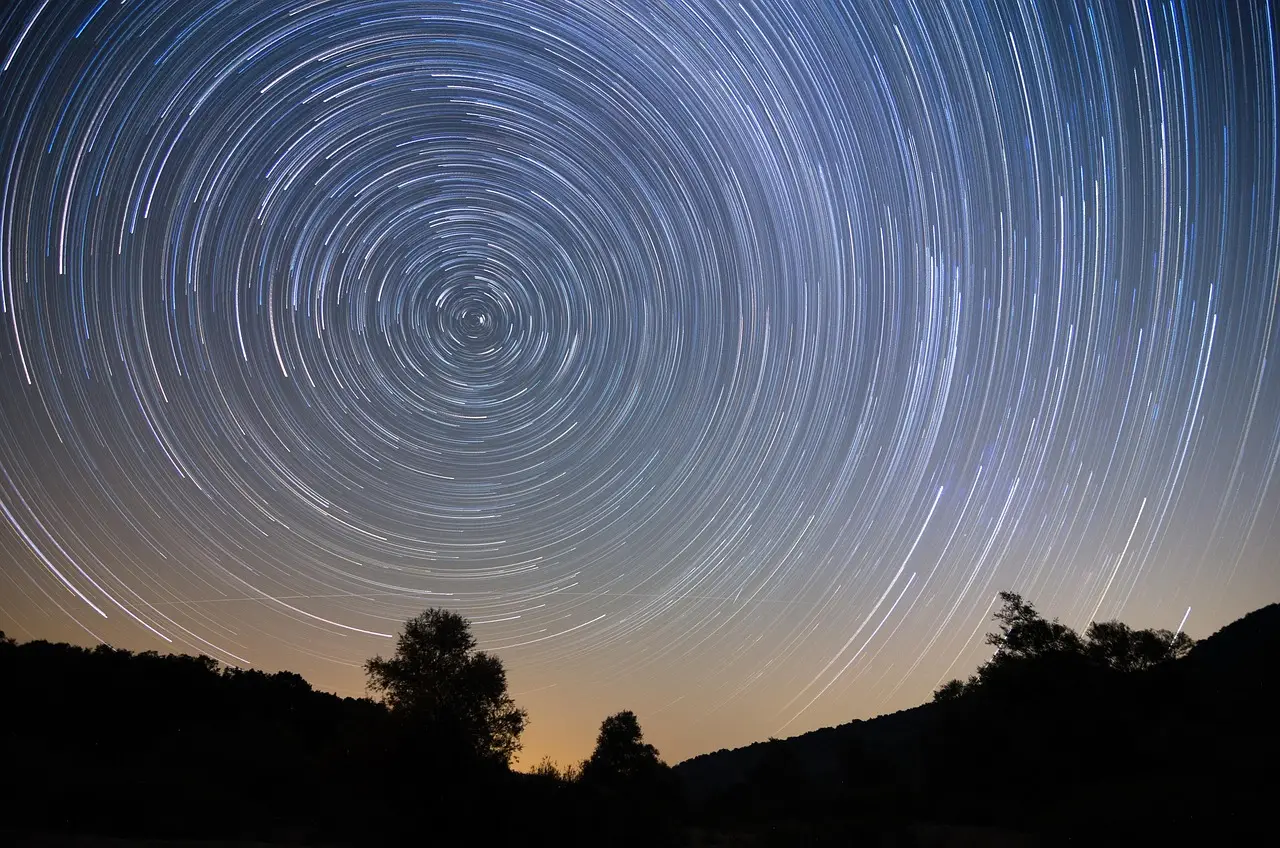
More than 700 satellites cross the sky over an average mid-latitude town at any given moment of the night — in many cases outnumbering the stars you can actually see with the naked eye.
That's the headline finding of an analysis published as a non-peer-reviewed study by engineering firm Accu Components. The researchers tracked the trajectories of 15,833 active satellites currently circling the planet in low Earth orbit below an altitude of 1,200 miles (2,000 kilometers). Working with data from Oct. 12 and Oct. 18 this year, they calculated that with a completely unobstructed horizon, 710 satellites were crossing the sky at every single moment above an average U.K. town.
How many can you actually see?
Not all 710 glow in the dark. Satellites, unlike stars, don't produce their own light — they only shine when the sun illuminates them while the ground below has already sunk into darkness. The study found an average of just 105 of those 710 satellites were catching light as they zoomed overhead, shining as bright as stars.
And that number swings dramatically through the night. Right after dusk and just before dawn, far more satellites catch sunlight than in the small hours.
"For a typical U.K. town, around 300 satellites are catching the sunlight in the first hour or so after dark," an Accu Components spokesperson told Space.com by email. "That falls to fewer than 20 around midnight, then climbs back to around 300 before dawn."
Across a full night, an average U.K. town sees 12,891 different satellites passing overhead, the study found.
Why the satellites bunch up over some places
The researchers focused on the U.K., but they say similar satellite traffic flows over most of Europe, the U.S. and other mid-latitude regions, especially between 40 and 50 degrees north or south.
The reason is orbital geometry. "Most Starlink satellites orbit at around 53 degrees to the equator, so the satellites bunch up over the mid-latitudes," the spokesperson said. "These worldwide figures are approximate, based on a global grid over a single day. Skies near the equator are the quietest, with around 490 satellites."
The study draws on satellite monitoring data from the U.S. Space Force, available to anyone through the public website CelesTrak.
How does that compare with the stars?
The comparison with the night sky depends heavily on where you live. In large, light-polluted megacities such as London or New York, as few as a few dozen stars are visible to the naked eye, according to OwnStarMap. In suburban areas and smaller towns, that rises to a few hundred. To see a few thousand stars, you have to retreat to remote countryside or isolated mountain ranges.
So in a bright city, even the ~105 illuminated satellites at any given moment — or the ~300 right after dusk — can easily exceed the visible stars. In a dark mountain sky, the stars still win, for now.
Why the trend worries astronomers
The number of satellites orbiting Earth has grown steeply over the past decade, especially since Elon Musk's SpaceX began launching its Starlink constellation of internet-beaming spacecraft. Satellite companies plan to launch hundreds of thousands, possibly millions, of satellites in the coming decades. If those plans come to pass, passing satellites will vastly outnumber stars almost anywhere in the world.
Astronomers are particularly concerned. Satellites crossing the view of ground-based telescopes leave streaks in astronomical images and raise the overall brightness of the sky through the light they reflect back down to Earth. Gradually, even the most powerful telescopes could lose their ability to see the distant stars and galaxies that hold answers to key questions about the universe's history.
There are caveats worth keeping in mind. The study hasn't undergone peer review, and the global figures are approximations based on a single day's data. Still, the core picture — a sky steadily filling with spacecraft — rests on solid tracking data from the U.S. Space Force.
via space.com (Source)
More from Nathan Brooks
Show full bio
Market editor covering companies, deals and strategy in general science news at SciBeat.
456 articles
Nearby plates
- A Giant Planet Vanished From View — And a Hidden Neighbor May Be Why
- Astronomers Watch an Exoplanet's Transits Vanish for the First Time
- Faint Young Stars Suggest Messier 74 Is Nearly Twice as Large as Thought
- Starlink Satellites Dodged 144,404 Collisions in Six Months
- ESA's 2026 Report: 31,000 Objects Now Crowd Low-Earth Orbit