Recorded November 24, 2026
Biology & EvolutionReported finding
Sociable, predictable dolphins live longer, 40-year study finds
A 40-year study of 457 wild Indo-Pacific bottlenose dolphins in PLOS Biology links high sociability and predictable group-size habits to longer lifespans, with males showing steeper social decline.
By Nathan Brooks3 min read566 words
In brief
- Study published Nov. 24 in PLOS Biology analyzed 457 wild Indo-Pacific bottlenose dolphins.
- Data came from a 40-year field study, with individuals observed for 2–35 years.
- Average group size first increases, then declines with age; declines are more pronounced in males.
- More sociable dolphins with less within-individual variation in group size tend to live longer.
- Limitation: average observation time was about five minutes per day, while group composition can change several times an hour.
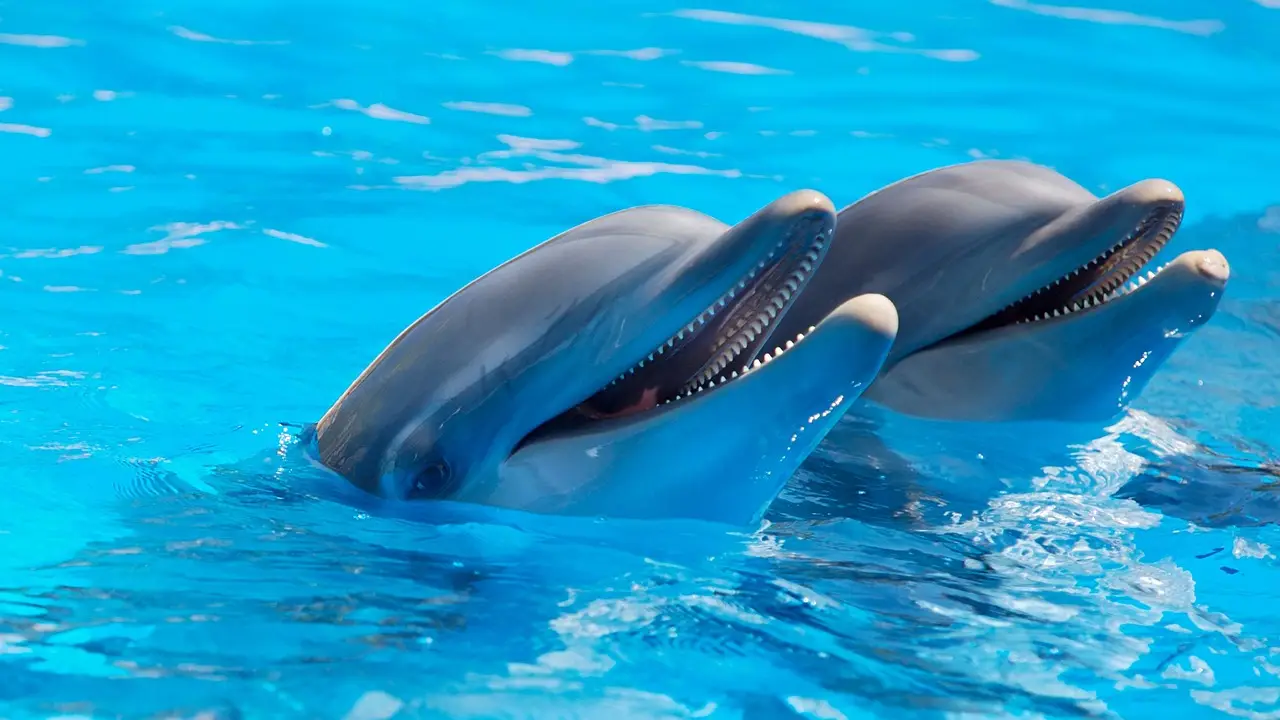
Dolphins that stay sociable — and stick to predictable group sizes — tend to live longer, according to a study published Nov. 24 in the open-access journal PLOS Biology. Kelley Caroline Meehan of The University of Queensland, St. Lucia, Australia, and colleagues drew the conclusion from 40 years of behavioral data on wild Indo-Pacific bottlenose dolphins (Tursiops aduncus), a long-lived species with intricate social structures.
The team analyzed records for 457 individual dolphins, each observed for anywhere from 2 to 35 years. That's a scale few wildlife studies can match: four decades of continuous monitoring, enough to follow the same animals across most of their adult lives.
What did the researchers actually find?
The pattern wasn't linear. Average group size first rises, then falls as a dolphin ages — a social arc that peaks in mid-life before tapering off. The decline was sharper in males than in females.
The more striking result involved predictability. Dolphins that were highly sociable and showed less day-to-day variation in their group sizes tended to outlive their less consistent peers. In plain terms: the animals that kept showing up with roughly the same crowd, at roughly the same crowd size, aged better.
That individual variation matters here. Earlier research on aging and social behavior across species focused on average changes — the population-level trend. This study instead tracked how each dolphin's own habits shifted over time, letting the researchers separate personality from demographics.
Why might social habits track lifespan?
The authors frame it as a question of social competence. Meehan said: "Dolphins live in a complex social environment with hundreds of conspecifics, which they must successfully navigate by adapting their behavior based on lived experience, a process known as social competence."
In this study, she explained, individuals develop consistent, or predictable, preferences in the size of groups they spend time in over decades of life — a measurable proxy for sociability. "This has important fitness implications, because those who continue to become more sociable and predictable throughout their lives also live the longest," Meehan said.
The authors put it more broadly in the paper itself: "Throughout ontogeny, animals are subject not only to the bounds of their physical world, but to a world defined by the other individuals around them: their social environment. Using 40 years of behavioral data from Indo-Pacific bottlenose dolphins, we provide new insights into social aging."
Meehan has spent a few months a year at the field site at Monkey Mia studying the animals for four years. Each dolphin, she said, has "a personality as unique as a fingerprint, and they are impossible to miss."
How solid are the numbers?
The authors flag a real limitation. Each dolphin's social group was sampled for an average of just five minutes per day — and in this species, group composition can change several times within a single hour. A five-minute snapshot may miss much of the daily churn.
The study also can't yet pin down the mechanism. The link between sociability, predictability and longevity is a correlation drawn from long-term observation, not a demonstrated cause. Future work, the authors write, is needed to understand the mediating factors in the relationship between aging and sociability.
Publication details: "Distinct trajectories and predictability of individual grouping patterns in dolphins link social ageing to longevity," PLOS Biology (2026). DOI: 10.1371/journal.pbio.3004022.
via phys.org/rss-feed/ (Source)
More from Nathan Brooks
Show full bio
Market editor covering companies, deals and strategy in general science news at SciBeat.
589 articles