Plate Nº 72 · recorded October 10, 2026
Biology & EvolutionReported finding
Southern Crabapple Genome Map Could Strengthen Domestic Apples
Researchers have mapped 242 DNA regions in the Southern crabapple tied to drought, heat and disease resistance. The genome, published in Horticulture Research, could help breeders develop hardier domestic apple varieties for a warming climate.
By Priya Raman3 min read570 words
In brief
- Study published in 2026 in Horticulture Research by a team led by Ben Mansfeld of Washington University in St. Louis
- Researchers sequenced more than 150 wild Southern crabapple samples from across the species' native range
- 242 DNA regions were tied to climate adaptation traits such as heat and drought tolerance
- Four crabapple species are native to North America, and Southern crabapple resists fire blight
- Mansfeld plans to extend the work to Malus coronaria and Malus ioensis
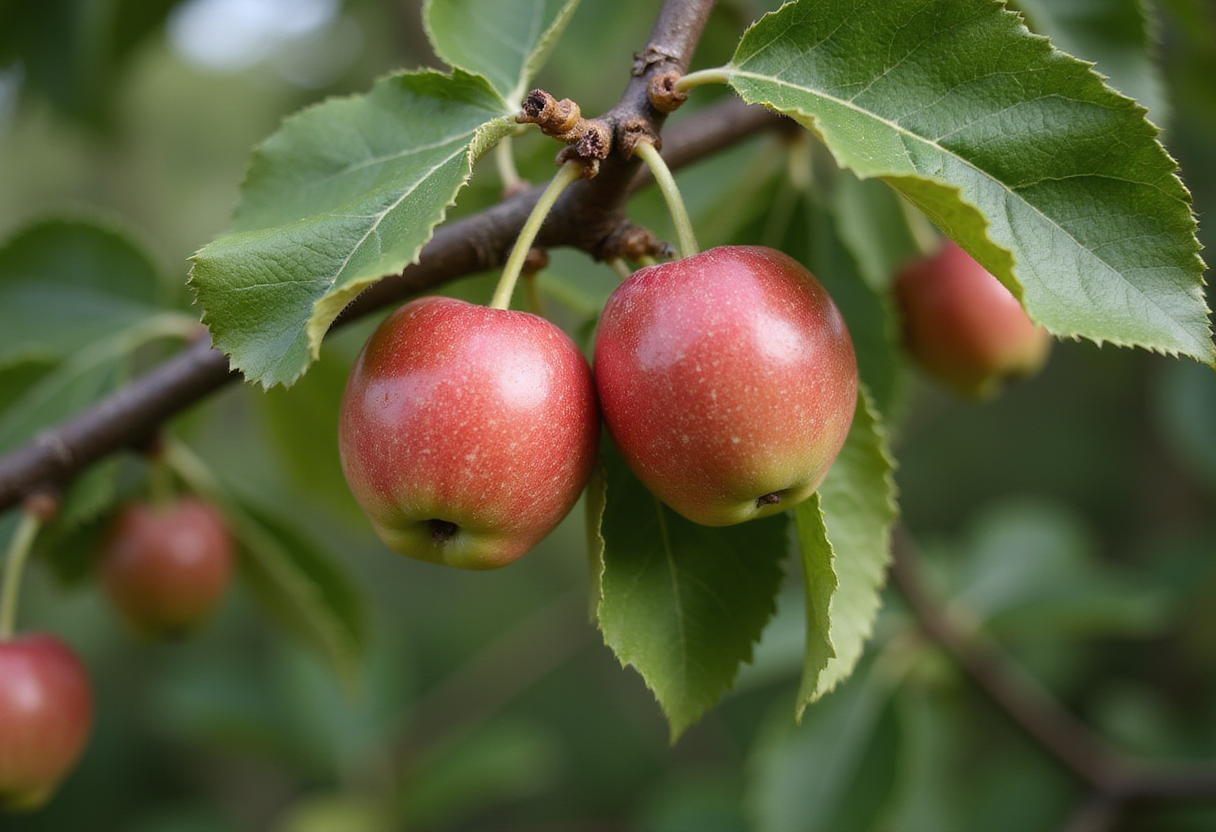
A new genome assembly of the Southern crabapple has revealed 242 DNA regions tied to traits such as heat tolerance, drought survival and disease resistance. The genomic resource, published in 2026 in Horticulture Research, gives apple breeders a detailed map of genetic variation in Malus angustifolia, one of four crabapple species native to North America.
What makes the Southern crabapple special?
The species thrives where commercial apples falter. It resists fire blight, a bacterial disease that kills orchards, and tolerates the high temperatures, drought and severe weather that climate change is making more common. That resilience has gone largely untapped because researchers lacked the genetic tools to study it.
"These species are really not included in the history of the breeding and domestication of apples at all," said Ben Mansfeld, an assistant professor of biology at Washington University in St. Louis who led the study. "They're what we call a genetic treasure trove."
How did the team crack the genome?
A small collection of M. angustifolia trees lives at the USDA Apple Collection in Geneva, New York, but there are not enough for proper genetic studies. Mansfeld's USDA colleague Christopher Gottschalk then found a stash of crabapple seeds stored for decades and previously overlooked.
"It's a valuable collection that's never been sequenced before," Mansfeld said.
The researchers built a high-quality, haplotype-resolved reference genome from those seeds, then sequenced more than 150 additional wild apple samples collected from across the species' native range. They layered climate data from each sample's origin onto the genetic information to look for variants tied to local temperature and precipitation patterns.
What did the analysis turn up?
The team flagged 242 genomic regions associated with environmental stress. They also paid close attention to large structural changes in DNA, not just single-letter mutations known as SNPs, or single-nucleotide polymorphisms.
Mansfeld noted that large changes in genomes, not just single-letter mutations, appear to shape traits in these apples. He was surprised by how diverse the genomes proved to be in their structural variation.
How could this help apple growers?
Two paths are open. Breeders can search the new map for genes involved in heat, drought or disease tolerance and move those into commercial varieties through traditional crossing, rootstock grafting or gene editing. Rootstock refers to the root system onto which a different apple variety is grafted.
Because apple trees produce fruit for roughly 25 years, hardier genetics can pay off for decades.
"You're not planting for next year," Mansfeld explained. "You're planning for the next 25 years."
The work also surfaces diversity missing from the current USDA orchard. Samples from Missouri, for example, are not represented there today. The team will donate those trees to the collection to improve its coverage of wild native species.
What's next?
Mansfeld's lab plans to apply the same approach to two more native crabapples, Malus coronaria and Malus ioensis, both understudied for fire blight resistance. The genome and sequencing data are openly available to any researcher, whether they study fruit quality, disease or flower color.
For Mansfeld, the broader lesson is that wild plants deserve protection in their own right. He called wild apples beautiful and amazing, and said they may hold hidden secrets that will hopefully help make the world a better place.
Citation: Ben N. Mansfeld et al., Horticulture Research, 2026. DOI: 10.1093/hr/uhag336
via Phys.org Biology (Source)
More from Priya Raman
Show full bio
Senior reporter covering industry trends and analytics at SciBeat.
207 articles
Nearby plates
- Microbe With 189 Genes Sets Record for Smallest Genome Ever Found
- Scientists name five new freshwater mussel species in southern U.S.
- Ancient DNA reveals extinct yak relative hidden in Siberian bones
- Tracking a 100-million-year-old genome duplication in salmonids
- Pond Protist Rewrites a Rule of the Genetic Code