Plate Nº 77 · recorded November 16, 2026
Science Policy & FundingReported finding
'Strange Loop Ethics': Scholars Say Environmental Fixes Merely Shift Problems
A KU law professor and colleagues argue in Ecology & Society that environmental governance often shifts problems rather than solving them, and propose "strange loop ethics" as a fix.
By Priya Raman4 min read732 words
In brief
- The study proposing 'strange loop ethics' was published in the journal Ecology & Society in 2026 (DOI: 10.5751/es-17568-310413).
- Lead co-author Robin Kundis Craig is the Robert A. Schroeder Distinguished Professor of Law at the University of Kansas.
- The paper analyzes fisheries management and carbon governance as cases where problems were shifted rather than solved.
- The 'maximum sustainable yield' approach to fisheries has never worked well at preventing fish stock depletion, the authors write.
- Eight researchers from the U.S., Spain, the Netherlands and Finland co-authored the study.
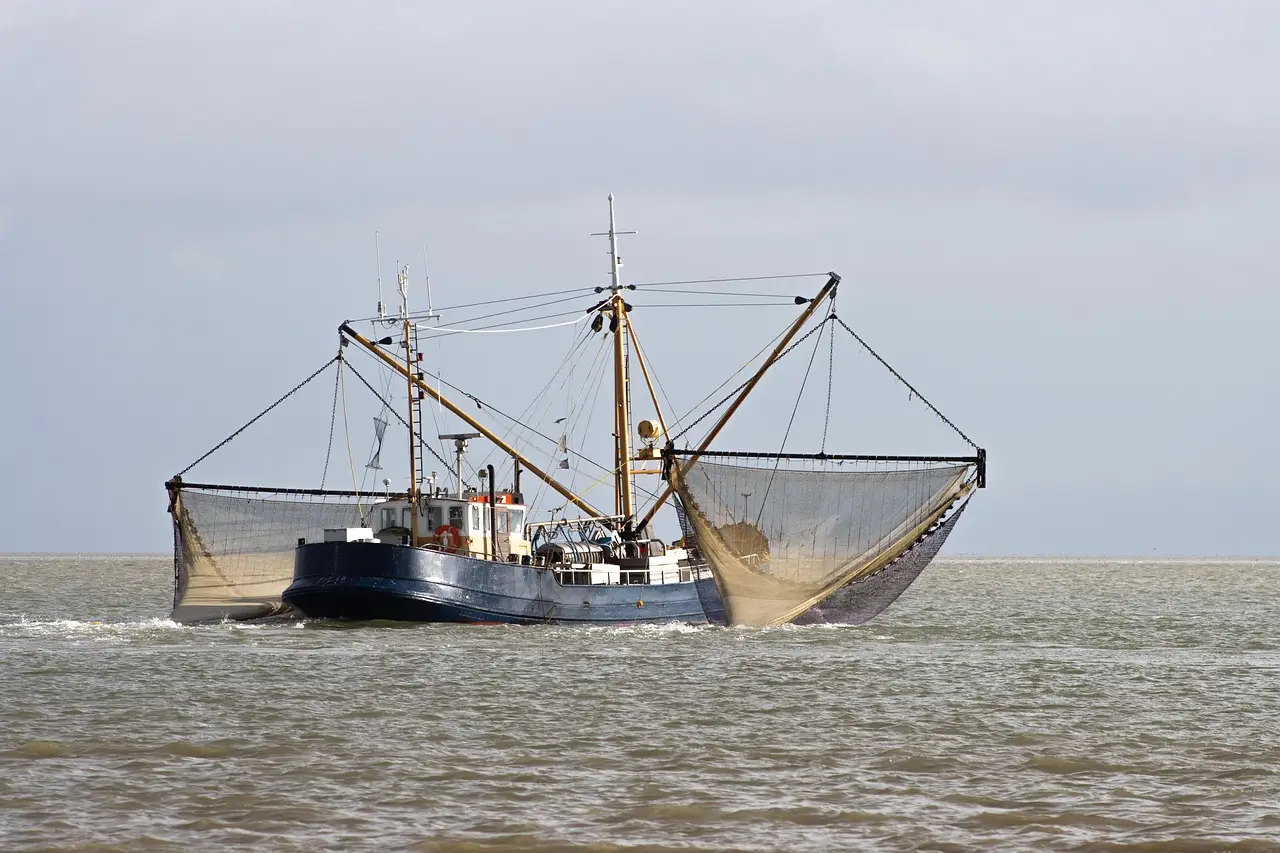
A study published in the journal Ecology & Society argues that decades of environmental governance have too often simply moved problems elsewhere, and it proposes a framework called "strange loop ethics" to break the cycle. Robin Kundis Craig, Robert A. Schroeder Distinguished Professor of Law at the University of Kansas and an expert in water and environmental law, co-authored the article with seven colleagues from institutions in Spain, the United States, the Netherlands and Finland.
The scholars base their argument on case studies from fisheries management and carbon governance, two arenas in which, they contend, interventions have shifted burdens rather than resolved underlying issues.
"For at least a couple of decades, scholars have recognized that the Anthropocene and climate change require being a little more flexible in how we approach problems," Craig said. "New circumstances require increased flexibility as well as cycles of learning. Having the ability to come back and adjust is necessary. What strange loop ethics and our proposal say is we've too long assumed the same ethical operating systems across scenarios."
The Anthropocene is the proposed geological epoch in which human activity, rather than natural forces, drives the planet's environment and ecosystems.
Why do current approaches fail?
Consider fisheries. Governments worldwide have long operated on the principle of "maximum sustainable yield," the idea that fishing fleets may take the largest possible catch without undermining the long-term survival of a species. The authors report that this approach has never worked well at preventing the depletion of fish stocks.
More troubling, they write, is where the burden lands. Limits on fishing have frequently been shifted onto small nations, Indigenous fisheries, particular species and specific waterways, while large commercial fleets and wealthier fishing nations have continued to deplete stocks globally. The result is a loop: new problems arise, the original problem persists, and governing bodies repeat the same decisions, held in place by political, economic or institutional inertia.
"Maybe we need to go back and revisit the premise that we should take the maximum number of fish that we think we can," Craig said. "Maybe we end up hurting small-scale or subsistence fishing and end up prioritizing the large-scale, economic powers that can afford to operate under that system like China and the U.S."
What would strange loop ethics change?
The framework asks governing bodies to pause and examine whether past approaches have actually worked, or whether they are even addressing the problem at hand. Craig points to two illustrations.
In the early 20th century, United States policy held, in effect, that there was no such thing as a bad dam: dams delivered power, flood control and recreation. Time revealed that they also threaten certain fish species. Similarly, global efforts to save endangered species have often overlooked a hard fact: a species' traditional habitat may no longer support its historical population.
The authors acknowledge real obstacles to reform, including inertia, rigid governance structures and legal barriers. Still, they argue that governing bodies can change, and the most promising route is small-scale experimentation rather than top-down mandates. Concrete possibilities include quota-based fishing, closing certain ocean areas to fishing entirely, and dam removal.
Who wrote the study?
Craig's co-authors are David Angeler and Salvador Sanchez-Carrillo of the National Museum of Natural Sciences in Madrid; Carolina Cuadrado Bastos of the Complutense University of Madrid; Julie Maybee of City University of New York; Rakhyun Kim of Utrecht University; Niko Soininen of the University of Eastern Finland; and Daniel DeCaro of the University of Louisville.
The paper, published in 2026, carries the title "Strange loop ethics: institutionalizing recursive ethical governance to address problem-shifting in the Anthropocene" (DOI: 10.5751/es-17568-310413).
As with any proposal of this kind, the framework remains preliminary: it is a scholarly argument, not an adopted policy, and its practical effects will depend on whether institutions choose to test it.
The researchers say the moment has arrived for oversight bodies to stop papering over problems and instead ask new questions about what should be done, and at whose expense.
"Let's start having the discussion," Craig said. "What values do we base our decisions on? Who inherits the problem when we think we have solved it? How do we get justice and equality through resource management?"
The question she leaves open is the one governments have avoided for decades.
via phys.org/rss-feed/ (Source)
More from Priya Raman
Show full bio
Senior reporter covering people, launches and day-to-day practice in general science news at SciBeat.
425 articles
Nearby plates
- Ocean risks could raise food prices and weaken pensions worldwide
- Researchers Urge Prevention-First Approach to the Human Right to Water
- COP17 Delivers $2 Billion in New Funding to Reverse Nature Loss
- New Study Ties Major Fossil Fuel Emitters to Extreme Weather Risk
- UN Warns: Delaying El Niño Action Will Double the Bill to $73 Billion