Plate Nº 14 · recorded November 14, 2026
Biology & EvolutionReported finding
The 'Hell Chicken' Dinosaur Was a Fruit Crusher, Fossils Show
A turkey-sized Cretaceous dinosaur nicknamed the 'hell chicken' evolved parrot-like jaws to strip flesh from fruit, researchers report in Nature Communications.
By Nathan Brooks3 min read598 words
In brief
- Infernogallus jamesi lived more than 65 million years ago and weighed about 12 kilograms, roughly turkey-sized.
- Findings were published October 10 in Nature Communications.
- The first fossil was found in eastern Montana in 2011; four more partial skeletons followed.
- It is the first evidence of non-avian dinosaurs evolving specialized adaptations for eating fruit.
- Its jaw moved forward and back like a parrot's — unique among non-avian dinosaurs.
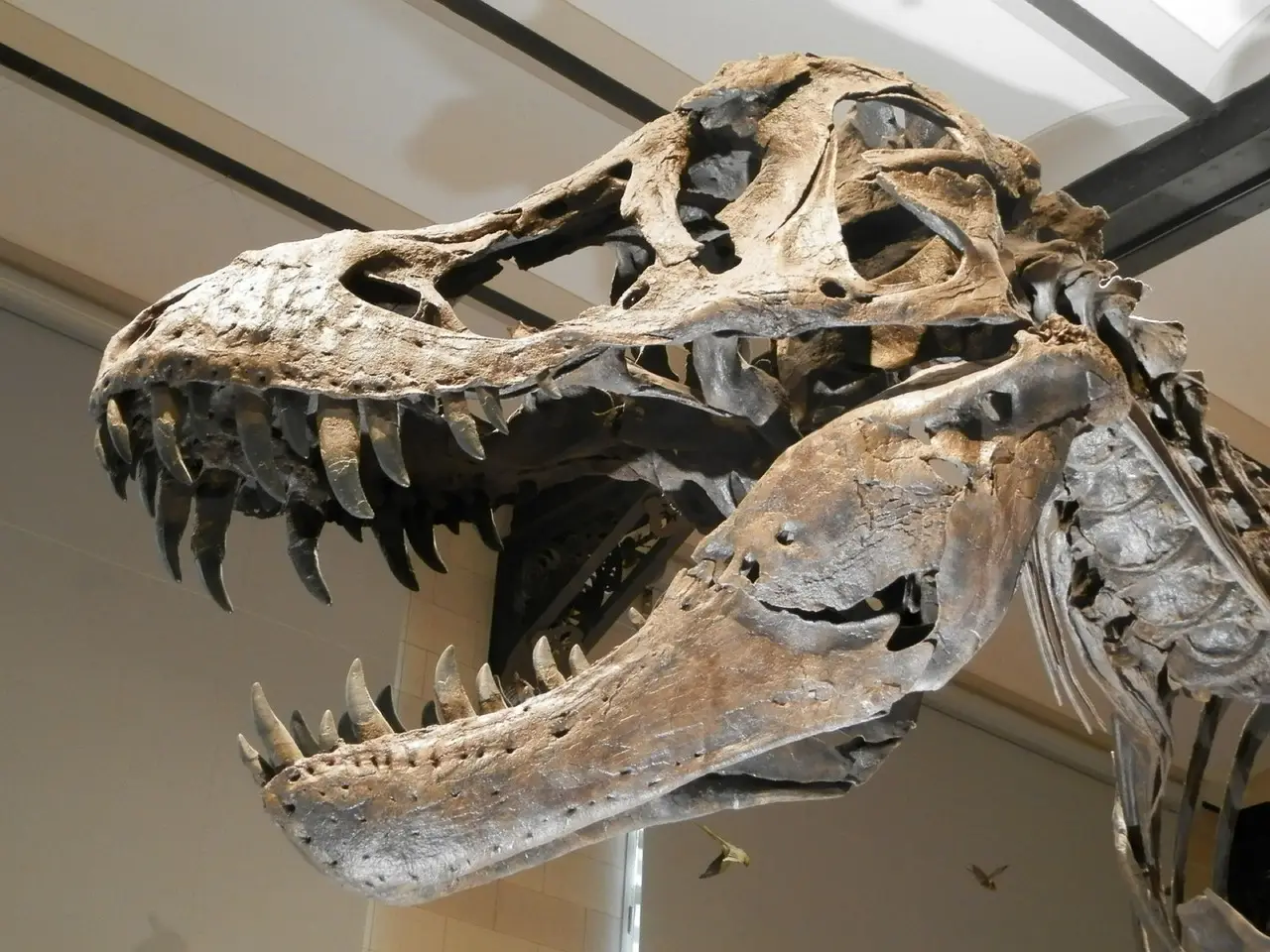
A dinosaur nicknamed the "hell chicken" evolved jaw machinery for eating fruit more than 65 million years ago — the first solid evidence that non-avian dinosaurs adapted specifically to a fruit-based diet.
The species, formally named Infernogallus jamesi, weighed roughly 12 kilograms, about the size of a turkey. Researchers reported their findings October 10 in Nature Communications.
The name comes from two things: the dinosaur was unearthed in the Hell Creek geological formation, and its overall build looked distinctly poultrylike. It belonged to a birdlike subgroup of beaked theropods called oviraptorosaurs, which lived during the Cretaceous Period.
How did the discovery unfold?
In 2011, a fossil collector found much of a fossilized skeleton of an odd theropod dinosaur in eastern Montana. The collector brought it to the attention of David Evans, a paleontologist at the Royal Ontario Museum in Canada.
Over the following several years, fossil collectors and paleontologists working across Montana and the Dakotas — both North and South — unearthed four more partial skeletons. That gave the team enough material to reconstruct the animal's skull in detail.
Evans and Greg Funston, a paleontologist at Stony Brook University in New York, led the naming and analysis, working with colleagues.
What made the jaw so strange?
When the researchers studied the skull and reconstructed its musculature, they realized Infernogallus was no ordinary theropod. The construction of its jaw joints, muscles and palate suggests it moved its jaw forward and back while eating — not up and down like its chomping relatives.
That's the key finding. This chewing style has never been documented in non-avian dinosaurs, but it's strikingly similar to how modern fruit-eating parrots process food.
Funston and his colleagues think Infernogallus adapted to a fruit-rich diet, deftly stripping the flesh from large seeds using its tongue and sliding jaw motions. Think of a parrot working a tough seed: precise, grinding, back-and-forth movements rather than a simple bite.
These fruit-munching adaptations caught the team off guard, Funston says. "But the more we delved into it, the more sense it made," he says. "All the different lines of evidence seemed to converge on this one answer."
Why does this matter for plant history?
The timing is what makes the discovery significant. Angiosperms — plants that produce flowers and fruits — were rapidly diversifying throughout the Cretaceous Period.
Mounting evidence suggests angiosperms were coevolving with Cretaceous animals, and that dinosaurs may have been eating their fruits. Infernogallus adds a concrete anatomical data point to that emerging picture.
It's possible that other "hell chicken" relatives, or even entirely different dinosaur groups, were habitual fruit eaters too, Funston says.
What does this change about our view of dinosaurs?
The discovery touches a bigger question: how complete is our picture of dinosaur life right before the extinction that ended the Cretaceous?
"[The discovery] suggests that our picture of dinosaur ecology right before the Cretaceous extinction has been missing major puzzle pieces, and that dinosaurs were more diverse than we thought," Funston said.
The findings are preliminary in one sense — they rest on five partial skeletons, and soft tissues like tongues don't fossilize, so the diet is inferred from jaw mechanics and comparisons with living parrots rather than direct evidence of stomach contents. Still, the convergence of skull joints, muscle attachments and palate structure on a single explanation gives the team confidence.
The next step, logically, is checking whether other oviraptorosaur skulls show the same forward-and-back jaw machinery. If they do, fruit-eating dinosaurs may turn out to be far less rare than paleontologists assumed.
via sciencenews.org (Source)
More from Nathan Brooks
Show full bio
Market editor covering companies, deals and strategy in general science news at SciBeat.
365 articles
Nearby plates
- 240-Million-Year-Old Tanzania Fossil Reshapes Dinosaur Timeline
- 220-Million-Year-Old Skull From South Africa Unveils New Dinosaur Species
- 66-Million-Year-Old Feather in Dinosaur Poop Sheds Light on Bird Survival
- First European Meرaraptor Found in a Museum Drawer After 100 Years
- New megapode found in Liang Bua, the Homo floresiensis cave