Recorded November 25, 2026
Biology & EvolutionReported finding
17-year study finds early hardship rarely isolates mountain gorillas
A 17-year Rwanda study found that early hardship rarely left surviving mountain gorillas socially isolated, though maternal loss predicted a higher rate of leaving birth groups.
By James Calloway5 min read910 words
In brief
- Researchers followed 122 gorillas for 17 years and logged more than 25,000 observation hours.
- The 2026 study assessed six types of early hardship in records of 164 gorillas known since birth.
- Only maternal loss clearly predicted birth-group departure; affected gorillas left at about 2.5 times the rate.
- Females exposed to infant killing while staying in birth groups received more than twice as many friendly overtures.
- In most infant killings with known circumstances, the attacker was an outsider male.
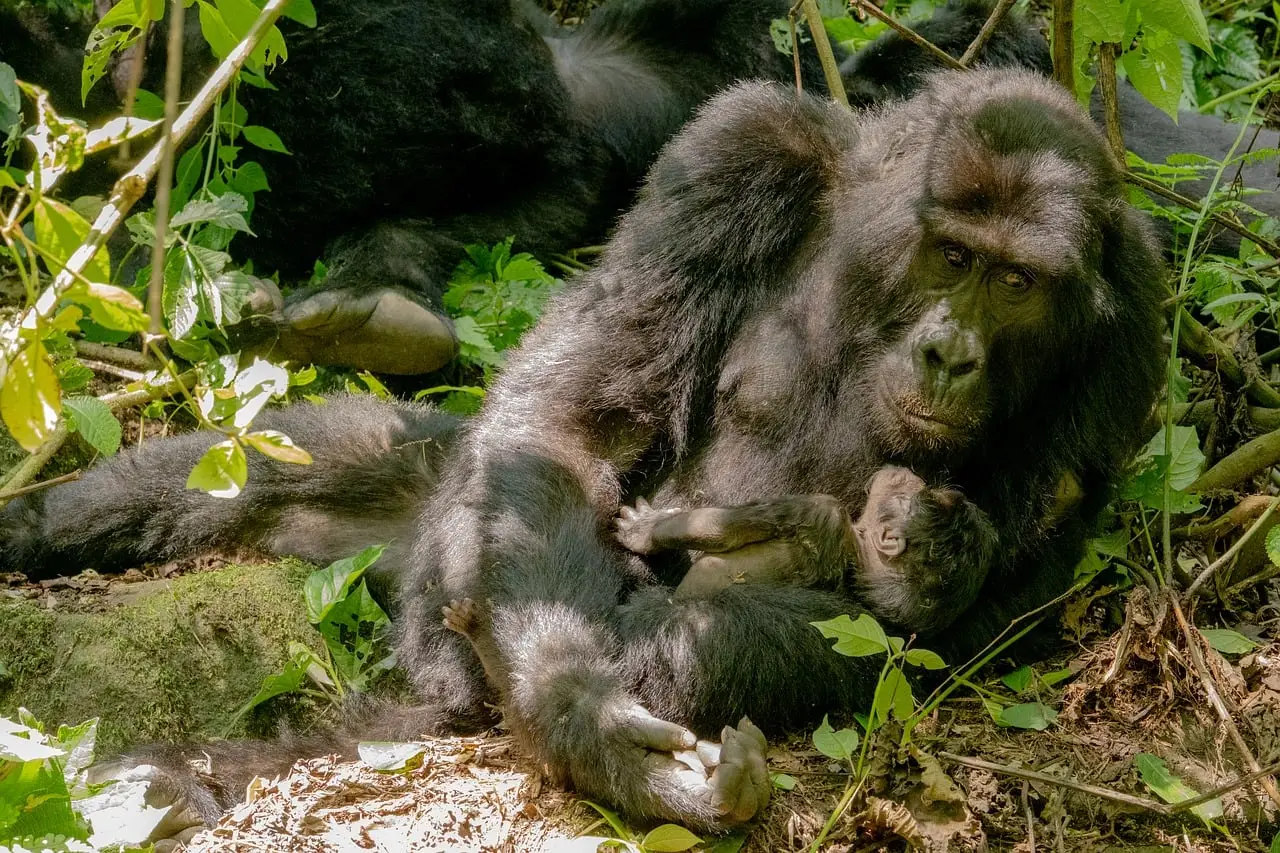
After 17 years and more than 25,000 hours of observation, a Rwanda study found that most mountain gorillas who survived early hardship remained socially connected rather than isolated.
Only one of six early hardships clearly predicted departure from the birth group: a mother dying or moving away before age 6. Those gorillas later left at about 2.5 times the rate of animals whose mothers remained through those early years.
Robin Emily Morrison and colleagues wrote in the 2025 Proceedings of the Royal Society B: Biological Sciences: “Our findings suggest that social adversity in early life does not have consistent detrimental long-term consequences for sociality in mountain gorillas.”
That result describes a group pattern, not a guarantee for every animal.
Which hardships did the study examine?
The team compared six categories of adversity in early life:
- Paternal loss
- Maternal loss
- Infanticide, meaning the killing of an infant
- Group instability
- Few age-mates, or companions of the same age
- A competing sibling
What did the long-term patterns show?
Gorillas that experienced more types of hardship before age 6 later spent more time near other males than peers with fewer experiences. Females still living in their birth groups showed the same pattern with other females.
More company did not mean hardship generally produced better social lives. The broad finding was the absence of a consistent harmful effect across the six categories and outcomes examined.
An earlier study by the same team had already found that youngsters spent more time near other group members during the six months after losing their mothers than during the six months before. The new study asked whether that apparent recovery held years later, when some animals had moved among new companions.
How did researchers measure social ties?
Observers with the Dian Fossey Gorilla Fund followed 122 gorillas in Rwanda’s Volcanoes National Park for 17 years, logging more than 25,000 hours of observation.
They noted who groomed or played with whom and who threatened or struck another gorilla. Every 10 minutes, they also recorded which animals were within 2 meters, or 6.6 feet, of the gorilla they followed.
Repeated sightings provided a practical measure of which animals regularly kept each other company.
Why did maternal loss stand out?
To enter the later observations, a gorilla had to reach age 6. Youngsters that lost their group’s dominant male were more likely to die before that age, according to earlier research on this population.
That survival filter matters. Researchers warned that animals reaching the later stage of the study may have been unusually robust to begin with.
Birth-group records for 164 gorillas known since birth showed that only maternal absence clearly predicted departure. Gorillas whose mothers died or moved away before age 6 left at about 2.5 times the rate of those whose mothers stayed. The pattern was similar for sons and daughters.
The researchers suggest why: a mother’s absence “may reduce the benefits of remaining in the natal group,” meaning the group where the gorilla was born.
A separate, weaker signal appeared among daughters. Among females no longer living with their mothers, those separated before age 6 appeared to spend less time near males than females separated later.
Could witnessing infant death strengthen ties?
For females that remained in their birth groups, one early experience stood out in records of grooming, play and other friendly contact. Females that had been young when an infant in the group was killed later received more than twice as many friendly overtures than females without that experience. They also spent more time near males.
Males that had witnessed an infant killing as youngsters likewise kept closer company with other males.
In most infant killings with known circumstances, the attacker was a male from outside the group. Because males within a group help defend its infants, the researchers suggest that staying near those males might help a female protect her own young.
Females that moved away showed no comparable increase in time spent near males. The authors suggest that a killing in one group may tell a female little about the danger to an infant she later raises in another.
What did the study not prove?
The study offers an observational group pattern, not a verdict on each animal. Observers did not assign hardships, so the records cannot establish that early adversity caused later social behavior.
Survivor selection also narrows the conclusion. Gorillas that died before age 6 could not appear in the later observations, and some losses apparently carried a higher mortality risk.
The findings cover six defined forms of adversity in this population. They do not erase the maternal-loss signal or establish the same outcome for every kind of hardship.
What does this change for conservation?
The practical implication is limited but useful: early hardship alone is a poor forecast of lifelong isolation. Maternal loss still warrants attention because it carried the clearest signal of later departure and appeared alongside weaker ties in some daughters.
The finding offers reassurance, not a guarantee. Individual gorillas may still experience serious social difficulties, but surviving a difficult childhood did not consistently mean losing the company of other gorillas for good.
Robin Emily Morrison and colleagues published “Social adversity in early life has minimal, predominantly positive long-term consequences for social behaviour in mountain gorillas” in Proceedings of the Royal Society B: Biological Sciences in 2026. DOI: 10.1098/rspb.2026.1142.
via phys.org/rss-feed/ (Source)
More from James Calloway
Show full bio
Staff writer covering regulation, policy and their impact on general science news at SciBeat.
601 articles
Nearby plates
- Asian Elephant Social Networks Fracture After 12 Years of Decline
- Black Rhinos Are Loners — Except When They're Not, and That Matters
- Sociable, predictable dolphins live longer, 40-year study finds
- Ancient Peru shows no climate-driven rise in violence
- Humpback Whale Mother Stayed With Dead Calf for Days, Study Finds