Recorded November 22, 2026
Biology & EvolutionReported finding
England's Sea Cliffs Hide World's Oldest Forest, at 390 Million Years
Fossils in Devon and Somerset sea cliffs reveal a 390-million-year-old forest of leafless, palm-like trees — the oldest known, and the force that first reshaped Earth's rivers.
By Nathan Brooks4 min read829 words
In brief
- A 390-million-year-old fossil forest found on the Devon-Somerset coast is the oldest known, beating New York's 386-million-year-old Cairo site.
- The trees, called Calamophyton, stood 2-4 meters tall, had hollow trunks, no true leaves, and shed their lower branches as they grew.
- At Porlock Weir, fossils show trees beside a 15-meter-wide river channel; scour marks prove trunks redirected flowing water.
- Co-author Christopher Berry studied similar plants for 30 years and also worked on the Cairo forest discovery.
- The study appears in the Journal of the Geological Society.
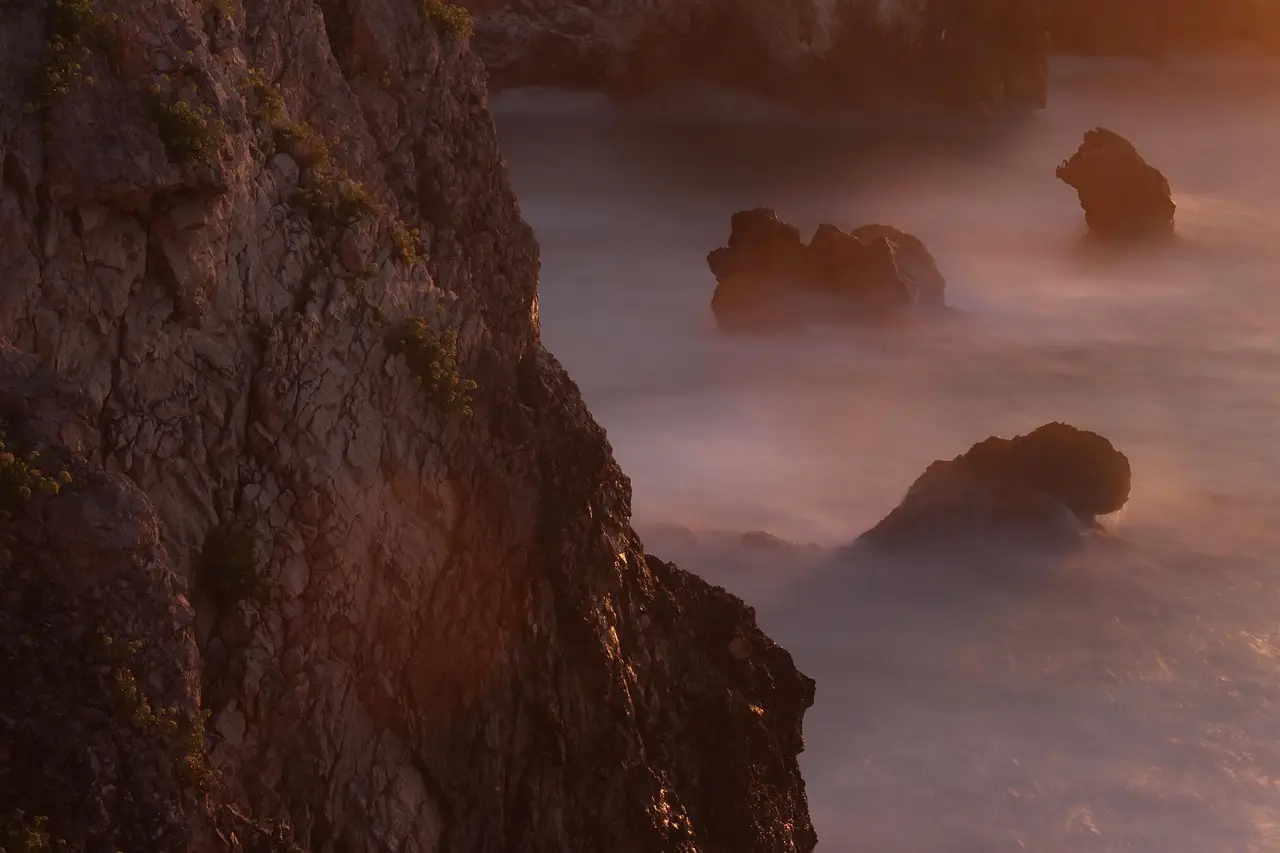
At 390 million years old, the world's oldest known forest has turned up in the sea cliffs of southwest England — and it beats the previous record holder by 4 million years.
The discovery, published in the Journal of the Geological Society, unseats the famous fossil forests of New York's Catskill Mountains: the 386-million-year-old Cairo quarry site and nearby Gilboa. Researchers found the English woodland in the Hangman Sandstone Formation along the Devon and Somerset coast, preserved as an entire fossilized forest floor.
"This was a pretty weird forest – not like any forest you would see today," said Neil Davies, a sedimentary geologist at the University of Cambridge who led the research.
What did these trees look like?
Strange barely covers it. The trees belonged to an extinct group called Calamophyton — distant relatives of modern ferns and horsetails that died out over 300 million years ago.
Picture something like a scruffy palm tree, and then shrink it. The trunks reached just 2 to 4 meters (6.5 to 13 feet), tiny next to most modern trees. There were no leaves to rustle, no birds singing, no grass underfoot.
The anatomy was just as odd. Instead of a solid wooden trunk, each tree had a hollow center ringed by supporting woody strands. Their branches carried hundreds of twig-like structures rather than recognizable leaves. As the trees grew, they constantly shed their lower branches, carpeting the ground in dead plant debris.
Still, looks can undersell an evolutionary leap. Trees growing together in stands created an environment entirely unlike the low-growing vegetation that came before — a major innovation, however modest it appears today.
How did anyone find it?
The team stumbled on the ancient woodland a couple of years back while examining the coastal sandstone. What they uncovered was unusually complete: upright trunks standing where they originally grew, flattened logs, root traces, and ripple marks left by ancient water.
Co-author Christopher Berry, a paleobotanist at Cardiff University, recognized the fossils immediately from photographs. He has spent three decades studying similar plants around the world — and, in an odd twist, he was also involved in the Cairo forest discovery that the new English site now dethrones.
"It was amazing to see them so near to home. But the most revealing insight comes from seeing, for the first time, these trees in the positions where they grew," Berry said.
Why do 390-million-year-old trees matter?
Plants had already lived on land for tens of millions of years. The difference here is scale: there's a gap between plants merely surviving on land and forests fundamentally changing how the land behaves.
Before forests spread, vegetation was small and couldn't anchor large expanses of sediment. Rivers shifted loose sand and mud across their floodplains easily, especially during floods.
Trees changed the physics. Rooted into the ground, they acted as living obstacles that slowed moving water and held sediment in place.
During the Middle Devonian, the region now forming southwest England sat south of the equator, near land that would eventually become Belgium and Germany. It was a largely semi-arid landscape crossed by channels carrying water and sediment down from higher ground.
The key evidence came from Porlock Weir, where fossils preserve trees growing beside a small ancient river channel. The channel ran roughly 15 meters wide and up to 75 centimeters deep. Around the tree bases, the rock holds distinctive scour marks — formed when flowing water swirled around the trunks and eroded the surrounding sediment.
By stabilizing riverbanks and trapping mud, these primitive trees forced water into deeper, winding channels — essentially inventing the river systems we recognize today.
"The evidence contained in these fossils preserves a key stage in Earth's development, when rivers started to operate in a fundamentally different way than they had before, becoming the great erosive force they are today," Davies said.
How fast did forests evolve?
Despite the narrow 4-million-year gap, the English and New York sites tell very different stories.
The English forest was dominated by primitive, relatively short cladoxylopsid trees. The younger New York forests already supported more complex plant communities. At Cairo, researchers identified at least two major tree types — cladoxylopsids and Archaeopteris, a more modern-looking tree with true leaves, substantial wood, and extensive branching roots — plus evidence of a possible third.
Those deeper root systems would go on to transform soils and landscapes even more profoundly.
The comparison suggests forests diversified dramatically over a geologically short interval, though the fossil record remains too patchy to pin down exactly how fast the transition happened. That's a real limitation, and the researchers are careful about it.
"It kind of suggests that around 390 million years ago, there is this sudden takeoff in forest-type environments," Davies told Live Science.
For now, the record — and the story of how trees first bent Earth's rivers to their roots — belongs to a stretch of English cliff.
via zmescience.com (Source)
More from Nathan Brooks
Show full bio
Market editor covering companies, deals and strategy in general science news at SciBeat.
563 articles
Nearby plates
- Amber Fossils Show Australia Fragment Seeded Asia's Rainforests
- Animals May Have Evolved 200 Million Years Earlier Than Thought
- Half of These Rainforest Ferns Are Under Six Million Years Old
- 240-Million-Year-Old Tanzania Fossil Reshapes Dinosaur Timeline
- Forgotten Museum Fossil Reveals New European Clawed Dinosaur