Recorded November 22, 2026
Reported finding
Sutton Hoo dig finds ‘sand body’ grave and possible second burial
A 2025 Sutton Hoo excavation uncovered a bone-less “sand body,” grave goods and possible evidence of a second burial. The cemetery may predate the famous seventh-century ship grave.
By Marcus Bennett4 min read764 words
In brief
- A month-long 2025 excavation at Sutton Hoo’s Garden Field cemetery uncovered a bone-less sand body.
- The grave goods included beads, tweezers, a knife and a brooch.
- Evidence directly beneath the sand cast suggested a possible second burial.
- At least one Garden Field burial included a gold ingot, indicating wealth and social status.
- A four-part Time Team documentary about the dig launched on YouTube on Nov. 14.
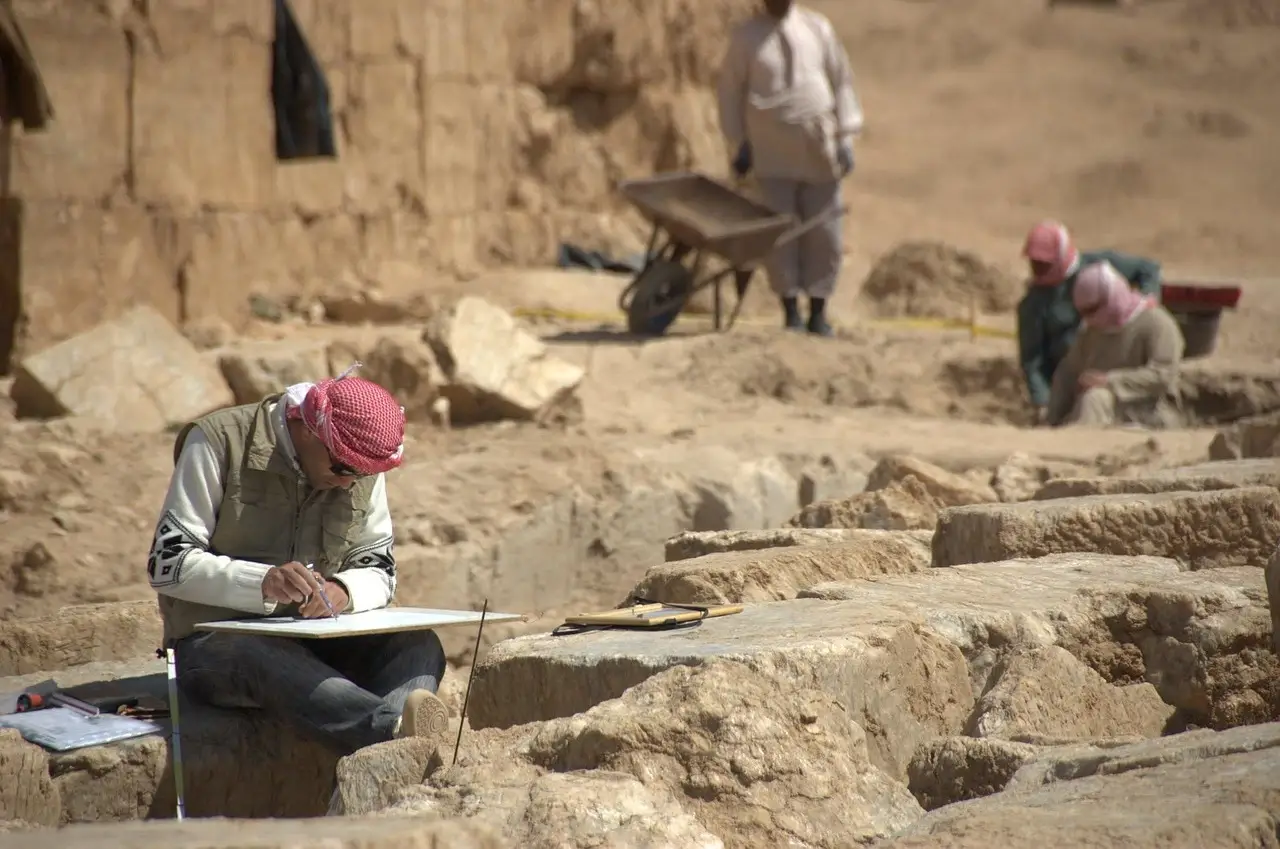
Archaeologists at Sutton Hoo found a bone-less “sand body” grave during a month-long 2025 excavation, with evidence directly beneath the cast indicating that a second person may have shared the burial.
The grave lay at Garden Field in an Anglo-Saxon cemetery in the UK, best known for an enormous seventh-century ship burial. The ship grave may have held the early medieval King Rædwald, who ruled East Anglia in eastern England and died around AD 627; it also contained an elaborate helmet.
What is a “sand body”?
The grave contains no bones. Acid in the soil dissolved the deceased’s body and bones, while harder sand retained the shape of the body. National Trust archaeologist Angus Wainwright described the mechanism as “burials where the bodies and bones had dissolved away in the acid soil, replaced by hard sand which held the form of the person.”
He compared those casts with some bodies preserved at Pompeii. Archaeologists have found similar burials at Sutton Hoo and at other Anglo-Saxon sites in the Suffolk area.
Each shape is therefore a natural mould of a person, not an intact skeleton or a carved figure.
Takeaway: The strange outline is a soil-made mould of the deceased, not a body left in the grave.
What did the excavation reveal?
Archaeologists uncovered the sand-body grave during the final week of the dig. They recorded these grave goods with the deceased:
- Beads
- Tweezers
- A knife
- A brooch
Directly below the sand body, the team found evidence that a second person may have been buried in the same grave. The evidence does not establish that person’s identity or condition.
For archaeologists, this remains the excavation’s key unresolved result. It supports the possibility of a double burial, but it does not explain how the second person came to lie beneath the first.
The 2025 dig set three aims:
- Establish the cemetery’s extent.
- Determine when it was used.
- Test whether its buried population had links to the ship-grave occupant.
Most earlier work concentrated on royal burial mounds and the identity of the person in the “great ship burial.” Wainwright said the 2025 project shifts attention from royalty to everyday East Anglian people, their ancestors and descendants. He called the sand-body discovery a high point of the excavation.
Takeaway: The new grave strengthens the case for a possible double burial and broadens the dig beyond Sutton Hoo’s royal mounds.
What did Time Team document?
The excavation appears in a four-part Time Team documentary created with the National Trust and FAS Heritage. The series launched on YouTube on Nov. 14.
In its first episode, the team presented evidence that people buried at Garden Field were gaining wealth and social status. At least one person was buried with a gold ingot, meaning a bar of gold.
The episode gives archaeologists a broader view of the cemetery than the royal mounds alone provide, although it does not establish a direct link between the ship-grave occupant and the people at Garden Field.
The crew also investigated possible remains of a dock used to build and launch ships into the River Deben. They found an unusual fragment of a cremation urn, a container for cremated remains; its decorated surface surprised the archaeologists because they had expected something plain.
FAS Heritage managing director Justin Garner-Lahire said in the video: “Well, it’s at Sutton Hoo. Anything can happen.”
Takeaway: The documentary places the grave within a wider local history of wealth, shipbuilding and different ways of caring for the dead.
Could these burials predate the ship grave?
Experts think the sand bodies and cremations at Garden Field may predate the famous ship burial. If that holds, the cemetery’s use began before the royal interment, although the dig has not established a direct link to Rædwald.
The 2025 project followed a 2024 excavation that uncovered pieces of a bronze bucket used in a cremation ritual. Together, the finds show that researchers had already traced cremation practices before the latest sand-body discovery shifted attention toward a possible double burial.
The dating and the second burial remain open questions: How old is Garden Field’s use, and how closely did the people buried there connect to the celebrated ship grave?
Takeaway: The new evidence may extend the cemetery’s history backward, but it does not establish a direct link to the king.
Taken together, the 2025 finds move Sutton Hoo’s story beyond one royal burial toward a wider account of East Anglian wealth, ritual and family connections.
via livescience.com/feeds/news (Source)
More from Marcus Bennett
Show full bio
News editor covering regulation, policy and their impact on general science news at SciBeat.
584 articles
Nearby plates
- Ancient Bones Show Roman Colchester Was Surprisingly Diverse
- Skull Fractures Back Theory of Sacrifice at Egypt's First Royal Tombs
- One Man's Bones Record the Day Farming Reached Denmark
- Medieval Bones Dated Hundreds of Years Too Old by Fish Diet
- Freshwater Fish Diet Makes Medieval Skeletons Look Centuries Older