Plate Nº 79 · recorded November 17, 2026
Earth & ClimateReported finding
Wildfire Smoke Doubles Combined Pollution Risk Across Western US
PM2.5 and ozone now spike together more often as wildfire smoke spreads east; western combined-pollution risk doubled over two decades, Penn State finds.
By James Calloway4 min read771 words
In brief
- Combined wildfire-related PM2.5 and ozone risk roughly doubled in the western U.S. from 2004 to 2023.
- Frequent combined pollutant spikes began in 2011; peak co-occurrence years were 2012, 2018, 2021 and 2023.
- The study analyzed EPA monitoring data, NOAA satellite smoke maps and weather data across 48 contiguous states.
- Parts of the West now have fire seasons more than a month longer than 35 years ago, per NASA.
- The paper appears in Environmental Science & Technology (DOI: 10.1021/acs.est.6c04403).
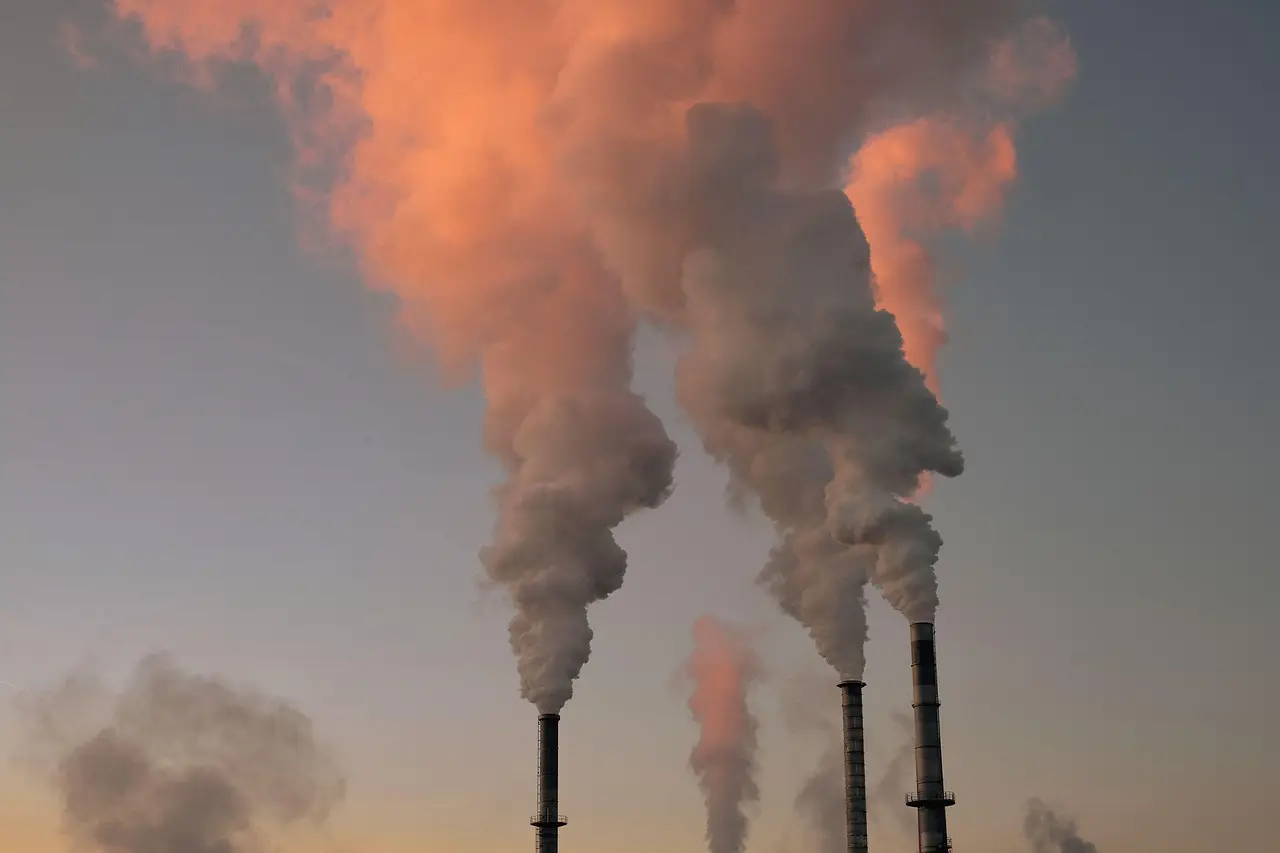
Wildfire-related combined pollution risks roughly doubled in the western U.S. between 2004 and 2023, and the hazard is creeping eastward, according to a Penn State study published in Environmental Science & Technology.
The findings center on two pollutants that regulators usually track separately: fine particulate matter (PM2.5) — microscopic soot and ash small enough to inhale deeply — and ground-level ozone, a gas that forms when carbon monoxide and other gases react in sunlight and warm air. Alone, each is bad. Together, they compound cardiovascular and respiratory risks.
The research team, based in Penn State's Department of Geography, merged EPA monitoring data, NOAA satellite smoke mapping and weather records across all 48 contiguous states. Frequent combined spikes in both pollutants began around 2011, and on many days the levels exceeded EPA regulatory standards for both pollutants at once.
A caveat matters here: the study did not measure individual health outcomes. It mapped regional and national pollution patterns already known to affect health. That's a real limitation, and the authors don't hide it.
What did the data actually show?
The numbers are specific:
- Summer wildfire smoke risk tied to combined pollutants roughly doubled over two decades in the West, and may shift progressively eastward.
- 2012, 2018, 2021 and 2023 were peak years nationally for the two pollutants co-occurring.
- "Widespread co-occurrence days" — when both pollutants exceed local 90th percentiles across more than 10% of the country — became more frequent, more persistent and more intense. The 90th percentile means the value below which 90% of EPA daily Air Quality Index readings fell in a given area for the year.
The eastern half of the country saw the most dramatic increases, and that surprised the researchers.
"We've been experiencing many summertime instances when wildfire smoke from the western U.S. or Canada has traveled into large parts of the eastern U.S., especially the Northeast," said Manzhu Yu, associate professor of geography and the paper's lead author.
The Midwest and Ohio Valley now face sharply higher co-occurrence risks too, as bigger fires push smoke over longer distances.
Why does the East worry researchers?
Eastern smoke doesn't come from one source. Yu flagged three: large western wildfires traveling east, prescribed burns for agriculture and land management, and local fires. Different smoke carries different fine particulate components — inorganic and organic carbon, even heavy metals — which shapes how PM2.5 and ozone interact.
"We are particularly curious about the links among smoke composition and cardiorespiratory ailments, which involve the heart, blood vessels and lungs," Yu said.
Curiosity, not yet answers. Those links remain under investigation.
The smoke-ozone chemistry is genuinely two-sided. Light and moderate smoke raises ozone by supplying particulate organic compounds and nitrogen oxides that fuel ozone production. Dense smoke does the opposite — it blocks sunlight and suppresses ozone. Warmer days tip the balance toward more ozone. To predict when combined extremes will hit, the team built a machine-learning model called the Spatiotemporal Bayesian Neural Field, which combines smoke, ground-level pollution and weather patterns into a risk estimate.
What does this change for communities?
Co-author Erica Smithwick, a distinguished professor of geography who directs Penn State's Earth and Environmental Systems Institute, said the mapping should help local decision-makers plan for hazardous smoke — risk-reducing steps at public schools, in older buildings and for medically vulnerable people.
"I can't say we're excited about the work — it's not good news," Smithwick said. "People have underestimated the effect of wildfire smoke in this region."
She leads the Eastern Fire Network, a six-institution effort to organize regional fire research. Her broader concern extends beyond sore throats and eye irritation: ongoing research elsewhere, she noted, suggests long-term pollution exposure may affect everything from mental health to dementia. Those connections are still emerging evidence, not settled science.
The backdrop is sobering. According to NASA, parts of the West now have fire seasons more than a month longer than 35 years ago, and estimated carbon emissions from forest fires grew 60% globally from 2001 to 2023. Researchers attribute the shift largely to global warming and a drier climate.
"We need to think about community awareness and community perception around smoke and have people be aware of the ecosystems they're living in," Smithwick said. That means practical judgment — knowing when not to burn a backyard debris pile, or when to skip the campfire.
The study is a risk map, not a warning siren. But it documents a measurable shift: two dangerous pollutants increasingly arriving together, in places that never planned for them.
via phys.org/rss-feed/ (Source)
More from James Calloway
Show full bio
Staff writer covering regulation, policy and their impact on general science news at SciBeat.
474 articles
Nearby plates
- Climate Change Tripled Iberia's Record 2025 Fire Burned Area
- US Wildfire Building Losses Could Nearly Triple by 2060
- Wood Stove Experiment Reveals How Wildfire Smoke Recycles Nitrogen Oxides
- Ozone From Amazon Wildfires Weakens Rainforest Carbon Uptake
- El Niño Drove Indonesia's 2026 Wildfires, Scientists Find