Plate Nº 13 · recorded November 10, 2026
Biology & EvolutionReported finding
British Museum Fossil Reveals New Pterosaur, Rewrites Tapejarid Origins
A Cambridge museum specimen first described in 1870 is a new tapejarid pterosaur, Hintighernia edingerae, hinting the crested flyers originated in Europe.
By Marcus Bennett4 min read704 words
In brief
- New tapejarid species Hintighernia edingerae lived in Britain 105–100 million years ago.
- The specimen was first described in 1870 and previously assigned to Ornithostoma sedgwicki.
- The Cambridge Greensand layer has yielded more than 2,000 pterosaur specimens.
- The study counts at least three azhdarchoid species, minimum four forms, in the Cambridge Greensand.
- Published in the Zoological Journal of the Linnean Society, 208(3), 2026, doi: 10.1093/zoolinnean/zlag162.
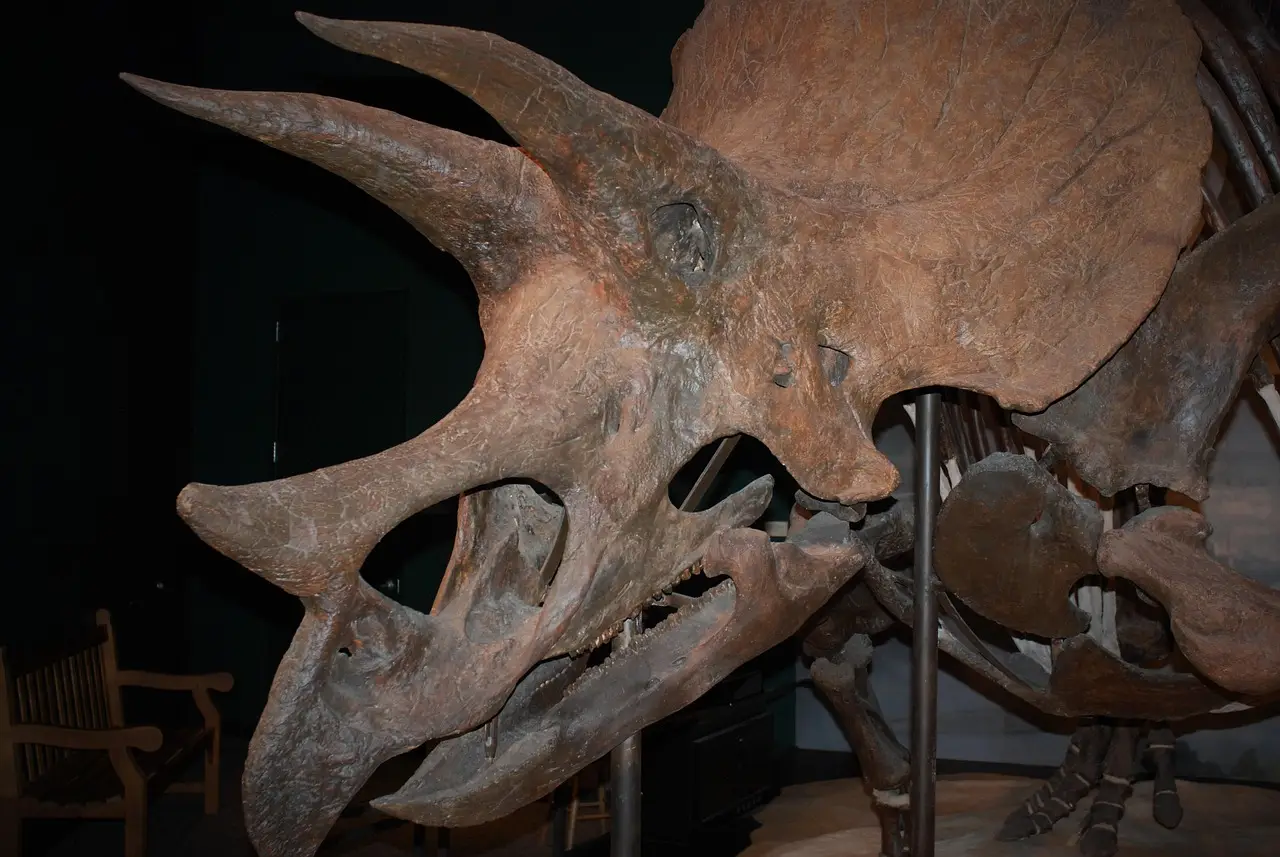
A pterosaur fossil sitting in a Cambridge museum since 1870 has been identified as a new genus and species of tapejarid pterosaur, Hintighernia edingerae — and the find suggests that a group long tied to Brazil may actually have deep roots in Europe.
The animal lived in what is now Britain between 105 and 100 million years ago, during the Cretaceous period. Paleontologist Rubi Pêgas of the Universidade Federal do ABC and colleagues report the discovery in the Zoological Journal of the Linnean Society (2026, volume 208, issue 3, doi: 10.1093/zoolinnean/zlag162).
What are tapejarids, and why does Britain matter?
Tapejarids were flying reptiles — pterosaurs, not dinosaurs — with short, downturned snouts and, in some species, spectacular bony head crests. They belong to a broader group called azhdarchoid pterodactyloids.
"Among the most distinctive and anatomically unusual of pterosaurs are the members of the Cretaceous clade Tapejaridae, a group of azhdarchoid pterodactyloids noted for their short, downturned rostra and sometimes spectacularly prominent premaxillary crests," the researchers write. They add that tapejarids "might also have been ecologically atypical," with indications the animals were likely omnivorous or even herbivorous and fruit-eating.
Until now, the group has been firmly anchored in South America. The type species, Tapejara wellnhoferi, comes from the Romualdo Formation of Brazil. Two species of Tupandactylus come from the Crato Formation, and the Caiuá Group yielded both the well-represented Caiuajara dobruskii and the recently named Torukjara bandeirae — all from Aptian-Albian deposits roughly 125 to 100 million years old.
Hints of tapejarids elsewhere appeared in 1999, when researchers recognized a Tapejara-like fragment of lower jaw from the Cenomanian Kem Kem Group of Morocco. Additional North African finds followed in 2020. The British specimen pushes the group's European presence into sharp focus.
In plain terms: a family textbook writers place in Brazil now looks European, at least in part.
How did a 155-year-old description hide a new species?
The specimen was first described in 1870 and later assigned to Ornithostoma sedgwicki, a name the new study argues was doing double duty for two different animals.
"Our reanalysis of Ornithostoma sedgwicki leads us to regard it as a chaoyangopterid," the team writes — a different branch of azhdarchoids. They propose restricting that name to its holotype and three referred jaw fragments, leaving the Cambridge braincase material free for the new genus Hintighernia edingerae.
The fossil comes from the Cambridge Greensand Member of the West Melbury Marly Chalk Formation, a layer of reworked sediment that has produced more than 2,000 pterosaur specimens.
What did the CT scan show?
Using micro-CT scanning, the researchers digitally reconstructed the animal's braincase. The endocast — a model of the cavity the brain once filled — closely resembles that of Tapejara wellnhoferi from Brazil.
The similarity likely reflects close evolutionary kinship, the scientists say, though they caution that further work on pterosaur neuroanatomy is needed before drawing firm family trees from brain shapes.
In short: the British animal's brain matches its Brazilian relatives, but the neurological evidence is still preliminary.
What else turned up in the Cambridge Greensand?
The team also reassessed other pterosaur material from the same beds:
- A snout-tip fragment identified as possibly belonging to the same new genus, labeled cf. Hintighernia.
- Two neck vertebrae and part of an upper arm bone attributed more broadly to tapejarids.
- A separate set of elongated neck vertebrae plus jaw fragments indicating at least one other kind of azhdarchoid in the area.
Counting everything, the researchers recognize at least three azhdarchoid species in the Cambridge Greensand, and a minimum of four distinct azhdarchoid forms when different bone types are considered.
Where does the group go from here?
The authors propose that Europe was a hotspot of early tapejarid diversity and a possible point of origin for two lineages: the sinopterines of eastern Asia and the tapejarines of South America. Dispersal through North Africa — possibly along the land connections described by the Eurogondwana hypothesis — would fit that scenario.
"Our finds suggest that Europe was an important region in the evolutionary history of this group, as an important center of early tapejarid radiation," they conclude.
One overlooked museum drawer just moved a Brazilian icon's birthplace an ocean away.
via sci.news (Source)
More from Marcus Bennett
Show full bio
News editor covering regulation, policy and their impact on general science news at SciBeat.
370 articles
Nearby plates
- Forgotten Museum Fossil Reveals New European Clawed Dinosaur
- Giant 20-meter dinosaur found at Brazilian construction site
- 240-Million-Year-Old Tanzania Fossil Reshapes Dinosaur Timeline
- Dinosaur Blood Traces Found in 115-Million-Year-Old Bone
- First European Meرaraptor Found in a Museum Drawer After 100 Years