Plate Nº 42 · recorded November 14, 2026
Biology & EvolutionReported finding
Kazakhstan and Uzbekistan Sign Saiga Protection Memorandum
Kazakhstan and Uzbekistan signed a Nov. 12 memorandum to protect saiga antelopes, whose numbers hit a record 4.1 million after a 1992 crash to 15,000.
By Elena Vasquez3 min read694 words
In brief
- Kazakhstan and Uzbekistan signed a saiga conservation memorandum on Nov. 12.
- Kazakhstan's saiga population reached a record 4.1 million in April 2025.
- A harsh winter in 1992 cut saiga numbers to an estimated 15,000.
- 60,000–65,000 saigas migrated into the Syrdarya area in late December 2025.
- The agreement covers satellite tracking, anti-poaching patrols and reintroduction.
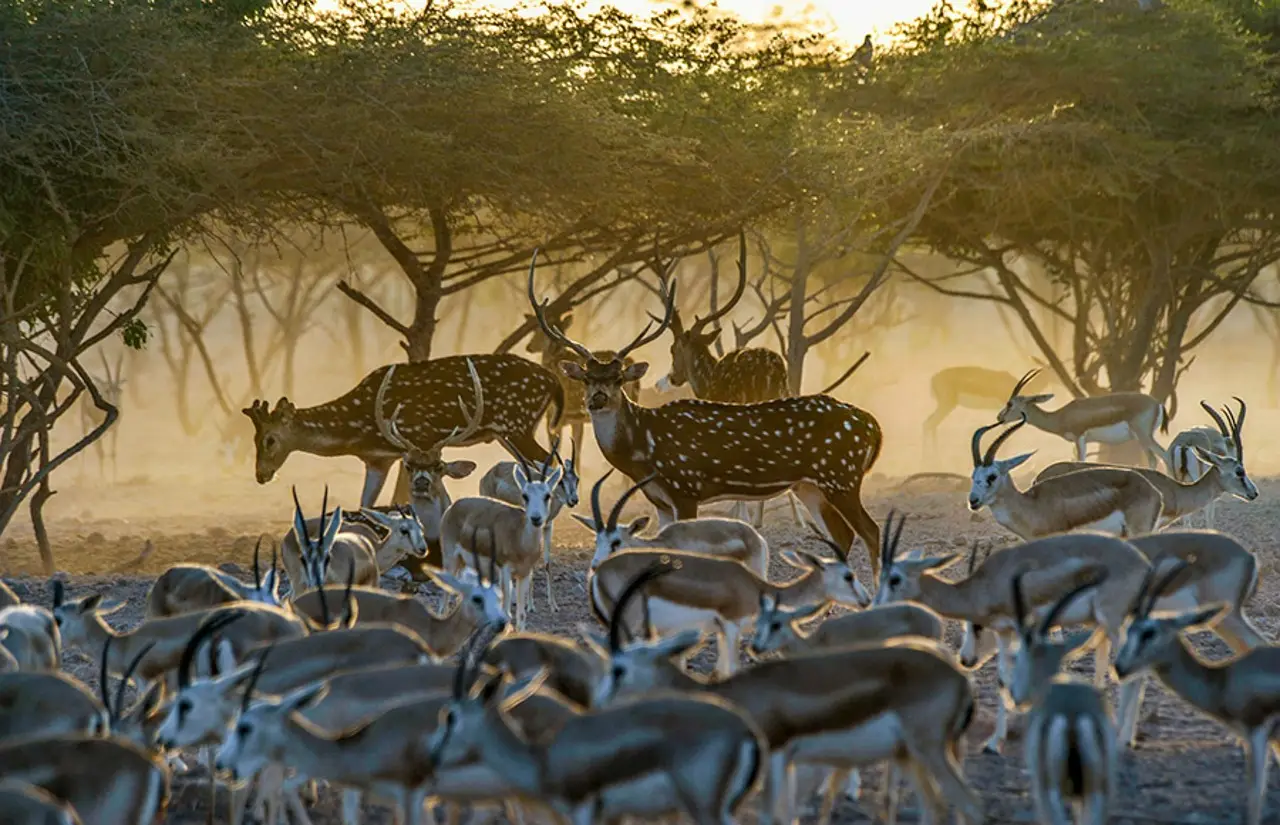
Kazakhstan and Uzbekistan signed a memorandum of understanding on Nov. 12 to conserve and restore the saiga, the endangered steppe antelope that roams across both countries' borders. Kazakhstan's Minister of Ecology and Natural Resources Alibek Kuantyrov and Uzbekistan's Chair of the National Committee on Ecology and Climate Change Aziz Abdukhakimov signed the document.
The deal aims to coordinate conservation work, protect the saigas' transboundary migration routes and restore the animals' natural habitats. In plain terms: two governments have agreed to manage one shared wildlife population together instead of separately.
What will the two countries actually do?
The memorandum sets out a concrete work plan. Under the agreement, Kazakhstan and Uzbekistan plan to:
- jointly monitor saiga numbers, migration patterns and animal health;
- exchange scientific data;
- use satellite tracking and veterinary monitoring methods.
One of the key areas of cooperation is returning saigas to their historical habitats. To achieve this, the parties intend to develop a reintroduction program, coordinate animal relocation efforts, and restore natural pastures and water bodies.
The memorandum also prioritizes the fight against poaching and illegal trade. The countries plan to conduct joint conservation patrols and develop transboundary protected areas and migration corridors.
Further cooperation will include joint research, exchanges of expertise among specialists, and the involvement of international organizations in conservation projects.
How does satellite tracking fit in?
Satellite telemetry — tracking animals through transmitters that beam location data to orbiting satellites — is already a working tool in Kazakhstan's saiga conservation. Wildlife experts explained how the equipment maps saiga movements and helps identify ways to protect the animals during an online event organized by the Global Rewilding Alliance on May 23, 2025.
Alyona Krivosheyeva, conservation director of the Association for the Conservation of Biodiversity of Kazakhstan (ACBK), described the group's role at that event. "ACBK was founded in 2004, and during all of this time, it has grown into the largest national biodiversity conservation NGO in Kazakhstan. Altyn Dala Conservation Initiative is one of the biggest initiatives within ACBK with wider national and international partnership," she said.
Why do migration routes matter so much?
Seasonal migration shows exactly why a cross-border agreement makes sense: saigas don't respect administrative or national borders. In late December 2025, large groups of saigas moved into the Aral district of the Kyzylorda Region, drawing public attention. Wildlife officials described the movement as a natural winter migration driven by snow depth and food availability.
Rasul Makhanov, head of the regional branch of the state enterprise Okhotzooprom, explained that saigas from the Kostanai, Aktobe and Ulytau regions move south when deep snow makes it difficult to find food. "They come in search of pasture. This is a natural process," Makhanov told Kazinform.
The numbers involved were substantial. At the time, an estimated 60,000 to 65,000 saigas were in the Syrdarya area, with more than 30,000 concentrated in the Aral district alone.
How many saigas are there now?
Kazakhstan is home to three saiga populations: Ural, Betpak-Dala and Ustyurt. A census conducted in April and May 2025, during the calving season, recorded 3,978,000 animals. The Ural population accounted for 2.3 million, Betpak-Dala for 1.6 million, and Ustyurt for 78,000.
Separately, data reported in April 2025 put the country's total saiga population at a record 4.1 million.
Those figures look healthy, but the recovery remains fragile. Makhanov noted that saiga numbers can fluctuate significantly, with severe winters posing a particular threat. He recalled that a harsh winter in 1992, marked by deep snow, caused extensive saiga deaths and reduced their numbers to an estimated 15,000. A species that climbed from 15,000 to over four million can still be knocked back hard by weather, disease or poaching.
The Kazakhstan-Uzbekistan initiative is aimed at ensuring the long-term conservation of the species, protecting biodiversity and strengthening environmental cooperation in Central Asia. The memorandum is an agreement to cooperate, not yet a detailed program — the reintroduction plan, joint patrols and protected corridors still have to be built. But it commits both governments to treat the saiga as one shared population across one shared steppe.
via astanatimes.com (Source)
More from Elena Vasquez
Show full bio
Correspondent covering money, funding and market shifts around general science news at SciBeat.
432 articles