Recorded November 19, 2026
Space & AstronomyReported finding
Two Stars Merged Into One in Andromeda — Webb Caught It Early
Webb observed the aftermath of a stellar merger in Andromeda just 47 days after peak brightness. A sun-like star fell into a supergiant in about seven orbits, leaving a single object nicknamed Bao.
By Marcus Bennett3 min read652 words
In brief
- Webb observed the merger aftermath 47 days after the eruption peaked in 2025.
- The final merger took about seven orbits, roughly seven years, once the smaller star touched the giant's outer layers.
- Unusual behavior was first noticed in 2023; the findings were published in Nature.
- The merged object is nicknamed Bao; it sits in Andromeda, the nearest large galaxy to the Milky Way.
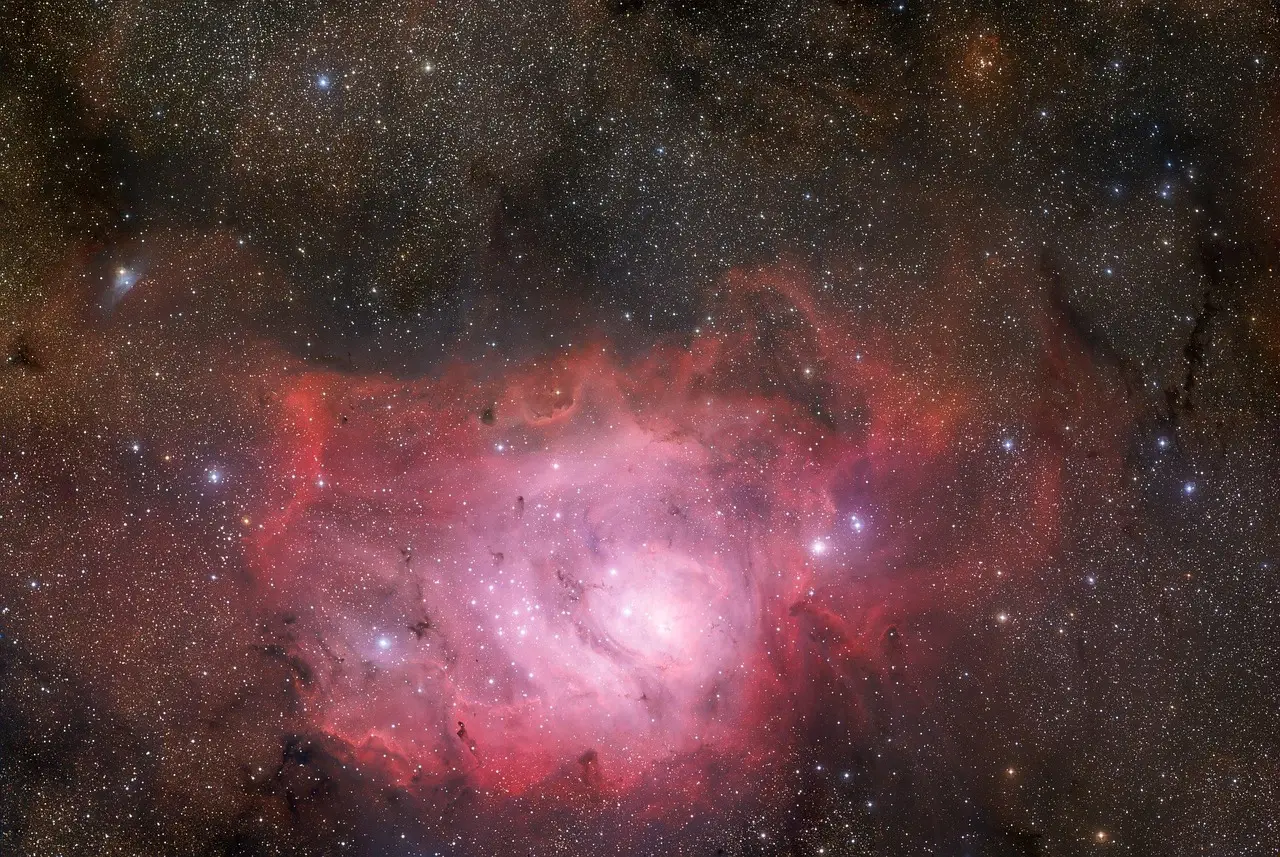
NASA's James Webb Space Telescope observed the aftermath of a stellar collision just 47 days after the eruption reached its brightest point, giving astronomers an unusually early look at two stars merging into a single object in the Andromeda galaxy.
The merged object carries the nickname Bao. A star slightly smaller than our Sun spiraled into a swollen supergiant, leaving one star behind. Researchers reconstructed the event's timeline by combining Webb's fresh infrared measurements with older telescope data. The findings appear in Nature.
What happened to the stars?
Most stars live in groups of two or more, bound together by gravity. Some pairs drift closer over time until they merge. These events are hard to catch because astronomers rarely know in advance when a star will suddenly change.
This particular pair orbited one another for thousands of years. The decisive phase began when the smaller star started brushing against the giant's outer layers. From that moment, the final merger took only about seven orbits — roughly seven years. That is much faster than some previously studied mergers between two smaller stars.
Researchers first noticed unusual behavior in the system in 2023 and kept watching. A major eruption in 2025 signaled that something remarkable had happened. Webb pointed at the system shortly after, catching the aftermath at its earliest stage yet.
In short: a long-married stellar pair collapsed into a single star in about seven years once the smaller one touched the giant's envelope.
Why infrared observations mattered
As the smaller star plunged inward, it transferred energy to the gas surrounding the giant. The interaction threw material into space, and dust formed around the changing system. Ordinary visible-light telescopes struggle to penetrate that dust.
Webb detects infrared light — the heat-carrying part of the spectrum — which passes through dust clouds. Those infrared measurements let scientists examine material around the merger that visible-light instruments could not easily reach.
The team compared the new observations with archival telescope measurements to build a timeline. This approach separated the bright 2025 eruption from the slower changes that preceded it, and it yielded clues about the newly merged star and the matter surrounding it.
The payoff: infrared data cut through the dust and let researchers place each stage of the collision in order.
Why Andromeda?
Andromeda is the nearest large galaxy to the Milky Way, which makes it a convenient place to study events that are difficult to observe in our own crowded sky. The stars involved sat too far away to see individually in ordinary images. Instead, changes in their combined light revealed what was happening, and infrared measurements filled in the hidden details.
What the findings change
The results suggest that mergers involving large, swollen stars may unfold differently from collisions between two smaller stars. Such events matter beyond the individual star: they change a star's future and release material that can later become part of new stars and planets.
The main advance is not simply finding a stellar merger. It is observing enough stages of a single event to test ideas about how stars interact when one swallows another.
How solid are the conclusions?
Important uncertainties remain. Astronomers cannot look inside Bao directly, and the long-term fate of the merged object stays unknown. Continued observations will show whether the star settles into a more stable state or changes again. More examples will be needed before scientists know how common this rapid merger path really is.
The caveat in one line: one well-observed merger tests the theory, but it does not yet tell us how often this happens.
For readers following Webb's run of discoveries, the telescope has recently also revealed a hidden giant star before it exploded, four distinct CO₂ types on Saturn's moons, rotten-egg gas on alien worlds for the first time, and hidden black holes eating stars.
By Marcus Bennett
via knowridge.com (Source)
More from Marcus Bennett
Show full bio
News editor covering regulation, policy and their impact on general science news at SciBeat.
584 articles