Recorded November 19, 2026
Space & AstronomyReported finding
Vulcan rocket's first total failure destroys Amazon satellites
ULA's Vulcan rocket failed for the first time on November 15, destroying Amazon Leo satellites. ULA blames inadequate fuel supply to the BE-4 engines, with ripple effects for NASA and the Space Force.
By Nathan Brooks4 min read775 words
In brief
- Vulcan's first stage fired 30 seconds longer than planned on November 15, destroying Amazon's Leo satellite payload 10 minutes after liftoff.
- ULA's November 18 update blames inadequate fuel supply to the BE-4 engines rather than the engines themselves.
- Amazon had booked 37 additional Vulcan launches for its Leo broadband constellation.
- This was ULA's first total mission failure; the U.S. Space Force is Vulcan's other main customer.
- Blue Origin's New Glenn remains grounded after a May pad-test explosion, with return to flight targeted for January 2027.
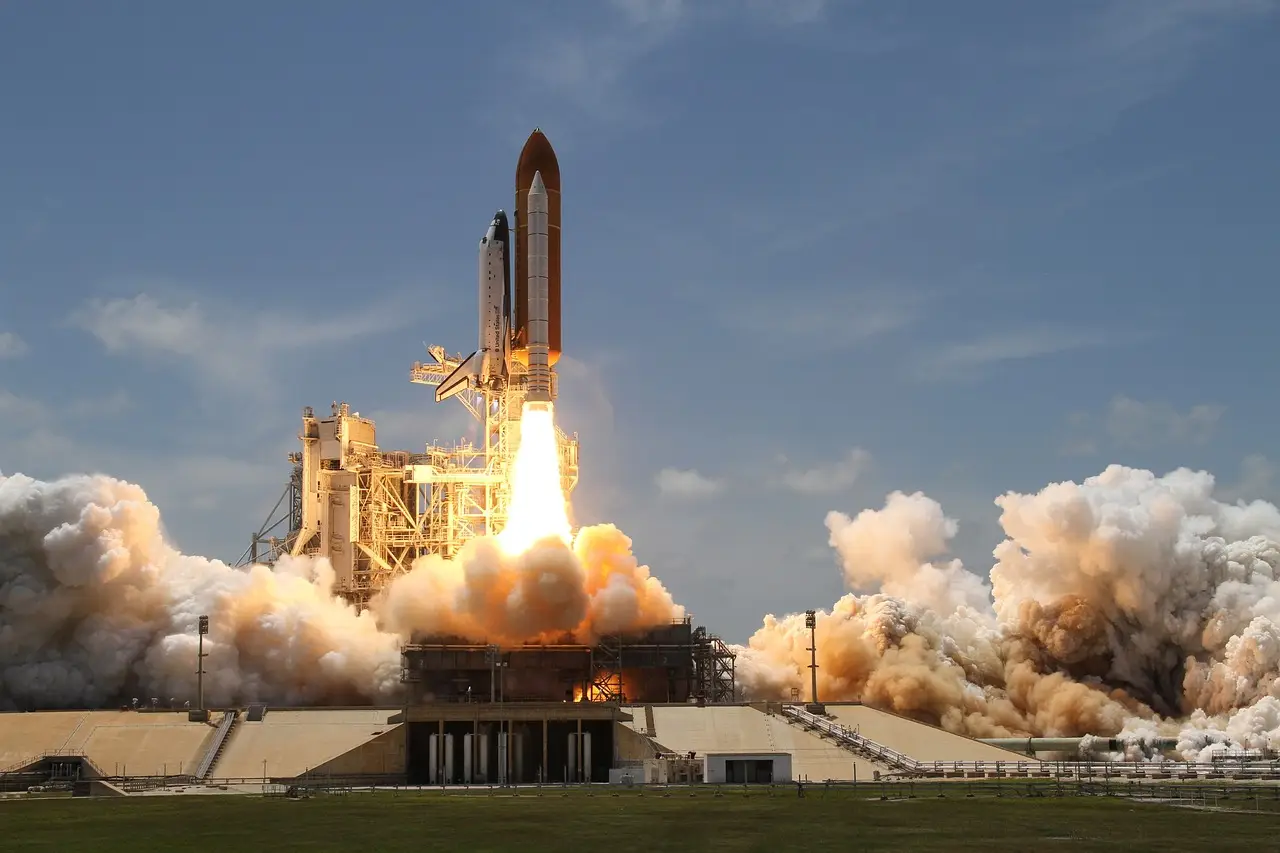
A rocket malfunction lasting just half a minute destroyed an entire Amazon satellite payload on November 15, marking the first total mission failure in United Launch Alliance's history. The Vulcan rocket's first stage fired 30 seconds longer than planned, and the mission — carrying satellites for Amazon's Leo broadband service — was lost about 10 minutes after liftoff from Cape Canaveral Space Force Station in Florida.
"That's a long time, because in launches, everything is timed to the second," says Paul Ronney, an aerospace engineer at the University of Southern California. The extended burn suggests the first stage underperformed and kept firing to compensate, he says.
ULA confirmed the broad picture in a November 17 statement: "Early indications are that just after liftoff the launch vehicle experienced low [first-stage] performance, resulting in stage separation occurring when the vehicle was low in altitude and below minimal velocity to reach orbit."
By 11 a.m. EST on November 18, ULA had narrowed the suspect further. The first stage's problems appear to be "the result of inadequate fuel supply from the vehicle to the BE-4 engines," the company said — pointing at plumbing rather than the engines themselves.
What happened during the flight?
Sunday's launch initially looked routine. It was the first Vulcan flight to use six solid rocket boosters instead of two or four, and unlike earlier flights — including February's mission, which suffered worrisome booster malfunctions and grounded the rocket — the boosters peeled away on schedule about 90 seconds in.
The trouble came at roughly five minutes after takeoff, when the first stage kept burning 30 seconds past its planned cutoff.
Who is affected by the failure?
The list is long, and it touches Amazon, NASA and the U.S. military.
- Amazon: The Leo broadband constellation is far behind schedule, and Amazon had already booked 37 more Vulcan launches for its satellites.
- NASA: If the BE-4 engines are implicated, delays could compound for Blue Origin's Blue Moon lunar lander, which the Artemis program needs and which must launch on Blue Origin's New Glenn rocket. New Glenn blew up during a pad test in May and remains grounded, with a return targeted for January 2027. Vulcan's Centaur V upper stage is also integral to future flights of NASA's Space Launch System.
- U.S. Space Force: Alongside Amazon, it is Vulcan's main customer, giving the failure national-security implications.
ULA spokesperson Julie Arnold said: "ULA exists to provide assured access to space for our nation and for the customers who depend on us. That purpose is why we take on some of the hardest missions in spaceflight, and why we hold ourselves to the standard of mission success. Today, we did not meet that standard."
"Blue Origin is working closely with ULA to investigate and determine the root cause," a Blue Origin spokesperson said. NASA chief Jared Isaacman offered support on X: "The team at NASA is available to assist in all matters related to the investigation and remediation effort. Artemis, Moon Base, and the nation need ULA. We are in your corner and here to help." Elon Musk replied to ULA's post expressing "hope you are back to flight soon."
Why does SpaceX loom over this story?
Both ULA — a Boeing-Lockheed Martin joint venture — and Blue Origin, bankrolled by Amazon's Jeff Bezos, have struggled to catch SpaceX, which continues to dominate. SpaceX recently caught its Starship on its Texas launch tower after the fully reusable vehicle delivered a batch of Starlink satellites to orbit during a test flight.
But SpaceX plans to retire its prolific Falcon 9 in favor of the still-experimental Starship, and that pivot creates risks for everyone else. Starship currently uses a custom deployment bay designed for Starlink satellites — hardware other customers' payloads may not fit.
"The first thing is, does the 'bus' have an extra seat? And the second is, can you fit your butt in that seat? I don't think SpaceX is going to make you a bespoke bus seat," says Clayton Swope, deputy director of the Aerospace Security Project at the Center for Strategic & International Studies.
If Falcon 9 retires before Vulcan, New Glenn or Rocket Lab's delayed Neutron rocket (now slipping to 2027) can fill the gap, the industry could face a launch crisis. "In some ways this is where we've been for 10 years, crossing our fingers and hoping there's an increase in competition in launch," Swope says. NASA, meanwhile, may use modified Starships for Artemis IV, slated for 2028 — which would be the first crewed lunar landing since Apollo.
via scientificamerican.com (Source)
More from Nathan Brooks
Show full bio
Market editor covering companies, deals and strategy in general science news at SciBeat.
581 articles
Nearby plates
- ULA Vulcan Rocket Fails in Flight, Stranding Amazon Satellites
- ULA Loses Vulcan Rocket and 40 Amazon Satellites, Grounding a Key US Launcher
- Vulcan failure points to BE-4 fuel supply after 40-satellite loss
- Vulcan Centaur Returns to Flight With 40 Amazon Leo Satellites
- Vulcan Returns to Flight Nov. 13 with First Amazon Leo Payload